


Biomethanation Plant Cost: A Realistic Breakdown for 2026
When you start looking into turning organic waste into renewable natural gas, the first question that pops up is always about money. People want to know the biomethanation plant cost before they commit to anything. And that makes sense—this isn’t a small purchase.
I’ve talked with plant operators and equipment manufacturers over the years. They all say the same thing: budgeting for a biomethanation plant is tricky because so many variables come into play. But you can get a clear picture if you break it down properly.
This article walks you through the real numbers, the hidden expenses, and what you should expect when asking for quotes from international biogas upgrading equipment manufacturers.
Why the Biomethanation Plant Cost Varies So Much
You might see online estimates ranging from $500,000 to over $15 million. That wide gap isn’t random. The biomethanation plant cost depends heavily on your feedstock type, desired gas purity, and site conditions.
A small farm-based system processing 50 tons of manure per year is completely different from a municipal facility handling 50,000 tons of food waste. The equipment size, automation level, and safety systems scale non-linearly.
Manufacturers in Europe and North America typically charge more upfront but offer better warranties and after-sales support. Asian suppliers might give you a lower sticker price, but shipping and installation add up fast.
Breaking Down the Major Components That Drive Price
Every biomethanation plant has four core systems. Understanding these helps you see where your money goes.
Pre-treatment equipment takes up about 15-20% of total capital expenses. This includes shredders, mixers, and sometimes pasteurization units. If your feedstock has contaminants like plastic or sand, you’ll need more robust pre-treatment, and the biomethanation plant cost jumps accordingly.
The anaerobic digesters themselves are the heart of the operation. Steel or concrete? Mesophilic or thermophilic? Single-stage or two-stage? Each choice changes the price. Concrete tanks last longer but cost more to build on-site. Steel tanks are prefabricated and faster to install but may need more corrosion protection.
Biogas upgrading unit – this is where hydrogen or CO₂ conversion happens. Membrane separation, water scrubbing, or biological methanation? Biological systems are newer and sometimes cheaper to run but have higher initial engineering costs. Most modern plants combine a biological step with conventional upgrading.
Gas storage and grid injection systems add another 10-15% to the total. You need compressors, odorization (if injecting into natural gas grid), and safety shutdown systems. These aren’t optional if you plan to sell the biomethane.
Small-Scale vs. Industrial-Scale: What You Actually Pay
Let’s get concrete with numbers. These are averages from manufacturer quotes in 2025-2026.
For a small on-farm plant processing 100-200 Nm³/h of raw biogas, the biomethanation plant cost typically lands between $800,000 and $1.8 million. That’s enough to power a few dozen homes or fuel two or three garbage trucks. You can often get agricultural grants that cover 30-40% of this in the EU or parts of the US.
A mid-sized industrial plant at 500-1,000 Nm³/h costs $3 million to $7 million. These are common for food processing facilities, wastewater treatment plants, or landfill projects. Payback periods range from 5 to 9 years depending on local gas prices and incentives.
Large-scale municipal facilities above 2,000 Nm³/h start at $10 million and can go past $20 million. At this level, the biomethanation plant cost includes full automation, backup power systems, and often on-site laboratories for quality control. These plants usually work with international engineering firms that specialize in biogas upgrading.
One thing to remember: these are just capital costs. You still need to budget for land, permits, and grid connection fees.
Operational Expenses That Surprise First-Time Buyers
A low purchase price doesn’t mean low total cost. I’ve seen plants sit idle because owners didn’t plan for operating expenses properly.
Electricity consumption is a major ongoing factor. Compressors, mixers, and pumps run 24/7. In a typical setup, electricity eats up 30-40% of annual operating budget. Some newer biological methanation designs cut this by using waste heat from the process itself.
Labor costs vary by region. A fully automated plant might need only one technician per shift. Manual plants with frequent maintenance needs can require three or four people. When you calculate the biomethanation plant cost over ten years, labor often equals or exceeds the original equipment price.
Consumables like nutrients, anti-foaming agents, and membrane replacement parts add another $20,000 to $100,000 yearly depending on scale. Don’t ignore catalyst replacement if you’re using a biological hydrogenation step. Those microbes need specific trace elements to stay healthy.
How Equipment Manufacturers Structure Their Pricing
Most international suppliers don’t give a single all-inclusive quote. They separate engineering, equipment, shipping, and commissioning.
European manufacturers (German, Dutch, Danish) typically charge $1,200-$1,800 per Nm³/h of installed capacity. That’s a useful rule of thumb for initial budgeting. So a 500 Nm³/h plant would have a biomethanation plant cost around $600,000 to $900,000 for equipment alone, plus another 25-35% for installation and startup.
Chinese and Indian suppliers quote $600-$1,000 per Nm³/h for similar capacity. But be careful: shipping a full container from Shanghai to Rotterdam or Los Angeles adds $15,000-$40,000. And you might need to fly their technicians over for commissioning, which doubles the installation labor cost.
North American manufacturers sit in the middle at $900-$1,400 per Nm³/h. Their advantage is shorter lead times and easier compliance with local electrical and gas codes. If you’re in the US or Canada, that convenience often justifies the higher base price.
Hidden Costs That Ruin Your ROI Forecast
Permitting surprises people the most. A biomethanation plant involves air permits, water discharge permits, fire safety reviews, and sometimes gas pipeline interconnection agreements. Each review takes months and costs $5,000 to $50,000 in fees plus consultant time.
Site preparation is another big one. You need a level concrete pad, drainage, utilities access, and often a security fence. Poor soil conditions can add $100,000 or more for piling or reinforced foundations. I’ve seen projects where site work alone reached 20% of the quoted biomethanation plant cost.
Commissioning and training aren’t always included in the base quote. Ask every manufacturer: “Does your price cover operator training and performance testing?” If they say no, budget an extra 8-12% of equipment cost.
Insurance premiums for biogas plants have risen lately. Underwriters worry about hydrogen sulfide corrosion and methane explosion risks. Expect to pay 1.5-2% of total plant value annually for proper coverage.
Reducing Your Biomethanation Plant Cost Without Cutting Corners
You can lower expenses by choosing the right location. Place the plant close to both feedstock source and gas buyer. Every kilometer of piping or trucking cuts into margins.
Shared infrastructure works well for smaller operations. Several farms or a group of restaurants can jointly invest in a single plant. The biomethanation plant cost per ton of input drops significantly when you split fixed expenses across multiple partners.
Used equipment is an option but comes with risks. I’ve seen three-year-old plants sell for 40% of new price because the owner went bankrupt. Hire an independent engineer to inspect before buying. Focus on stainless steel components that resist corrosion – those hold value better.
Government incentives change frequently. In 2026, the US has Section 45Z tax credits for clean fuel production. The EU’s Renewable Energy Directive III offers tradable certificates. Some states and provinces add their own grants. A good equipment manufacturer will help you apply – ask them about their experience with local incentive programs.
Real-World Example: A 800 Nm³/h Plant in the Midwest
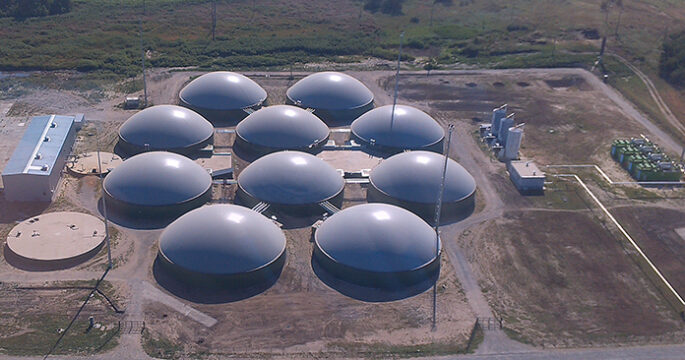
Let me share an actual case. A dairy cooperative in Wisconsin built an 800 Nm³/h biomethanation plant in late 2024. They went with a Danish manufacturer for the upgrading skid and used local contractors for civil work.
The total biomethanation plant cost came to $5.2 million. Breakdown: equipment $3.1 million, site and foundations $0.9 million, grid connection $0.5 million, permits and engineering $0.4 million, contingency $0.3 million.
Annual operating expenses run around $480,000. They sell biomethane to a nearby utility at $18 per MMBtu. Payback period is projected at 6.2 years. Not bad for a rural project.
The owner told me the biggest lesson was spending extra on remote monitoring. That system lets them adjust parameters without driving to the plant every day. It added $35,000 upfront but cut labor costs by 18% in the first year.
Frequently Asked Questions About Biomethanation Plant Cost
Q1: What is the typical biomethanation plant cost for a small community project (200 Nm³/h)?
A1: For a 200 Nm³/h facility, expect $1.2 million to $2.5 million fully installed. This covers pre-treatment, a single concrete digester, membrane upgrading, and basic gas storage. Small projects benefit from prefabricated modular designs, which some European manufacturers offer starting around $1.1 million. Don’t forget to add $150,000-$300,000 for land, permits, and grid interconnection.
Q2: How much does biomethanation plant cost per kilogram of methane produced annually?
A2: A well-designed plant runs $8 to $15 per kilogram of daily methane production capacity. For example, a plant making 500 kg of biomethane per day would cost $4,000 to $7,500 per kg of daily capacity. This metric helps compare quotes across different sizes. Lower than $8/kg often means cheap components that fail early. Higher than $15/kg suggests over-engineering or unnecessary features.
Q3: Can I reduce biomethanation plant cost by using a Chinese manufacturer?
A3: Yes, but you need to add shipping, import duties (typically 5-15%), and longer commissioning travel costs. A Chinese system might quote $400,000 where a European one quotes $700,000. After shipping ($40,000), duties ($20,000), and technician travel ($25,000), you’re at $485,000. That’s still cheaper, but factor in potential language barriers and spare parts availability. Many operators choose Chinese for non-critical components like mixers but buy European for the upgrading unit.
Q4: What’s the cheapest biomethanation plant cost possible for a DIY-style setup?
A4: You can build a very basic 20 Nm³/h plant for around $80,000 using agricultural digesters and a used membrane system from eBay. But this is risky. No certifications, no warranty, and your gas may not meet pipeline quality. Insurance companies often refuse coverage. For a legitimate commercial operation, the minimum realistic biomethanation plant cost is $350,000 for a 50 Nm³/h system using certified components and professional installation.
Q5: How do financing options affect the biomethanation plant cost over time?
A5: With a 7-year loan at 8% interest, a $2 million plant ends up costing about $2.8 million total including interest. Leasing equipment can lower monthly payments but often includes a buyout at the end. Some manufacturers offer power purchase agreements (PPAs) where you pay per cubic meter of gas produced – this removes upfront cost entirely but locks you into higher per-unit prices. Green bonds and climate funds sometimes offer 4-5% interest rates for certified biogas projects, which significantly reduces the total biomethanation plant cost over the loan term.
Final Thoughts on Budgeting for Your Biogas Project
Getting a clear answer on biomethanation plant cost isn’t easy. Every site has unique factors. But the ranges I’ve shared give you a solid starting point.
Talk to at least three equipment manufacturers. Ask for references you can call. Visit an operating plant similar to what you want to build. That onsite visit will teach you more than any quote ever could.
The industry is growing fast. Prices for biological methanation components are slowly dropping as more suppliers enter the market. If you can wait another 12-18 months, you might see 5-10% lower equipment costs. But energy prices and incentives change too – sometimes acting now makes more financial sense.
Whatever you decide, get everything in writing. A detailed contract that spells out exactly what’s included in the quoted biomethanation plant cost will save you from ugly surprises during construction. Good luck with your project.