


News
We'll get back to you as soon as possible.
5 Critical Facts You Need to Know About Biogas Recovery
For decades, methane from landfills, wastewater, and agricultural waste was seen as a problem to be flared or simply released. Today, it’s recognized as a valuable resource being wasted.
Biogas recovery is the engineered process of capturing, cleaning, and utilizing this methane-rich gas. It’s a direct action against climate change and a driver for the circular economy. For site operators, municipalities, and project developers, it turns a regulatory liability into a source of revenue and clean energy.
Implementing a recovery project is a significant undertaking. Success depends on understanding a few foundational principles. Here are five critical facts to guide your planning.
1. What is Biogas Recovery? Beyond Simple Capture
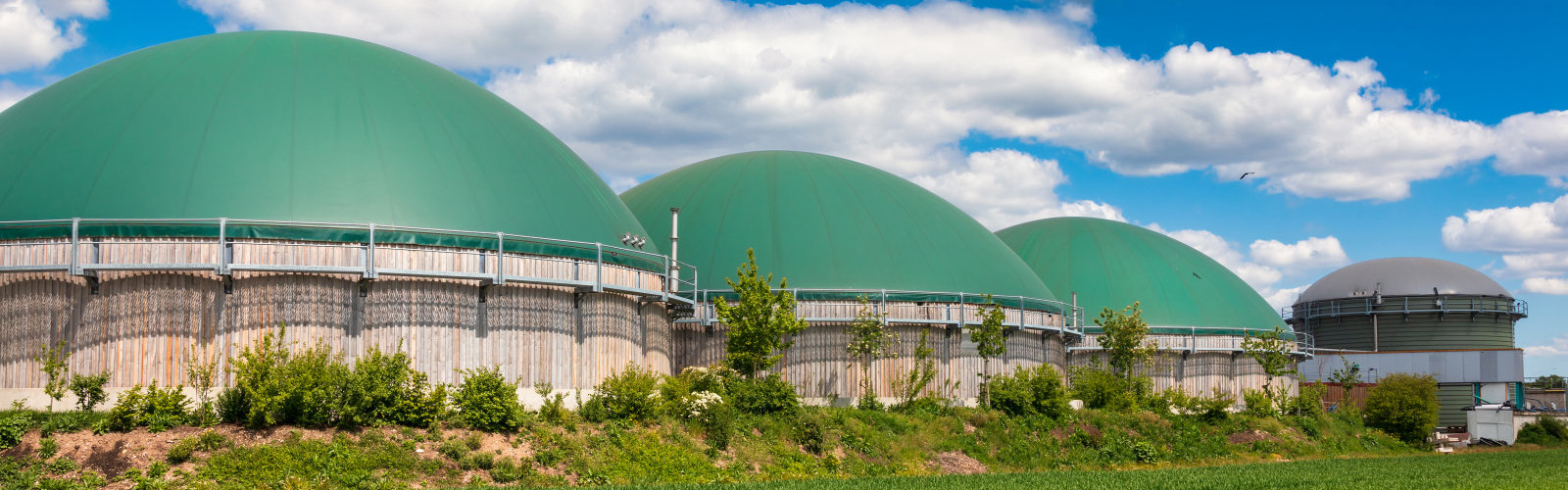
At its core, biogas recovery is a multi-step process. It starts with the extraction of raw gas from an anaerobic source, but it doesn’t end there. The complete system ensures the gas is converted into a reliable, usable product.
The primary sources are well-established:
Landfill Gas (LFG): Generated from the decomposition of municipal solid waste. Extraction involves a network of vertical wells and horizontal collectors drilled into the waste mass.
Anaerobic Digester Gas: Produced in controlled tanks processing organic waste—like food scraps, wastewater sludge, or manure. The gas is collected directly from the sealed digester headspace.
Agro-Industrial Waste: Gas from covered lagoons or digesters at food processing plants, distilleries, or dairies.
The raw gas is a mixture of roughly 50% methane (CH4), 45% carbon dioxide (CO2), and trace contaminants like hydrogen sulfide (H2S), siloxanes, and moisture. Simple gas collection is just the first step. Effective recovery and utilization require robust cleaning and conditioning systems to meet the specifications of your chosen end-use technology.
2. The Why: Environmental Imperative and Economic Driver
The case for biogas recovery systems is built on two powerful pillars: environmental compliance and financial return.
From an environmental standpoint, methane is a potent greenhouse gas, over 25 times more effective at trapping heat than CO2 over a 100-year period. Capturing and destroying it through combustion (in a flare, engine, or boiler) is a major climate win. Utilizing it for energy displaces fossil fuels, creating a double carbon reduction benefit.
Economically, the gas is a fuel. A well-designed biogas to energy project creates several revenue streams:
Electricity Generation: Using the gas in a generator to produce power for on-site use or grid sale.
Renewable Natural Gas (RNG): Upgrading the gas to pipeline quality for injection or use as vehicle fuel (bio-CNG/LNG). This often commands premium prices and access to valuable credits (like RINs or LCFS credits).
Direct Thermal Use: Using the gas in boilers, kilns, or dryers to offset natural gas or propane costs.
Carbon Credits: Monetizing the verified emission reductions in voluntary or compliance carbon markets.
For landfills, landfill gas recovery is often mandated by regulation, but energy projects make compliance a revenue-generating activity instead of a pure cost.
3. Key Applications: From Flaring to High-Value Fuels
The end application dictates the level of gas cleanup required. The spectrum of biogas utilization ranges from simple to complex.
Basic Destruction: Flaring
A enclosed flare is the minimum standard for gas collection and control. It combusts methane to CO2, significantly reducing its climate impact. It generates no energy revenue but is a critical component for safety and basic regulatory compliance at many sites.
Electricity Production (CHP)
Using the gas in an internal combustion engine or turbine is a common application. The system generates electricity and captures waste heat for on-site use (Combined Heat and Power). This application requires robust gas conditioning to remove moisture, H2S, and siloxanes that can damage engines.
High-Value Renewable Natural Gas (RNG)
This is the premium pathway. Producing RNG requires a biogas upgrading system to remove CO2 and other impurities, leaving 95%+ pure methane. Technologies like membrane separation, pressure swing adsorption (PSA), or amine scrubbing are used. The RNG can be injected into pipelines or compressed/liquefied for vehicle fuel.
Direct Use and Boiler Fuel
In some industrial settings, the gas can be used directly in process equipment with minimal cleaning (often just drying and H2S removal). This provides direct fossil fuel displacement at the facility.
4. Core System Components and Technology Choices
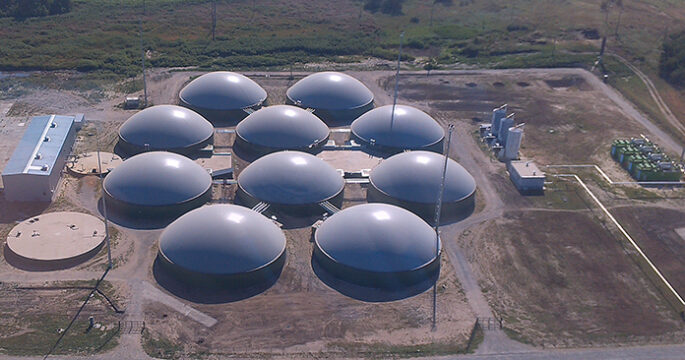
A full biogas recovery and upgrading plant is an integrated skid of technologies. Each component plays a specific role.
Gas Extraction and Pretreatment
This is the front end. For landfills, it includes wells, headers, and a blower station. For all systems, pretreatment is critical and typically includes:
Condensate Removal: Knock-out pots and chillers to remove water vapor.
Filtration: Removing particulate matter.
Hydrogen Sulfide Removal: Using biological trickling filters or iron-based media scrubbers (ferric chloride dosing or iron sponge).
Core Upgrading Technology
This is the heart of an RNG project. The choice depends on gas flow, composition, and desired purity.
Membrane Separation: Uses selective polymer membranes to separate CO2 from methane. Known for modularity and lower energy use.
Pressure Swing Adsorption (PSA): Uses adsorbent materials (like activated carbon or zeolites) to trap impurities under pressure. Excellent for high-purity methane.
Amine Scrubbing: A chemical process where amine solutions absorb CO2 and H2S. Known for high efficiency and very low methane slip.
Gas Utilization or Injection
The final step ties into the chosen end-use: a CHP engine generator set, a gas compressor station for pipeline injection, or a CNG/LNG liquefaction system.
5. Project Economics and the Role of Professional Services
The financial viability of a biogas recovery project hinges on capital costs, operational expenses, and the value of the outputs.
Capital costs are highly variable. A simple collection and flaring system for a small landfill is one thing; a full-scale RNG plant with pipeline interconnection is another, often running into millions of dollars. Key cost drivers include gas flow rate, the complexity of cleanup, and the distance to a gas pipeline or electrical interconnect.
Operational costs include electricity for blowers and compressors, consumables (filter media, amine solution), and routine maintenance.
This complexity is why professional engineering firms are essential. Most projects are developed as turnkey biogas recovery solutions. A specialized contractor handles the feasibility study, design, engineering, equipment procurement, construction, and commissioning.
Many owners also opt for long-term operation and maintenance contracts. These ensure the biological and mechanical systems are managed by experts, maximizing uptime, gas yield, and revenue.
Frequently Asked Questions (FAQs)
Q1: What's the minimum gas flow needed to make a recovery project economically viable?
A1: There's no universal threshold, as viability depends heavily on gas quality, energy prices, and available incentives (like RINs). For electricity generation, flows below 300-500 standard cubic feet per minute (scfm) are often challenging. For RNG projects, the bar is higher, typically needing 1,000+ scfm to justify the significant capital cost of upgrading equipment and pipeline interconnection. Smaller flows may be viable with exceptionally high incentives or very low project costs.
Q2: How long does a landfill gas recovery project remain productive?
A2: A well-managed landfill gas recovery system can extract viable quantities of gas for 20-40 years or more after waste placement stops. Gas production follows a curve, peaking a few years after waste disposal and then gradually declining over decades. The financial model must account for this declining yield over the project's life.
Q3: What is "methane slip," and why is it important?
A3: Methane slip refers to the uncombusted methane that escapes from the system. It can occur from incomplete combustion in an engine or flare, or as a loss from the upgrading process. Since the goal is climate mitigation, minimizing methane slip is critical. High-efficiency flares, well-tuned engines, and upgrading technologies with >99% methane recovery rates are essential to maximize the environmental benefit of the biogas recovery project.
Q4: Can biogas recovery systems handle variations in gas quality and flow?
A4: Yes, but it's a key design challenge. Gas composition and flow from landfills and digesters can fluctuate daily or seasonally. A robust system design includes buffers like gas storage balloons (holders) and is sized with some flexibility. The pretreatment and upgrading skids must be selected and controlled to handle a defined range of variability to ensure consistent gas quality output.
Q5: Who typically owns and operates these recovery systems?
A5: Ownership models vary. The site owner (landfill company, wastewater utility, farm) may own and operate the system themselves, sometimes with a third-party O&M contract. Alternatively, a specialized energy developer may finance, build, own, and operate the recovery facility under a long-term agreement with the site owner, who receives royalties or tip fees. The latter model is common for larger, capital-intensive RNG projects.