


News
We'll get back to you as soon as possible.
5 Key Components of a Modern Biogas Treatment Plant for Efficient RNG Production
Turning raw biogas into a valuable energy commodity requires precise engineering. A biogas treatment plant, also known as a biogas upgrading or purification system, is the essential facility where this transformation happens. It’s not a single machine, but an integrated process chain designed to remove impurities and isolate methane. For anyone investing in anaerobic digestion, understanding the layout and function of a complete biogas treatment plant is critical for project success, reliability, and return on investment.
The Core Process: More Than Just Upgrading
A common misconception is that a biogas treatment plant is only about stripping out CO2. In reality, it's a multi-stage purification train. Raw biogas from the digester is saturated with water and contains hydrogen sulfide, siloxanes, and other trace contaminants that can damage equipment.
The process typically follows a logical order: conditioning, upgrading, and final polishing. Each stage protects the next. Skipping robust pre-treatment is a frequent cause of operational failure and unexpected costs. The goal is to produce pipeline-quality Renewable Natural Gas (RNG) or vehicle fuel (Bio-CNG/LNG) that meets strict utility and regulatory specifications.
Stage 1: Biogas Conditioning and Pre-Treatment
This first line of defense is arguably the most important part of any biogas treatment plant. It prepares the raw gas for the sensitive main upgrading unit.
Gas cooling and condensate removal happen immediately. The gas is then routed through a biological or chemical scrubber for hydrogen sulfide (H2S) removal. High H2S levels cause rapid corrosion. For landfill or wastewater gas, a specialized adsorbent filter, often activated carbon, captures volatile siloxanes and organic compounds.
These elements form deposits that can ruin compressors and engine components. Effective pre-treatment ensures consistent gas quality entering the core upgrading section, maximizing its lifespan and efficiency.
Stage 2: The Heart of the Plant – Biogas Upgrading Technologies
This is the core biogas treatment plant process where CO2 is separated from methane. Several proven technologies are used globally, each with pros and cons.
Water scrubbing uses pressurized water to absorb CO2 and some H2S. It’s a robust, well-understood method. Membrane separation uses selective polymer membranes that allow CO2 to pass through faster than methane. It's known for its compact footprint and modular design.
Pressure Swing Adsorption (PSA) uses adsorbent materials that trap CO2 under pressure. Chemical scrubbing, often with amine solvents, selectively absorbs CO2 in a closed-loop system. The choice depends on gas composition, desired purity (typically >96% methane), energy efficiency targets, and scale.
Stage 3: Gas Polishing and Grid Injection
After upgrading, the biomethane often requires final polishing. This might involve a precision drying step to reach a specific dew point, as pipeline operators have strict moisture limits.
If the gas is destined for the grid, it is compressed to high pressure—often over 80 bar for transmission lines. An odorant (mercaptan) is added for safety, identical to conventional natural gas. Precise metering and analytical equipment continuously verify the gas quality before it’s injected into the utility network.
For vehicle fuel production, the gas is compressed differently for CNG or undergoes a complex liquefaction process to become Bio-LNG.
Cost Factors: From CAPEX to Operational Expense
The price of a biogas treatment plant varies significantly. A small, containerized unit for a farm might cost several hundred thousand euros. A large-scale municipal system can run into the millions.
Key cost drivers include plant capacity (Nm³/h of raw gas), the chosen upgrading technology, and the extent of pre-treatment needed. Amine systems may have higher capital expenditure (CAPEX) but lower energy use. Membrane systems might offer lower upfront costs.
Operational expenditure (OPEX) includes electricity for compressors and pumps, replacement filter media, adsorbents, scheduled maintenance, and labor. A well-designed plant balances CAPEX and OPEX for the lowest lifetime cost.
Selecting a Technology Partner and Service Model
Choosing a supplier for your biogas treatment plant is a long-term decision. Look for manufacturers with a strong reference list in your specific biogas source (agricultural, landfill, industrial).
Many providers now offer full Engineering, Procurement, and Construction (EPC) turnkey solutions. This single-point responsibility reduces risk for the plant owner. For projects with budget constraints, Build-Own-Operate-Transfer (BOOT) or leasing models are available.
Long-term service and maintenance agreements are highly recommended. They ensure access to spare parts, expert troubleshooting, and performance guarantees, protecting your asset and revenue stream.
The Role of Automation and Digitalization
Modern plants are highly automated. A PLC-based control system manages the entire process, from pressure swings in a PSA unit to solvent circulation in an amine scrubber.
Remote monitoring is now standard. Engineers can view real-time performance data, receive alarm notifications, and sometimes make adjustments off-site. This digital capability reduces on-site staffing needs and allows for predictive maintenance, preventing small issues from becoming costly shutdowns.
Data logging is also crucial for regulatory compliance and for claiming environmental credits like Renewable Identification Numbers (RINs) or Guarantees of Origin (GOs).
Future Trends in Treatment Plant Design
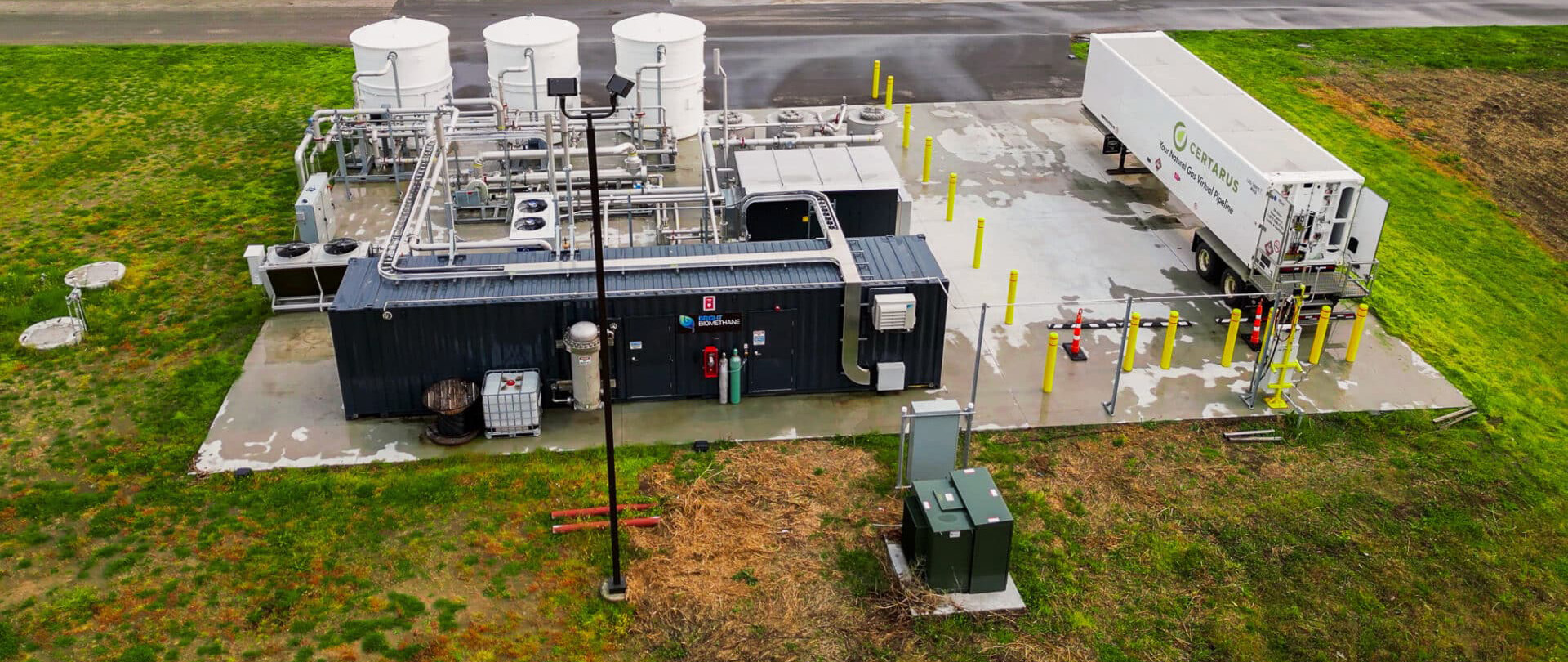
The industry is moving towards greater standardization and modularization. Pre-fabricated, skid-mounted biogas treatment plant units shorten installation time and reduce on-site construction risk.
Energy optimization remains a key focus. New membrane materials and improved solvent formulations aim to lower the electricity consumption per cubic meter of RNG produced. Furthermore, the integration of carbon capture from the separated CO2 stream is gaining interest, creating an additional product for greenhouses or industrial use.
A well-engineered biogas treatment plant is the cornerstone of a profitable RNG project. It transforms a raw, problematic gas into a clean, market-ready product. By focusing on the integration of all stages—pre-treatment, upgrading, and polishing—operators can ensure reliability, meet stringent standards, and secure a strong financial return from their biogas investment.
Frequently Asked Questions (FAQ)
Q1: What is the typical lifespan of a biogas treatment plant?
A1: With proper maintenance and occasional component replacement, the core infrastructure of a well-built biogas treatment plant can last 20 years or more. Consumable parts like filter elements, membrane cartridges, or adsorbent materials have replacement cycles ranging from months to several years, based on gas quality and operating hours.
Q2: Can one treatment plant handle biogas from different sources?
A2: It's challenging. A biogas treatment plant is typically engineered for a specific gas composition range. Switching from, say, agricultural biogas to landfill gas would likely require significant modifications to the pre-treatment section, as contaminant levels and types differ greatly. It's not a plug-and-play change.
Q3: How much space does a typical plant require?
A3: Space needs vary by technology and capacity. A compact, containerized membrane system for a small digester might fit in a 40-foot container area. A large-scale amine scrubber plant with multiple tanks, scrubber columns, and a compressor house could require an area the size of a basketball court. Always discuss footprint requirements early in planning.
Q4: What are the main safety systems in place?
A4: A professional biogas treatment plant includes multiple safety layers: gas detection sensors (for CH4, H2S, O2), emergency shutdown valves, pressure relief devices, fire and explosion protection, and ventilation in enclosed spaces. The control system is designed to automatically initiate safe shutdown procedures in case of any parameter deviation.
Q5: How long does it take to commission a new plant?
A5: After delivery and installation, the commissioning and start-up phase for a biogas treatment plant usually takes several weeks. This includes mechanical completion checks, electrical and control system testing, water runs, and finally, the gradual introduction of biogas while fine-tuning all process parameters to achieve specification.