


News
We'll get back to you as soon as possible.
6 Important Facts About Membrane Biogas Upgrading: Technology and Benefits
In the search for efficient and clean energy, membrane biogas upgrading has become a leading method. This technology refines raw biogas into high-purity biomethane. It is a core process in the international biogas upgrade equipment manufacturing sector. This article explains how it works and why it matters.
What is Membrane Biogas Upgrading?
Membrane biogas upgrading is a physical separation process. It uses special filters to purify biogas. The goal is to increase the methane content and remove impurities.
Raw biogas from digesters contains methane (CH4) and carbon dioxide (CO2). It also has water vapor and trace gases. A membrane system separates these components effectively.
Input: Raw, humid biogas from the digester.
Process: Gas passes through semi-permeable membranes.
Output: High-purity biomethane (over 97% CH4) and a CO2-rich off-gas stream.
This method is favored for its simplicity and reliability. It is a key technology for modern membrane biogas plants.
How Does a Membrane Biogas System Work?
The process relies on the different speeds at which gases pass through a membrane material. CO2, water, and oxygen pass through faster than methane molecules.
First, biogas is compressed and dried. Then, it is fed into membrane modules. The membranes act as selective barriers.
Compression: Gas pressure is increased to optimize separation.
Pre-treatment: Removal of hydrogen sulfide and water is critical to protect the membranes.
Separation: Gas flows across hollow fiber or spiral-wound membranes.
Product Recovery: Methane is collected on one side, while CO2 permeates through the other.
This creates a continuous flow of clean biomethane. The efficiency of a membrane biogas system is consistently high.
Key Advantages of Choosing Membrane Technology
Compared to other upgrading methods, membrane systems offer distinct benefits. These advantages explain their growing popularity worldwide.
They have no moving parts inside the separation modules. This leads to lower maintenance needs and high operational stability.
High Efficiency: Can achieve biomethane purity levels above 99%.
Modular Design: Systems can be easily scaled to match plant size.
Low Energy Use: Primarily requires energy for compression, often less than other techniques.
No Chemicals: The process is dry and does not require absorbents or solvents.
Quick Response: Systems can handle fluctuations in biogas flow and composition.
For these reasons, membrane biogas upgrading is a smart investment. It offers a strong return over time.
Core Components of a Membrane Upgrading Plant
A complete membrane biogas plant consists of several integrated units. Each plays a specific role in the gas treatment chain.
The heart of the system is the membrane module array. Supporting equipment ensures optimal conditions for separation.
Pre-treatment Skid: Includes filters and dryers for gas cleaning.
Compressor Unit: Increases gas pressure to the required level.
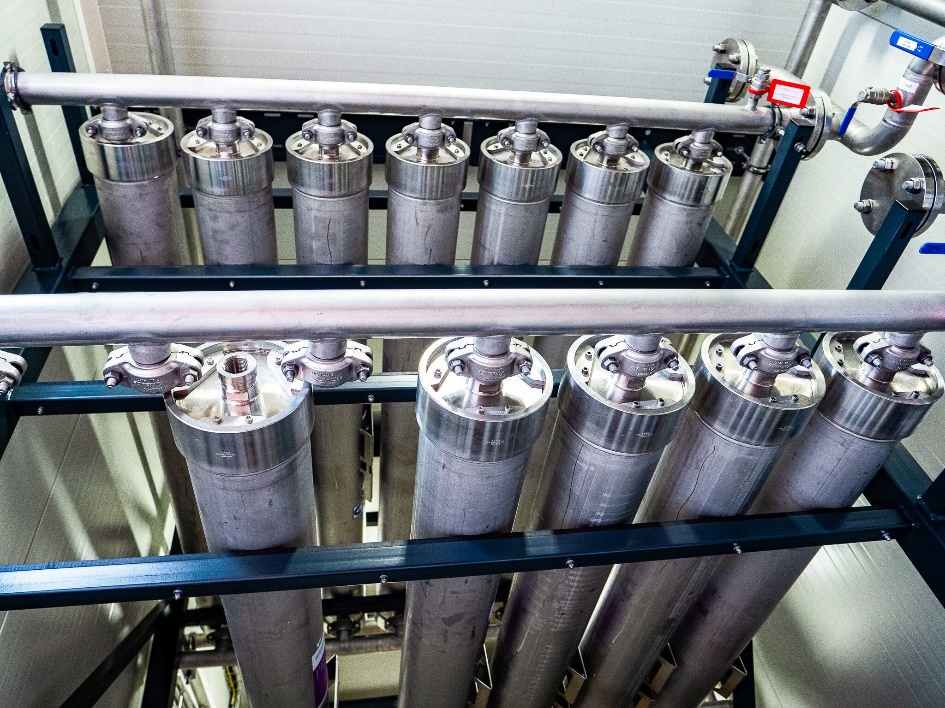
Membrane Modules: The actual separation units, often arranged in stages.
Process Control System: Automates and monitors the entire operation.
Post-treatment Section: May include odorization and gas quality sensors before grid injection.
International manufacturers supply these components as packaged systems. This ensures compatibility and performance.
Maintenance and Operational Considerations
Operating a membrane biogas plant requires attention to a few key areas. Proper care extends the system's lifespan.
Regular monitoring of inlet gas quality is essential. Contaminants like H2S and siloxanes can damage membranes over time.
Pre-treatment Upkeep: Regularly change filter elements and desiccant.
Membrane Integrity: Perform periodic performance tests to check for wear.
Pressure Monitoring: Ensure operating pressures remain within design specifications.
Data Logging: Track purity levels and energy consumption to spot trends.
With good maintenance, membranes can last for many years. This makes membrane biogas technology a durable choice.
The Role in International Biogas Upgrade Equipment
The global market for biogas upgrading is expanding rapidly. Membrane biogas technology holds a significant share.
Major equipment manufacturers in Europe, North America, and Asia offer advanced membrane systems. They compete on efficiency, cost, and service.
Standardization: Equipment is built to international safety and performance norms (ISO, ATEX).
Innovation: Ongoing research focuses on more selective and durable membrane materials.
Integration: Systems are designed to work seamlessly with different digester types and gas sources.
This technology is a pillar of the international biogas upgrade equipment manufacturing field. It supports the global renewable gas infrastructure.
Future Outlook for Membrane Biogas Technology
The future for membrane biogas upgrading looks positive. Trends point toward even better performance and lower costs.
New polymer materials and module designs are under development. These aim to reduce energy needs further and increase methane recovery rates.
Material Science: Development of membranes with higher selectivity for CO2 over CH4.
Hybrid Systems: Combining membranes with other technologies for optimal results.
Digitalization: Using AI and IoT for predictive maintenance and process optimization.
As the demand for renewable natural gas grows, so will the use of this technology. Membrane biogas systems are set to become even more common.
In conclusion, membrane biogas upgrading is a proven and efficient technology. It turns raw biogas into a valuable, clean energy source. Its role within the international biogas upgrade equipment manufacturing sector is vital for a sustainable energy future. For project developers, it represents a reliable and cost-effective path to high-quality biomethane production.
Frequently Asked Questions About Membrane Biogas
Q1: What is the typical methane loss in a membrane biogas upgrading system?
A1: Modern membrane biogas systems are highly efficient. Methane loss is typically between 1% and 3%. Advanced multi-stage systems can achieve losses below 1%. This high recovery rate is a major advantage of the technology.
Q2: How long do the membranes last before they need replacement?
A2: Membrane lifespan depends on gas quality and operating conditions. With proper pre-treatment, membranes can last between 5 to 8 years, sometimes longer. Regular performance monitoring helps plan for replacement before efficiency drops significantly.
Q3: Can membrane technology handle biogas from all types of feedstocks?
A3: Yes, but effective pre-treatment is key. Biogas from landfills, wastewater, or agricultural waste can be upgraded with membranes. The system must be designed to remove specific contaminants like siloxanes or ammonia before the gas reaches the membranes.
Q4: Is membrane biogas upgrading suitable for small-scale plants?
A4: Absolutely. The modular nature of membrane biogas systems makes them excellent for small to medium-sized applications. Units can be designed to process as little as 20-30 Nm³/h of raw biogas, offering scalability that other methods lack.
Q5: What happens to the separated CO2 from the membrane process?
A5: The CO2-rich stream is usually released to the atmosphere, as it is biogenic carbon. However, this stream is often very pure. Increasingly, it is being captured and used in greenhouses, for beverage carbonation, or even in combination with Power-to-X technologies, adding extra value to the membrane biogas process.