


News
We'll get back to you as soon as possible.
Pressure Swing Adsorption Biogas: 7 Critical Factors for Cost, Technology & Commercial Services
Biomethane demand is rising — and pressure swing adsorption biogas systems have become a workhorse for upgrading raw biogas to pipeline quality. From farm digesters to large landfill sites, project owners look at pressure swing adsorption biogas because it offers high methane recovery with a relatively small footprint. Unlike chemical scrubbing, this physical process uses adsorbent materials under pressure to separate CO₂, H₂O, and other impurities.
In the following sections, we break down seven essential aspects of pressure swing adsorption biogas that every plant developer, investor, or operator should consider. These cover core technology, applications, selection criteria, cost structures, commercial services, recent innovations, and environmental benefits. Each part delivers concise facts — no fluff, no overused AI buzzwords.
1. Core Operating Principles of Pressure Swing Adsorption Biogas Systems
Pressure swing adsorption biogas units operate on a simple cyclic principle: pressurisation, adsorption, depressurisation, and desorption. Typically, multiple vessels (adsorbers) work in parallel so that one column is always feeding product gas. The adsorbent material — often activated carbon, zeolites, or carbon molecular sieves — retains CO₂, N₂, and O₂ while letting methane pass through.
Adsorption phase: Raw biogas (40–65% CH₄, 35–50% CO₂) is compressed to 4–10 bar and fed into the adsorber. CO₂ sticks to the pore surfaces.
Depressurisation: The vessel pressure drops; CO₂ and other gases are released (off-gas) and can be sent to a flare or recycled.
Purging: A small portion of product methane may be used to flush residual impurities, boosting methane concentration to 96–99%.
Multi-bed design: Most modern pressure swing adsorption biogas skids use 4 to 12 adsorbers to maintain continuous flow and minimise pressure swings.
The entire process is dry, requires no chemicals or water, and can be fully automated — a clear advantage for remote biogas sites.
2. Primary Applications for Pressure Swing Adsorption Biogas Units
You will find pressure swing adsorption biogas installations across diverse feedstocks and project scales. Because PSA is modular, it suits both small farm‑scale plants and large centralised upgrading facilities.
Agricultural biogas: Manure and crop residue digesters often use PSA to produce vehicle fuel or grid biomethane.
Landfill gas: Even with variable methane content (35–55%), PSA can consistently yield pipeline-grade gas if pre‑treatment removes siloxanes and H₂S.
Food waste and industrial digesters: High‑strength organic waste streams pair well with pressure swing adsorption biogas due to stable gas quality.
Wastewater treatment plants: Many municipal facilities now add PSA to turn digester gas into renewable electricity or CNG for fleet vehicles.
The adaptability of PSA to fluctuating inlet compositions makes it a preferred choice for operators who deal with seasonal substrate changes.
3. Selection Guide: Choosing the Right Pressure Swing Adsorption Biogas Equipment
Selecting a pressure swing adsorption biogas system involves more than comparing price tags. Here are the main parameters that engineering firms evaluate before specifying a unit.
Feed gas composition: Methane, CO₂, H₂S, and moisture levels determine pre‑treatment needs and adsorbent type.
Target methane purity: 96% might suffice for on‑site boilers, but grid injection often requires 98%+ with strict O₂/N₂ limits.
Capacity (Nm³/h): Skid sizes range from 30 Nm³/h (small farms) to over 3000 Nm³/h (industrial parks).
Energy consumption: Typical PSA uses 0.2–0.3 kWh/Nm³ of raw gas — check compressor efficiency and possible heat recovery.
Methane slip: High‑quality pressure swing adsorption biogas systems keep methane loss below 1.5%, some even below 0.5%.
Always ask suppliers for reference plants with similar gas composition. A site visit to an operating PSA plant can reveal real‑world performance.
4. Pressure Swing Adsorption Biogas Costs: Capital and Operational Expenses
Budgeting for a pressure swing adsorption biogas plant requires splitting costs into CAPEX (equipment, installation) and OPEX (energy, maintenance, adsorbent replacement). While actual figures vary by region and capacity, general ranges help with initial planning.
CAPEX: For a 250 Nm³/h unit, equipment + installation may fall between €600,000 and €1,200,000. Larger plants have lower per‑Nm³ costs.
Compressor: Often the largest single capital item — oil‑free screw or piston compressors add 25–35% to total equipment cost.
Adsorbent replacement: After 5–8 years, zeolite or carbon media must be changed (€30,000–€80,000 depending on volume).
Electricity: At €0.12/kWh, power can represent 40% of annual OPEX — modern PSA designs cut consumption via pressure equalisation steps.
Maintenance: Valves (pneumatic actuators), sensors, and PLC backups typically require 2–3% of CAPEX per year.
Obtaining a firm quote for a pressure swing adsorption biogas system should include a 10‑year cost projection, factoring in media life and energy inflation.
5. Commercial Services for Pressure Swing Adsorption Biogas Installations
Reputable suppliers of pressure swing adsorption biogas equipment offer a range of services beyond the skid itself. These can determine whether your project runs smoothly from day one.
Feasibility and lab tests: Some vendors analyse your biogas sample and simulate PSA performance before contract signing.
Turnkey engineering: Includes piping, electrical integration, gas grid connection, and permitting assistance.
Operator training: Two‑week on‑site programmes to teach local teams how to optimise pressure swing adsorption biogas controls.
Remote monitoring: Many manufacturers now offer 24/7 cloud dashboards that flag pressure drops or valve failures early.
Service contracts: Annual visits, spare parts kits (seals, valves, filters), and adsorbent replacement planning.
When comparing bids, consider the level of post‑commissioning support. A slightly higher upfront cost often pays off through less downtime.
6. Recent Technical Advances in Pressure Swing Adsorption Biogas Equipment
Engineers continue to refine pressure swing adsorption biogas technology. These innovations lower operating costs and improve reliability, making PSA competitive even at smaller scales.
High‑capacity adsorbents: New carbon molecular sieves with higher CO₂/CH₄ selectivity reduce vessel size and energy use.
Advanced cycle control: Fast‑responding valves and pressure equalisation logic cut methane slip below 0.3% in some designs.
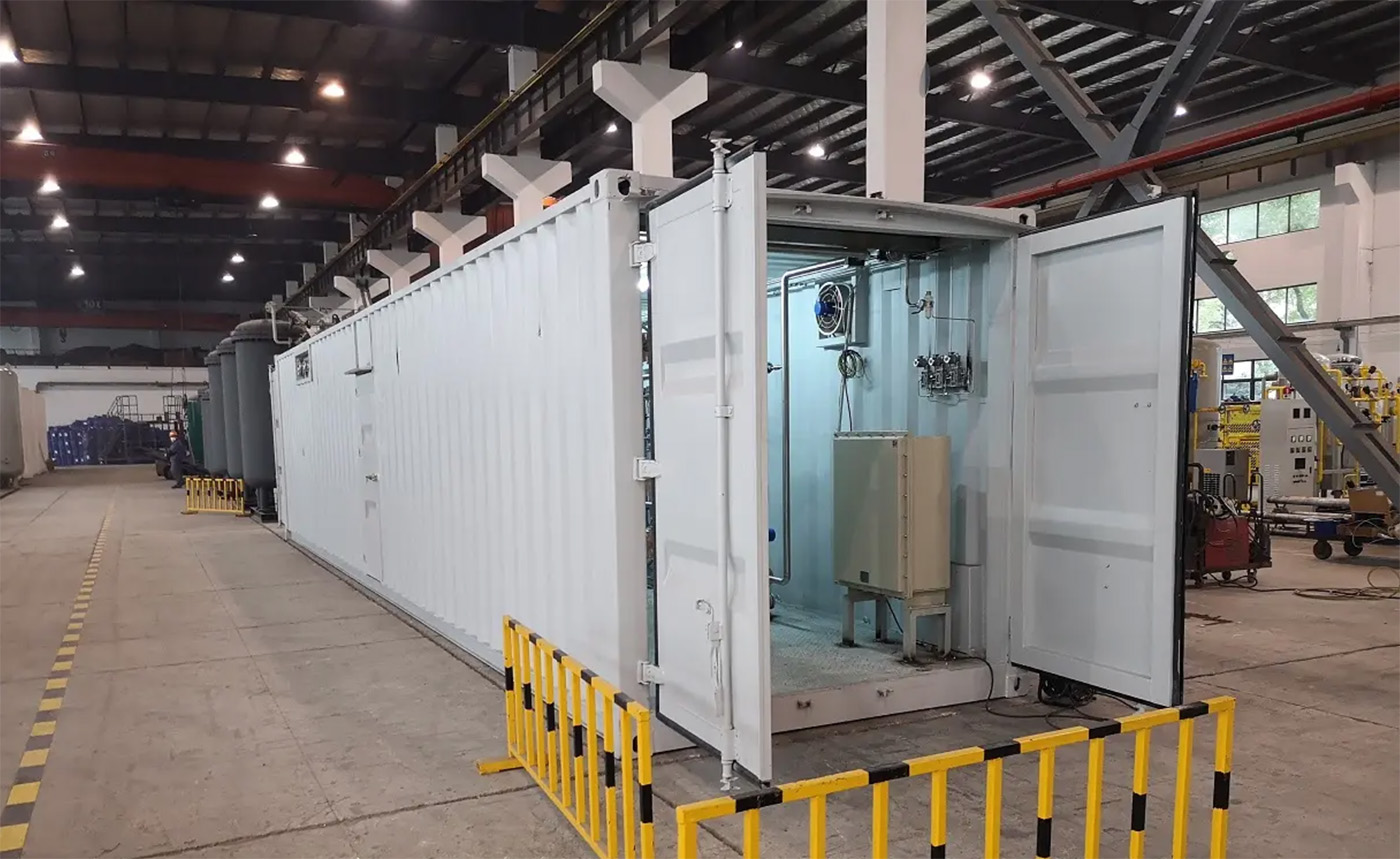
Modular, containerised units: Plug‑and‑play PSA trains that can be delivered in standard 20‑ or 40‑foot containers — ideal for remote sites.
Integration with membrane pre‑treatment: Some hybrid systems use membranes for bulk CO₂ removal followed by a small PSA polisher, slashing total power consumption.
Keep an eye on these developments if you are planning a pressure swing adsorption biogas purchase in the next 12‑24 months.
7. Environmental and Regulatory Benefits of Pressure Swing Adsorption Biogas
Upgrading with pressure swing adsorption biogas directly contributes to renewable energy targets and lower carbon intensity scores. Many jurisdictions reward biomethane with certificates or tax credits.
Methane slip control: Low methane loss means more greenhouse gas reduction — important for programmes like the California Low Carbon Fuel Standard.
Renewable identification numbers (RINs): In the US, biogas upgraded via PSA qualifies for D3 RINs under the RFS, provided it meets pipeline specs.
Waste heat utilisation: Heat from the compressor can be recovered to warm digesters, improving overall plant efficiency.
Circular economy: The CO₂‑rich off‑gas can be captured for greenhouses or industrial use, further lowering emissions.
Documenting these benefits strengthens the business case for any pressure swing adsorption biogas investment.
Frequently Asked Questions – Pressure Swing Adsorption Biogas
Making the right choices around pressure swing adsorption biogas technology can define the economic success of your biomethane project. From understanding core operating principles to evaluating long‑term commercial support, each of the seven factors discussed above plays a role. As the market for renewable gas expands, pressure swing adsorption biogas remains a proven, reliable route to turn waste streams into pipeline‑ready fuel. Use this overview as a starting point for discussions with suppliers, engineers, and financial partners — and always verify performance data with real‑world references.