


News
We'll get back to you as soon as possible.
How a Commercial Biogas Plant Turns Organic Waste into Reliable Revenue
When a city processes its food scraps or a large farm handles manure from thousands of animals, a small-scale digester won’t cut it. You need an industrial setup built for continuous operation, high gas yields, and strict environmental permits. That’s exactly what a commercial biogas plant delivers. Unlike on-farm digesters that might run only a few hours a day, commercial facilities operate 24/7, often feeding multiple feedstocks like crop residues, slaughterhouse waste, and expired grocery products.
International biogas upgrading equipment manufacturers have developed standardized solutions for these plants. A commercial biogas plant typically processes over 500 tons of organic material per year, producing enough biomethane to power hundreds of homes or fuel a fleet of garbage trucks. In this article, we’ll break down how these systems work, what they cost, and how they generate profit. You’ll also find answers to common questions at the end.
What Defines a Commercial Biogas Plant?
The line between a farm-scale digester and a commercial biogas plant comes down to three things: throughput, revenue model, and regulatory status. A commercial facility treats at least 5,000 tons of organic waste annually. It sells energy (electricity, heat, or biomethane) under long-term contracts. It also holds environmental permits that require continuous emissions monitoring and certified operators.
Many commercial plants are built near urban centers to process municipal source-separated organics. Others sit next to food processing factories or large livestock operations. The key is that a commercial biogas plant is a business first – not just a waste treatment add-on.
Core Components of a Commercial Biogas Plant
Every commercial facility shares a basic flow: reception, digestion, upgrading, and utilization. Let’s walk through each part.
Feedstock reception: Trucks dump organic waste into a concrete pit. A screw conveyor or wheel loader moves material into a shredder and then to a mixing tank. Magnets and screens remove plastic, glass, and metal.
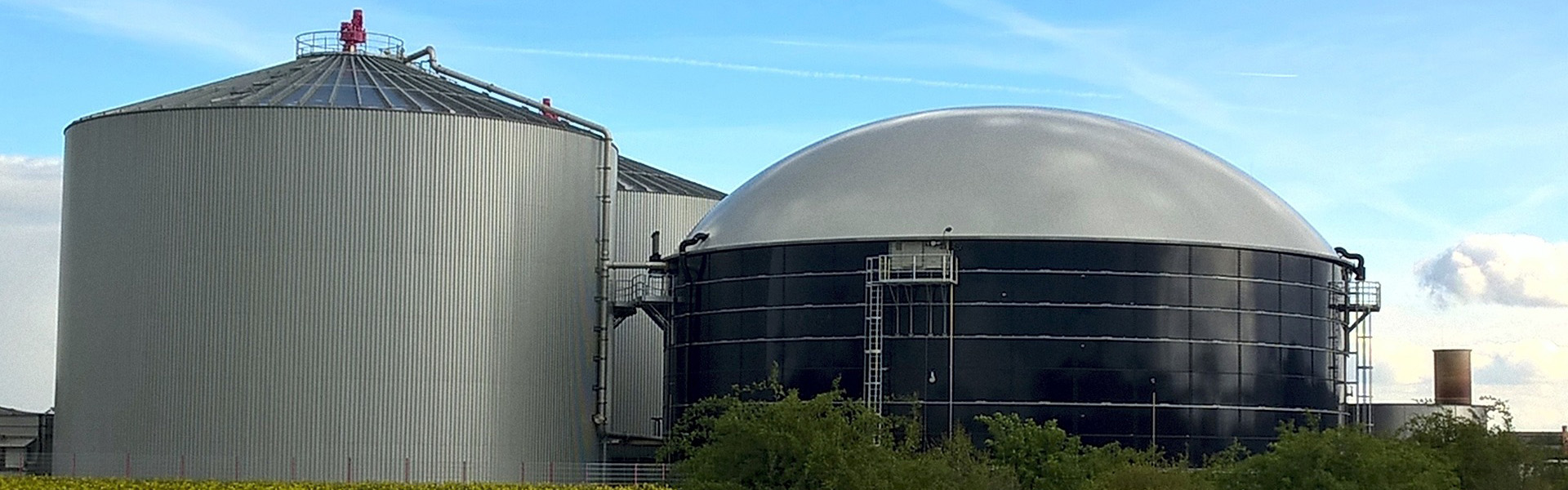
Anaerobic digesters: Commercial plants use either continuous stirred-tank reactors (CSTR) or plug-flow digesters. These are large steel or concrete tanks, often heated to 37-42°C for mesophilic digestion or 50-55°C for thermophilic. Retention time ranges from 20 to 60 days.
Biogas storage: The gas produced is stored in double-membrane roofs on digesters or in separate low-pressure gas holders. This buffer allows the upgrading system to run steadily even when gas production fluctuates.
Upgrading equipment: Raw biogas contains 50-65% methane, plus CO2, H2S, and moisture. A commercial biogas plant almost always includes a purification skid to produce pipeline-grade biomethane. Common technologies include water scrubbing, pressure swing adsorption (PSA), and membrane separation.
Compression and injection: A multi-stage compressor pushes the upgraded gas to 150-300 psi for injection into the natural gas grid or to fill cylinders for vehicle fuel.
Each component must be sized correctly. Under-sizing leads to downtime; over-sizing wastes capital. That’s why good engineering matters.
Biogas Upgrading Technologies Used in Commercial Plants
Not all upgrading methods suit every commercial biogas plant. The choice depends on gas volume, H2S levels, and local regulations for grid injection.
Water scrubbing is the oldest and most reliable. Biogas enters a packed column while water flows counter-current. CO2 dissolves into the water. The water is then regenerated by stripping CO2 in a second column. This method works well for plants producing 200-2,000 Nm³/h of raw biogas. Operating costs are moderate, but water consumption can be high in dry areas.
Pressure swing adsorption (PSA) uses vessels filled with carbon molecular sieves. At high pressure, CO2 and other impurities stick to the sieve. Methane passes through. The vessels cycle between adsorption and regeneration. PSA units are compact and produce very high methane purity (>97%). However, they consume more electricity and require dry, clean gas.
Membrane separation forces biogas through hollow fibers. CO2 permeates the fiber walls faster than methane. A two- or three-stage membrane setup can reach pipeline quality. Membranes have few moving parts and handle variable gas flows well. But they are sensitive to liquid aerosols and H2S.
Chemical scrubbing (amine) uses solvents like MEA or MDEA to absorb CO2. This technology delivers high purity with low methane slip. However, amines degrade over time and need careful handling. It’s more common in very large plants (>2,000 Nm³/h).
Most commercial biogas plants in Europe and North America choose water scrubbing or PSA. Membrane systems are gaining ground due to lower maintenance.
Revenue Streams from a Commercial Biogas Plant
A commercial biogas plant typically has three or four income sources. Relying on just one is risky.
Renewable Natural Gas (RNG) sales: Upgraded biomethane injected into a pipeline fetches the highest price. In California, RNG can sell for $25-35 per MMBtu thanks to Low Carbon Fuel Standard credits. In Europe, feed-in tariffs or renewable gas certificates add value.
Electricity and heat: Some plants run combined heat and power (CHP) engines instead of upgrading. They sell electricity to the grid and use waste heat to keep digesters warm. Power prices are lower than RNG, but CHP equipment is simpler and cheaper.
Gate fees: Waste processors pay the plant to take their organic material. Typical gate fees range from $30 to $80 per ton. For a plant handling 50,000 tons per year, that’s $1.5-4 million in revenue before selling a single cubic foot of gas.
Digestate sales: The material left after digestion is a nutrient-rich liquid or solid. It can be sold as organic fertilizer or soil amendment. Some plants separate liquid digestate for irrigation and dry the solids for bagged garden products.
A well-run commercial biogas plant can achieve payback periods of 4 to 7 years, depending on local incentives.
Siting and Permitting for a Commercial Biogas Plant
Finding the right location is often harder than choosing equipment. A commercial biogas plant needs:
Proximity to feedstock suppliers (within 15 miles to keep trucking costs low)
Access to a natural gas pipeline or electric substation
Zoning that allows industrial waste processing
Buffer distance from homes (typically 500-1,000 feet)
Water supply for cleaning and possibly scrubbing
Roads that can handle heavy trucks
Permitting involves multiple agencies: air quality (emissions from engines or flares), water quality (digestate storage), solid waste (feedstock handling), and building safety. The process can take 12 to 24 months. Many developers hire a permitting specialist early to avoid delays.
Operational Challenges and Solutions
Even a well-designed commercial biogas plant faces daily hurdles. Here are the most common and how operators solve them.
Feedstock inconsistency: Food waste changes composition by season. High fats increase biogas yield but can cause foaming. Low-fiber material like bakery waste digests too quickly, leading to acid buildup. Solution: blend multiple feedstocks and maintain a buffer tank for homogenization.
Foaming in digesters: Foam can block gas pipes and overflow tanks. Causes include overloading, sudden temperature changes, or certain detergents. Anti-foam agents (like vegetable oil emulsions) are sprayed into the digester headspace. Some plants install foam breakers or switch to foam-resistant digester designs.
H2S spikes: When sulfate-rich feedstocks (like spoiled vegetables or slaughterhouse blood) enter the system, hydrogen sulfide can jump from 500 ppm to 5,000 ppm overnight. Biological desulfurization may not keep up. Backup iron sponge media or caustic scrubbers handle the spikes.
Methane slip: Some upgrading technologies release small amounts of methane into the atmosphere. This hurts both the environment and carbon credits. Regular leak detection with infrared cameras and tuning of the PSA cycle times reduces slip below 2%.
Digestate handling: Storing liquid digestate in winter is problematic because it can freeze. Covered lagoons or heated tanks are necessary in cold climates. Solid digestate may need composting or drying before sale.
Operators who track daily gas production, pH, volatile fatty acids, and alkalinity catch problems early. Many plants use automated SCADA systems that send alerts to mobile phones.
Future Trends in Commercial Biogas Plants
The industry is moving toward smaller footprints, higher efficiency, and integrated carbon capture. Here’s what to watch.
Electrofuels: Some new plants route a portion of CO2 from upgrading into a electrolyzer, where hydrogen from water splitting reacts with CO2 to make additional methane. This turns a waste gas into more fuel.
On-site liquefaction: Instead of compressing biomethane into a pipeline, plants are installing small-scale liquefiers. Bio-LNG can be trucked to remote industrial users or used as marine fuel.
Digital twins: Operators now use real-time simulation models that predict digester behavior based on incoming feedstock data. This allows them to adjust feed rates and temperature proactively.
Carbon capture and storage (CCS): A commercial biogas plant that separates CO2 can capture that CO2, compress it, and sell it to greenhouses or beverage companies. Some plants inject CO2 into saline aquifers for permanent storage, earning carbon removal credits.
These trends are making commercial biogas more profitable and environmentally beneficial than ever.
Frequently Asked Questions (FAQ)
Q1:
How much does it cost to build a commercial biogas plant?
A1:
Costs vary widely by location and capacity. For a plant processing 30,000 tons
per year of food waste (producing about 400 Nm³/h of raw biogas), total
installed cost ranges from $8 million to $15 million. This includes digesters,
gas upgrading, grid connection, and site work. Larger plants (100,000+
tons/year) can cost $25-40 million. The per-ton capital cost drops as scale
increases.
Q2:
What’s the typical payback period for a commercial biogas plant in
2025?
A2: With current renewable fuel credits in the US (LCFS,
RINs) and similar schemes in Europe, payback ranges from 4 to 8 years. Without
incentives, payback extends to 10-15 years. The most profitable plants have
three revenue streams: gate fees, RNG sales, and digestate. Payback is shortest
when the plant is located near a high-carbon fuel market like California or
Germany.
Q3:
Can a commercial biogas plant run on food waste?
A3: Yes,
but with precautions. Pure food waste digests quickly and can cause
acidification if the organic loading rate is too high. Most successful plants
blend food waste with a buffer material like manure, crop residues, or green
waste. A common mix is 60% food waste and 40% manure or grass silage. This
provides trace elements and alkalinity to stabilize pH.
Q4:
How much land is needed for a commercial biogas plant?
A4: A
plant processing 50,000 tons per year typically requires 2 to 5 acres. This
includes the reception hall, digesters (often 3-4 tanks each 30 feet tall), gas
storage, upgrading skid, compressors, digestate storage ponds, and a truck
turnaround area. Additional land may be needed for a buffer zone or future
expansion. Always add 30% extra space for maintenance access.
Q5:
What certifications should a commercial biogas plant have?
A5:
For grid injection in the US, gas must meet ASTM D7900 or Pipeline and Hazardous
Materials Safety Administration (PHMSA) standards. European plants require ISO
13624 or DVGW G 260. Equipment manufacturers should be certified under ISO 9001
(quality) and ISO 14001 (environment). For digestate as fertilizer, look for
OMRI listing in the US or the EU’s End-of-Waste criteria.
A commercial biogas plant selling carbon
credits needs Verra or Gold Standard certification.
Q6:
What happens if the biogas upgrading system fails?
A6: Most
plants have a backup flare. When the upgrading skid goes down, raw biogas is
automatically diverted to the flare and burned. This prevents methane emissions.
Redundant components (spare compressor, spare blower) are standard in commercial
designs. Some plants also have a secondary upgrading technology on standby, such
as a small PSA unit for emergencies. Downtime is typically less than 48 hours
per year for well-maintained systems.
Q7:
Can a commercial biogas plant use waste from multiple sources like a
landfill?
A7: Landfill gas is different from anaerobic digester
gas – it contains more oxygen and siloxanes. You cannot feed solid landfill
waste into a wet digester. However, some commercial plants co-locate with
landfills and process leachate or landfill gas separately. For mixed municipal
solid waste, mechanical-biological treatment plants are a different category.
Stick to source-separated organics for a conventional commercial
biogas plant.
Building and operating a commercial biogas plant is not a small undertaking. It requires serious capital, technical expertise, and patience with permits. But the rewards are equally substantial. You take waste that would otherwise emit methane in a landfill and turn it into pipeline gas, vehicle fuel, or electricity. You create jobs, reduce odors, and produce fertilizer that closes the nutrient loop. With the right equipment from experienced international manufacturers, a commercial biogas plant becomes a long-term asset – not just an environmental statement. If you’re evaluating a project, start with a feasibility study that includes feedstock testing and gas grid conversations. The market for renewable gas is only growing.