


News
We'll get back to you as soon as possible.
How a Modern Biogas Treatment Plant Optimizes Gas Purity and Operational Efficiency
For industries looking to convert organic waste into a reliable energy source, achieving high-purity biomethane remains the ultimate technical challenge. Raw biogas typically contains carbon dioxide, hydrogen sulfide, ammonia, and siloxanes. These impurities limit its direct use in engines, boilers, or gas grids. This is where a well‑designed biogas treatment plant makes the difference.
A proper treatment system does not simply clean the gas. It protects downstream equipment, boosts methane concentration, and reduces maintenance headaches. In international biogas upgrading markets, plant operators now demand compact, energy‑efficient solutions that can handle variable feedstock. The following sections explain the core technologies, design choices, and operational realities of modern biogas treatment.
Membrane Technology: The Core of Modern Biogas Upgrading
Membrane separation has become a leading method for biogas upgrading. The principle is straightforward: high‑pressure gas flows through hollow fiber membranes. Carbon dioxide, water vapor, and residual oxygen permeate through the membrane wall faster than methane. The result is a methane‑rich retentate stream ready for injection into natural gas networks or for liquefaction.
Many project developers favor membrane systems because they are modular and scalable. There are no chemical absorbents to replace and no thermal regeneration steps. For a biogas treatment plant designed to process 500 m³/h of raw gas, membrane skids can be arranged in parallel to match flow variations.
Another practical advantage is fast startup and shutdown. Unlike amine scrubbing or water wash systems, membrane units reach full specification within minutes. This responsiveness fits agricultural biogas plants that operate seasonally or landfill gas projects with declining flow rates over time.
Pretreatment for Tough Feedstocks: Straw, Stalks, and Fibers
Raw material preparation is often underestimated. Many biogas plants struggle with fibrous feedstocks such as wheat straw, corn stover, or empty fruit bunches (EFB). These materials float, form crusts, and degrade slowly in conventional digesters. Without proper pretreatment, the downstream biogas treatment plant receives gas with highly variable methane content.
A practical solution combines coarse shredding with milling and pelletizing. This reduces particle size to 2‑3 mm. More importantly, steam explosion pretreatment breaks down lignin structures. Operators report that fermentation time drops from 28 days to only 3‑7 days after steam explosion.
The capital investment for digester tanks can then be reduced by up to 90%. This is a game changer for project economics. Smaller tanks mean lower civil works costs and less land use. The steam explosion reactor also pasteurizes the substrate, reducing pathogen load in the digestate.
Containerized and Mobile Treatment Units
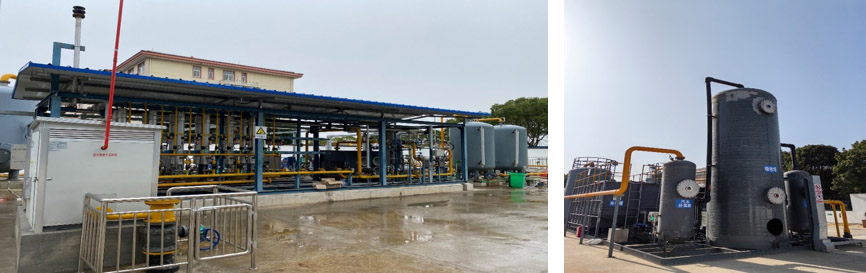
Not every site has the space or budget for a large building. Containerized treatment plants address this constraint directly. A 40‑foot container can house a complete H₂S removal skid plus a three‑stage membrane system. The final CO₂ content reliably stays below 2%. For bio‑LNG production, further polishing brings CO₂ down to under 50 ppm.
Mobile units offer another benefit: they can be relocated when a feedstock source dries up or when a project moves to a new site. This flexibility appeals to waste management companies that operate temporary landfill gas extraction wells. Instead of building a permanent structure, they lease a containerized biogas treatment plant for the duration of the project.
Operators also appreciate the factory‑prewired and pretested nature of these units. On‑site commissioning takes days, not months. Remote monitoring via industrial IoT platforms is already integrated into many modern containerized systems.
Corrosion Control and Gas Storage with GFS Bolted Tanks
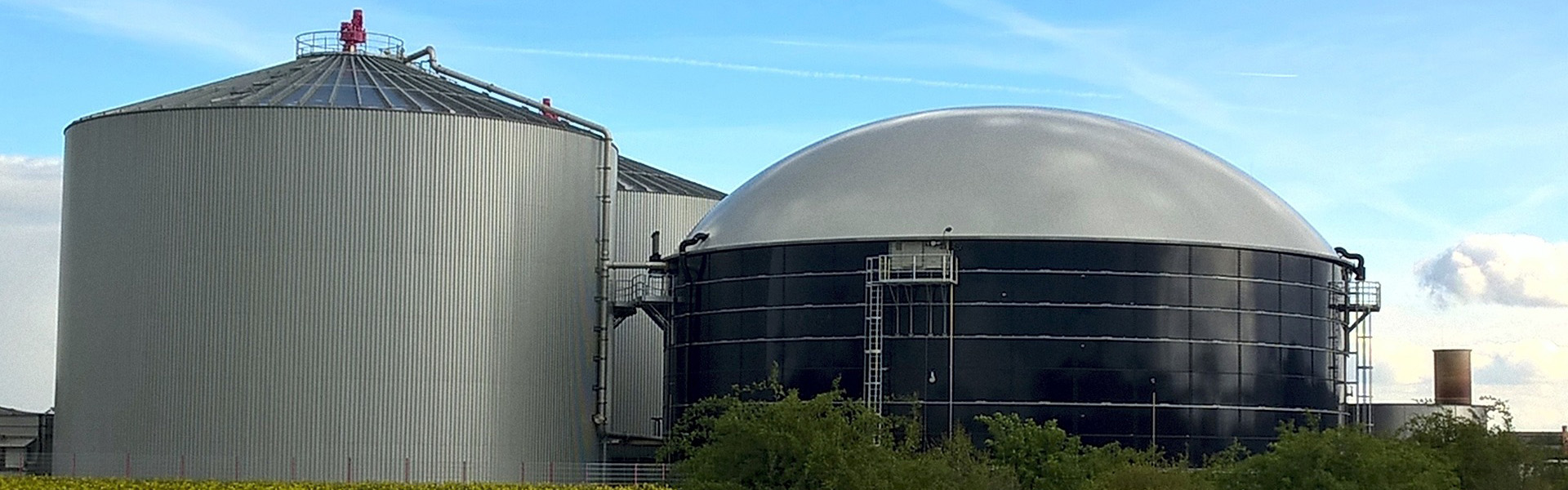
Biogas contains hydrogen sulfide, which forms corrosive sulfuric acid when condensed. Steel tanks and piping are vulnerable. Glass‑Fused‑to‑Steel (GFS) bolted tanks provide a proven solution. The enamel coating is fired at high temperatures, creating a hard, inert surface that resists both acidic attack and UV degradation.
These tanks arrive as standardized panels and bolt together on site. Compared to welded steel or concrete tanks, GFS tanks install faster and require less heavy lifting equipment. For a biogas treatment plant located in a remote area, this logistics advantage is substantial.
GFS tanks also serve as buffer storage for raw biogas or upgraded biomethane. They can be designed for pressures up to a few hundred millibars. Adding a flexible membrane roof allows gas holder integration. The same bolted construction method applies to digestate storage and process water tanks, standardizing spare parts across the facility.
Managing CO₂ and Producing Bio‑LNG
The separated CO₂ stream from a membrane system is not just waste. With CO₂ liquefaction technology, this stream becomes a valuable byproduct. Liquid CO₂ finds markets in food processing, beverage carbonation, and greenhouses. Recovering and selling CO₂ improves the overall carbon intensity (CI) score of the project.
For bio‑LNG production, the methane product must be both pure and cold. A typical liquefaction skid integrates gas pretreatment, cryogenic cooling to -162°C, and storage in one modular package. Energy consumption for these small‑scale skids can be below 0.35 kWh per normal cubic meter of LNG. Lead times for such skids are as short as 5‑7 months because of standardized designs.
LNG reduces the gas volume by a factor of 600, making it economical to transport to off‑grid industrial users or marine fueling stations. The same liquefaction technology can also process associated petroleum gas or coalbed methane, as demonstrated in projects like the 90,000 m³/day plant in Linfen City, China.
Sludge Management and Circular Economy
Digester sludge is often overlooked. However, dewatered sludge has a calorific value comparable to low‑grade lignite. A complete biogas treatment plant should include sludge pelletizing. The steps involve multi‑disc screw presses or filter presses, low‑temperature mesh drying, hammer milling, and pelletizing. The final sludge pellets can fire a gasifier for combined heat and power (CHP) generation.
This approach closes the loop. The biogas plant generates renewable gas and electricity while producing a solid biofuel from the digestate. No wet storage lagoons are needed. The reduced odor and lower transport costs are additional benefits.
Operators also avoid landfill disposal fees. In many regions, regulations are tightening against landfilling organic residues. Pelletizing sludge turns a liability into a revenue stream. The same equipment line can process biochar or RDF pellets, giving a plant multiple product options.
Avoiding Common Operational Mistakes
New operators sometimes skip biogas cooling before the treatment unit. Hot, saturated gas quickly damages membrane fibers and accelerates corrosion. A simple heat exchanger and condensate trap are cheap insurance. Another frequent error is ignoring siloxanes from landfill gas or sewage gas. Siloxanes form abrasive silica deposits in engines and on membrane surfaces. Activated carbon filtration upstream of the membranes solves this problem at a reasonable cost.
Regular membrane performance monitoring is also essential. Methane slip (methane lost in the permeate stream) should be checked weekly. If slip exceeds 2%, the membranes may need cleaning or replacement. Fortunately, membrane skids are designed so that individual modules can be swapped without shutting down the entire plant.
Why Project Finance Looks Favorably on Membrane Treatment
Banks and investors scrutinize technology risk. Membrane systems have a track record stretching back two decades in biogas applications. They involve no hazardous chemicals, no high‑temperature thermal oxidizers, and no complex solvent regeneration. This lower risk profile translates into better loan terms and lower insurance premiums.
Additionally, membrane plants can be offered under equipment leasing or project investment structures. A developer does not need to raise the full capital cost upfront. The equipment provider may take an equity stake or accept payments from operating cash flow. This aligns incentives and reduces financial pressure during the commissioning phase.
Summary of Design Priorities
When planning a new facility, focus on these five priorities:
Feedstock flexibility – Include shredding and steam explosion for fibrous materials.
Corrosion resistance – Specify GFS tanks and stainless steel piping where wet H₂S is present.
Modularity – Use containerized membrane skids that can be expanded later.
CO₂ recovery – Add liquefaction if there is a local market for liquid CO₂.
Sludge valorization – Install pelletizing to convert digestate into a sellable biofuel.
A well‑executed biogas treatment plant delivers three bottom‑line benefits: high methane purity, low operating costs, and multiple revenue streams from CO₂ and sludge pellets. The technology is mature, the risks are understood, and the financial models work.
Frequently Asked Questions
Q1: What is the typical methane recovery rate of a membrane-based biogas treatment plant?
A1: Modern membrane systems achieve methane recovery rates of 98% to 99.5%. The exact figure depends on the number of membrane stages and the target CO₂ concentration. Two‑stage systems usually recover 98%, while three‑stage configurations can exceed 99%. Methane slip is kept below 1% in well‑designed plants.
Q2: How do I remove hydrogen sulfide before the biogas treatment plant?
A2: Biological desulfurization with limited oxygen injection into the digester headspace is the most cost‑effective method. For higher H₂S loads (above 1,500 ppm), iron chloride dosing into the substrate or an iron oxide filter vessel is preferred. Always remove H₂S before the gas enters membrane skids to avoid corrosion.
Q3: Can the same biogas treatment plant process landfill gas and agricultural biogas?
A3: Yes, but landfill gas requires additional siloxane removal using activated carbon or a refrigeration trap. Landfill gas also has lower methane content (35‑50%) compared to agricultural biogas (50‑65%). Membrane area and compression power must be adjusted accordingly. A mobile containerized plant can be reconfigured for different gas types within a few days.
Q4: What is the typical energy consumption for upgrading biogas to biomethane?
A4: Total electrical consumption ranges from 0.20 to 0.35 kWh per normal cubic meter of raw gas. This includes compression for membrane separation, blowers for desulfurization, and any heating for pretreatment. High‑efficiency systems with energy recovery on the permeate stream operate at the lower end of that range.
Q5: Is CO₂ liquefaction profitable for a small biogas treatment plant?
A5: Profitability starts at raw gas flows above 300 m³/h (about 500 kg/h of CO₂). Below that, the capital cost of liquefaction equipment is hard to justify. However, multiple small plants can share a mobile liquefaction unit that rotates between sites. Some operators also sell compressed CO₂ gas instead of liquid, which requires less investment.