


News
We'll get back to you as soon as possible.
How Biogas to Natural Gas Conversion Works: Technologies, Costs & Performance
Turning raw biogas into pipeline‑grade natural gas is no longer a niche experiment. Wastewater treatment plants, farms, and landfills now routinely produce biomethane that meets grid specifications. The core process is called biogas to natural gas conversion. It removes carbon dioxide, hydrogen sulfide, ammonia, and siloxanes. The final product is interchangeable with fossil natural gas. For project developers, the choice of upgrading technology directly determines methane yield, operating costs, and revenue from byproducts like liquid CO₂.
A complete biogas to natural gas conversion system does more than clean gas. It protects engines, compresses biomethane for injection or vehicle fuel, and handles digestate responsibly. The following sections explain what works in the real world, based on operating plants across Europe, North America, and Asia.
Why Biogas to Natural Gas Conversion Needs a Complete System
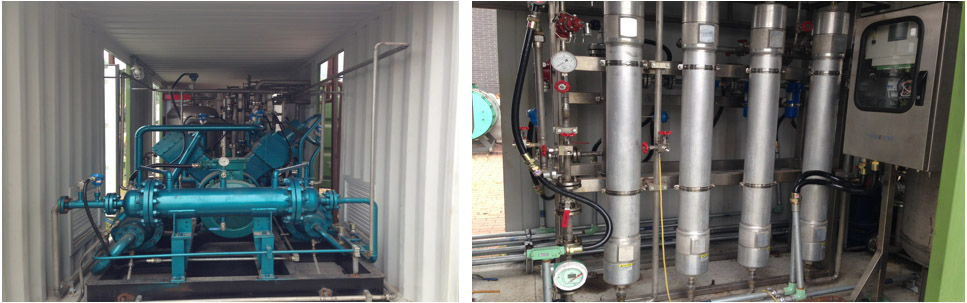
Many first‑time buyers assume a single machine does everything. That is not correct. Raw biogas from an anaerobic digester contains 50‑65% methane, 35‑50% CO₂, plus traces of H₂S, moisture, and oxygen. A successful biogas to natural gas conversion line includes four stages: pretreatment (H₂S and moisture removal), upgrading (CO₂ separation), polishing (trace component removal), and compression. Skipping any step leads to equipment failure or off‑spec gas.
Operators who try to cut costs on pretreatment often regret it. H₂S corrodes pipelines and membranes. Moisture freezes in winter or promotes bacterial growth. A professional plant integrates every step into a balanced flow sheet. That is why turnkey solutions have become the industry norm.
Membrane Separation: The Industry Standard for Upgrading
Membrane technology dominates the biogas upgrading market. The principle is simple: compress raw gas to 8‑15 bar, then pass it through hollow fiber membranes. CO₂, water vapor, and O₂ permeate through the membrane wall faster than methane. The retained methane stream reaches 96‑99% purity.
Why do manufacturers prefer membranes? There are no chemical absorbents to heat or replace. No water treatment is needed. The system starts and stops in minutes. For a typical biogas to natural gas conversion plant processing 500 m³/h, three membrane stages in series bring CO₂ below 2%. If bio‑LNG is the goal, a fourth stage reduces CO₂ to under 50 ppm.
Membrane life exceeds 10 years with proper gas cleaning. The modules are compact. A 40‑foot container can house a complete three‑stage membrane unit plus H₂S removal. That containerized approach cuts civil works costs by half compared to a stick‑built building.
Pretreatment for Difficult Feedstocks: Steam Explosion and Pelletizing
Not all biogas comes from easy feedstocks like food waste or manure. Corn stover, wheat straw, rice straw, and empty fruit bunches (EFB) are fibrous and slow to degrade. In a standard digester, these materials take 28 days or more to break down. They also float and form crusts.
A smarter approach combines coarse shredding, milling to 2‑3 mm particles, and steam explosion. The steam explosion reactor treats biomass at high temperature and pressure, then suddenly releases pressure. This ruptures lignin structures. Fermentation time drops to 3‑7 days. Digester tank volume and capital cost fall by 90%. For a large biogas to natural gas conversion project, this reduction in tankage is a game changer.
The same pretreatment line can pelletize the digested sludge after the tank. Those pellets become an alternative fuel for power plants or cement kilns. Two revenue streams from one facility: biomethane and solid biofuel.
Containerized Plants for Faster Deployment and Relocation
Building a permanent concrete building for gas upgrading takes 12‑18 months. A containerized plant arrives on a flatbed truck and is online in 2‑4 weeks. All piping, wiring, and controls are factory‑preinstalled and tested. The operator only connects power, raw gas, and biomethane outlet.
Containerized biogas to natural gas conversion units are especially popular for landfill gas projects. Landfill gas composition changes over years. When methane content drops below 35%, it may be uneconomical to upgrade. With a containerized plant, you simply unbolt it and move to a new site. Leasing companies offer these units on 5‑year terms. No long‑term commitment to a fixed asset.
The container also serves as the control room. Industrial IoT sensors monitor membrane performance, methane slip, and compressor hours. Alerts go to the operator’s phone. Remote troubleshooting reduces site visits by 60%.
Corrosion Control with Glass‑Fused‑to‑Steel (GFS) Bolted Tanks
Raw biogas contains H₂S. When combined with moisture, it forms sulfuric acid. Standard carbon steel corrodes within months. Stainless steel is expensive. The practical solution is Glass‑Fused‑to‑Steel (GFS) bolted tanks.
GFS starts as high‑strength steel panels. A vitreous enamel layer is fused to the steel at high temperature. The resulting surface is inert, hard, and acid‑resistant. Panels bolt together on site with sealant. No welding, no field coating.
For a biogas to natural gas conversion facility, GFS tanks store raw biogas, upgraded biomethane, and digestate. The same bolted construction method works for all three. Standardization reduces spare parts inventory. Compared to concrete tanks, GFS installs in half the time. Compared to welded steel, there is no risk of pinhole corrosion.
CO₂ Recovery and Bio‑LNG Production
The CO₂ stream separated by membranes is not waste. With a liquefaction skid, it becomes liquid CO₂ (LCO₂). Food processing plants, greenhouses, and beverage manufacturers buy LCO₂. Recovering CO₂ improves the project’s carbon intensity score and adds a revenue stream.
For bio‑LNG, the upgraded biomethane must be cooled to -162°C. A modular LNG liquefaction skid does this efficiently. Energy consumption stays below 0.35 kWh per normal cubic meter of LNG. The skid includes gas pretreatment, cryogenic cooling, and storage. Lead times are only 5‑7 months because of standardized designs.
Bio‑LNG reduces gas volume by 600 times. This makes it economical to transport to off‑grid industrial users or marine fueling stations. A single biogas to natural gas conversion plant can thus serve three markets: grid injection, vehicle fuel (CNG or LNG), and liquid CO₂ sales.
Sludge Management as a Revenue Stream
Many upgrading plants ignore the digestate. That is a mistake. Dewatered sludge has a calorific value of 12‑18 MJ/kg, similar to lignite. Pelletizing that sludge turns it into a sellable solid biofuel.
The process line includes: a multi‑disc screw press or filter press for dewatering, a low‑temperature mesh dryer, hammer mills, and a pellet mill. The final sludge pellets fire a gasifier for combined heat and power (CHP). Or they are sold to cement plants as alternative fuel.
Adding sludge pelletizing to a biogas to natural gas conversion project eliminates wet storage lagoons. Odor is reduced by 90%. Transport costs drop because water is removed. In regions where landfill disposal of organic waste is banned or expensive, pelletizing becomes a compliance necessity.
Common Operational Mistakes and How to Avoid Them
Mistake one: skipping gas cooling before the membrane skid. Hot, saturated gas damages membrane fibers. Always install a heat exchanger and condensate trap after the compressor. Keep gas temperature below 40°C.
Mistake two: ignoring siloxanes. Landfill gas and sewage gas contain siloxanes from personal care products and detergents. Siloxanes form abrasive silica deposits on membranes and in engines. Activated carbon filtration upstream of the membranes removes siloxanes at low cost.
Mistake three: infrequent membrane monitoring. Methane slip (methane lost in the permeate) should be checked weekly. If slip exceeds 2%, membranes may need cleaning or replacement. Most systems allow individual module replacement without plant shutdown.
Mistake four: undersized compressors. Membrane systems require stable inlet pressure. A compressor sized at of average flow will struggle during peak production. Oversize by 20% and add a small buffer tank.
Financial and Leasing Models for Biogas Upgrading
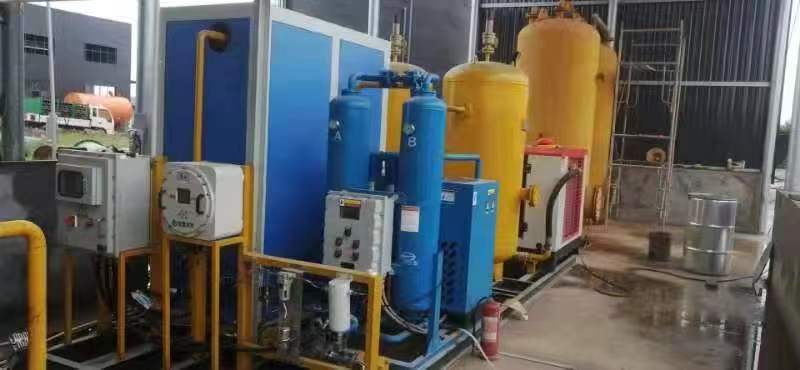
Not every operator wants to buy equipment outright. Equipment leasing and project investment models are increasingly common. A developer pays a monthly fee for the containerized upgrading plant. The supplier retains ownership and is responsible for maintenance. After 5‑7 years, the operator may buy the plant at residual value or return it.
This model works well for farms and landfill operators with seasonal cash flows. The upfront capital requirement is near zero. The monthly lease payment is tax‑deductible as an operating expense. Some equipment suppliers also take an equity stake in the project, aligning their incentives with the operator’s success.
For a biogas to natural gas conversion project using membrane technology, total capital cost ranges from $2,500 to $4,000 per m³/h of raw gas capacity. Leasing can reduce the first year’s cash outlay by 80%. The payback period for a well‑sited plant is typically 3‑5 years, depending on local natural gas prices and renewable energy credits.
Why the Industry is Moving to Turnkey Solutions
Piecemeal engineering – buying a compressor from one vendor, membranes from another, and controls from a third – creates integration headaches. Turnkey suppliers deliver a fully assembled, tested plant. One phone number for support. One warranty. One set of manuals.
Turnkey providers also offer investment and operation services. They will finance, build, and even operate the biogas to natural gas conversion plant for a share of the revenue. This “biogas as a service” model removes technical risk for the feedstock owner.
The best turnkey plants include pretreatment (shredding, steam explosion), membrane upgrading, CO₂ liquefaction, and sludge pelletizing in one integrated flow sheet. They are built in ISO containers for fast deployment. They use GFS tanks for corrosion‑free storage. And they are monitored via industrial IoT.
When you evaluate suppliers, ask for references from plants with similar feedstock. Visit a running facility. Check methane slip numbers from the last 12 months. A good plant will have less than 1% methane slip and more than 98% methane recovery.
Frequently Asked Questions
Q1: What is the typical methane purity after biogas to natural gas conversion?
A1: For grid injection, methane purity must reach 96‑98% with CO₂ below 2‑3%. For bio‑CNG vehicle fuel, purity often exceeds 98%. For bio‑LNG, CO₂ must be below 50 ppm to prevent freezing in the liquefaction process. Three‑stage membrane systems routinely achieve 99% methane purity.
Q2: How much does a biogas to natural gas conversion plant cost?
A2: Capital costs range from $2,500 to $4,000 per m³/h of raw biogas capacity for a complete membrane‑based system including pretreatment and compression. A 500 m³/h plant therefore costs roughly $1.25‑2 million. Containerized units are at the higher end of that range due to factory integration. Leasing options reduce upfront payments.
Q3: Can I remove H₂S and upgrade biogas in the same unit?
A3: Not effectively. H₂S must be removed before the membrane skid, otherwise it corrodes the membrane modules and reduces their life. The most common method is biological desulfurization (air injection into the digester) followed by a polishing step with iron oxide or activated carbon. A separate H₂S removal vessel is always required.
Q4: What happens to the separated CO₂ stream?
A4: It can be vented, but that wastes a revenue opportunity. With a CO₂ liquefaction skid, the stream becomes liquid CO₂ (purity 99.9%) for sale to food, beverage, or greenhouse industries. Alternatively, it can be compressed into cylinders for industrial use. Some plants use the CO₂ for pH control in their own wastewater treatment.
Q5: How long do membrane modules last in real operation?
A5: With proper pretreatment (H₂S below 10 ppm, no siloxanes, gas temperature below 40°C), membrane modules last 8‑12 years. Methane slip gradually increases over time. Many operators replace modules at year 10 as a preventive measure. Individual modules can be swapped without shutting down the entire plant.
Q6: Can the same plant upgrade biogas from different feedstocks?
A6: Yes, but you must adjust for varying methane content. A plant designed for 55% methane will handle 45‑65% without hardware changes, but output flow will vary. For extreme swings (e.g., landfill gas at 35% methane to food waste digestate at 65% methane), you need variable speed compressors and membrane modules that can be staged differently. A programmable logic controller (PLC) handles this automatically.
Q7: Is biogas to natural gas conversion profitable without government subsidies?
A7: In regions with natural gas prices above $8/MMBtu and where CO₂ or sludge pellets can be sold, yes. The payback period is typically 3‑5 years. With subsidies (renewable fuel credits, carbon credits, or feed‑in tariffs), payback can drop below 3 years. The key is feedstock cost – manure or crop residues are cheap; food waste may have a tipping fee (revenue). Run a detailed model before committing.