


News
We'll get back to you as soon as possible.
Biogas from Palm Oil Waste: Turning POME into Profit and Clean Energy
The palm oil industry has long battled a difficult reputation regarding environmental sustainability. However, a significant shift is happening right now in mills across Indonesia, Malaysia, and Latin America. The massive amounts of wastewater generated during production are no longer just a disposal headache.
Instead, plant owners are realizing that biogas from palm oil waste is a viable, lucrative energy source. For mill operators and investors, the conversation has moved from "how do we treat this waste?" to "how do we capture and upgrade this gas?"
This transition represents a massive opportunity for the renewable natural gas (RNG) sector. It allows mills to cut operational costs, reduce carbon footprints, and even generate new revenue streams by selling biomethane.
The Hidden Energy in Palm Oil Mill Effluent (POME)
Every ton of crude palm oil produced generates about 2.5 to 3.0 cubic meters of Palm Oil Mill Effluent (POME). Historically, this acidic, brownish liquid was treated in open lagoons. While this reduces the biological oxygen demand (BOD), it creates a massive side effect: methane.
Open lagoons release methane directly into the atmosphere. Methane is a greenhouse gas significantly more potent than carbon dioxide.
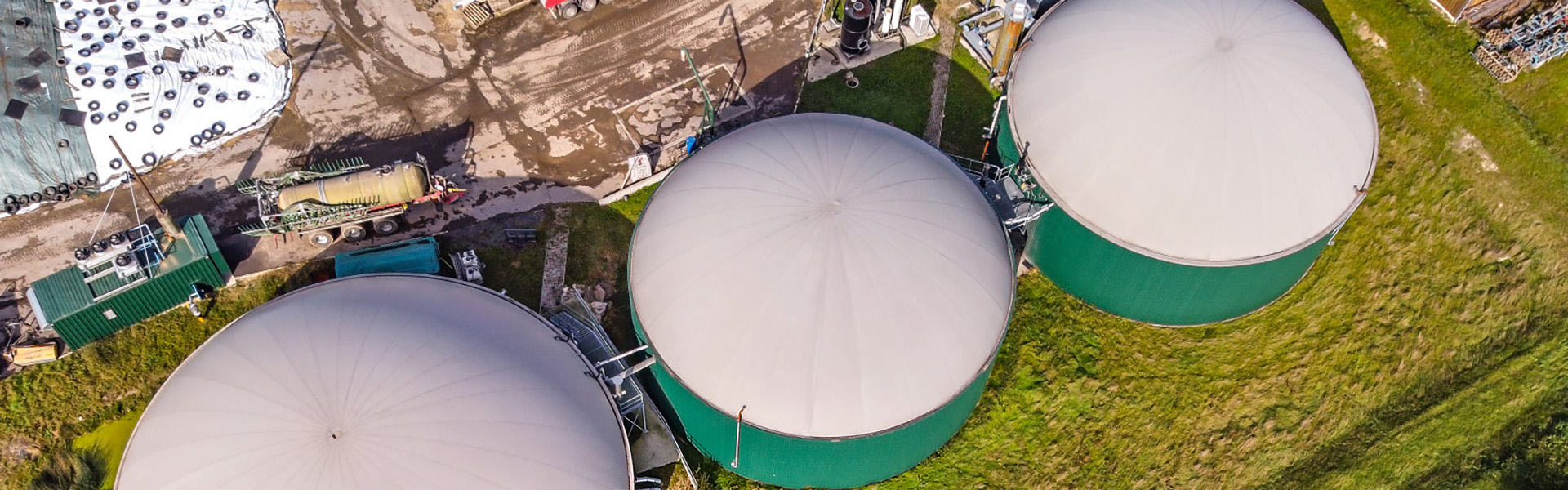
By capping these lagoons or using closed tank digesters, mills can capture this gas. The organic load in POME is incredibly high, making it one of the most efficient feedstocks for anaerobic digestion. The result is a consistent flow of raw biogas that can be used for power generation or further refined.
How the Anaerobic Digestion Process Works
The science behind generating biogas from palm oil waste relies on biology. When POME is pumped into an anaerobic reactor, bacteria break down the organic matter in the absence of oxygen.
This process usually occurs in two main stages:
Acidogenesis: Bacteria break down long-chain organic compounds into volatile fatty acids.
Methanogenesis: A different set of bacteria converts these acids into methane (CH4) and carbon dioxide (CO2).
Temperature control is vital here. Most modern systems operate in the mesophilic range (30-40°C) or thermophilic range (50-60°C). Thermophilic digestion often yields gas faster but requires more precise management to prevent system instability.
From Raw Biogas to Electricity
The most immediate use for the captured gas is electricity generation. Most palm oil mills operate in remote areas, often running on diesel generators or burning shell and fiber.
Raw biogas usually contains about 55% to 65% methane. Even without high-level purification, this gas can be fed into biogas engines.
This replaces fossil fuels directly. A standard mill processing 60 tons of Fresh Fruit Bunches (FFB) per hour can generate enough biogas to produce 1 to 2 MegaWatts of electricity. This is often more than the mill needs for its own operations, allowing the excess power to be sold to the national grid if infrastructure permits.
The Role of Biogas Upgrading Equipment
While generating electricity is a good start, the real value lies in upgrading. To align with international standards and renewable energy markets, the gas must be refined. This is where advanced manufacturing technology comes into play.
Raw biogas contains impurities like hydrogen sulfide (H2S), moisture, and siloxanes, along with a large percentage of CO2. To create biomethane (which is chemically similar to natural gas), the CO2 and impurities must be removed.
Several technologies are currently dominating the market for upgrading biogas from palm oil waste:
Membrane Separation Technology
This is increasingly the preferred method for POME biogas projects. High-selectivity membranes separate methane from carbon dioxide based on the permeation rates of different gases.
Membrane systems are modular, meaning mills can scale up capacity easily. They are robust and can achieve methane purity levels exceeding 97% or even 99%. For equipment manufacturers, this is a key selling point: high efficiency with a relatively small physical footprint.
Pressure Swing Adsorption (PSA)
PSA systems use adsorbent materials to trap impurities under high pressure while letting methane pass through. When the pressure is released, the impurities are desorbed.
PSA is a mature technology and very effective. However, it involves moving parts and complex valve systems, which require regular maintenance—a factor to consider for mills in remote locations.
Chemical Scrubbing
This method uses amine solutions to absorb CO2. It is highly efficient and results in very low methane loss. However, it requires significant heat input to regenerate the amine solution, which can increase operational costs unless waste heat is readily available.
Handling High Hydrogen Sulfide (H2S) Levels
One specific challenge with biogas from palm oil waste is the sulfur content. POME biogas can have H2S levels ranging from 2,000 to over 5,000 ppm. This is corrosive to engines and upgrading equipment.
Before the gas enters a membrane or PSA system, it must go through a desulfurization unit.
Biological scrubbers are common, using bacteria to eat the sulfur. Alternatively, chemical scrubbers or activated carbon filters are used for polishing the gas to ensure H2S levels drop near zero. Equipment manufacturers must provide robust pre-treatment systems to protect the expensive upgrading machinery.
Economic Viability and ROI
Investing in biogas infrastructure is capital intensive. Owners always ask: "When will I see the money back?"
The return on investment (ROI) depends on the end-use of the gas.
If the project is strictly for self-consumption (replacing diesel), the payback period is typically 3 to 5 years. Diesel is expensive, and the savings add up immediately.
If the project involves upgrading to biomethane for export (Bio-CNG) or grid injection, the CapEx is higher. However, the revenue potential is also significantly higher. In markets where carbon credits or renewable energy certificates (RECs) are traded, the value of the gas increases.
Furthermore, effectively treating POME reduces regulatory fines. Environmental agencies are tightening discharge standards. A biogas plant solves compliance issues while generating income, making the economic case very strong.
Operational Challenges in the Field
It is important to be realistic. Running a biogas plant requires a different skillset than running a palm oil mill.
One common issue is the fluctuation in feedstock quality. The oil content and acidity of POME change depending on the season and milling efficiency. If the digester becomes too acidic, the methanogenic bacteria can die, halting gas production.
Sedimentation is another hurdle. POME contains suspended solids that can settle in the digester tanks, reducing their effective volume over time. Modern mixing systems and sludge removal designs are essential to keep the system running for years without needing a total shutdown for cleaning.
The Global Push for Decarbonization
The demand for biogas from palm oil waste is being driven by global pressure. The European Union and other Western markets are demanding sustainable palm oil.
Mills that can prove they capture methane and use renewable energy have a competitive advantage. They can obtain certifications like RSPO (Roundtable on Sustainable Palm Oil) and ISCC (International Sustainability and Carbon Certification) more easily.
These certifications often allow producers to sell their Crude Palm Oil (CPO) at a premium. Therefore, the biogas plant is not just an energy asset; it is a marketing tool for the core product.
Future Trends: Bio-CNG and Bio-LNG
The future looks toward mobility. Instead of just making electricity, more projects are converting POME biogas into compressed natural gas (Bio-CNG).
Trucks that transport Fresh Fruit Bunches usually run on diesel. Converting these fleets to run on Bio-CNG produced on-site creates a closed-loop system. The mill powers its own logistics.
For larger mills, liquefying the gas into Bio-LNG is becoming a possibility. This allows the fuel to be transported over long distances to industrial customers who need off-grid gas solutions. This requires advanced cryogenic equipment, representing the next frontier for technology suppliers in this space.
Why Equipment Quality Matters
For developers looking to source technology, price is often the first filter. However, in the context of POME, durability is king.
The tropical environment is harsh. High humidity and heat, combined with the corrosive nature of the gas, destroy inferior equipment. Stainless steel piping, high-grade instrumentation, and weather-proof control panels are non-negotiable.
Suppliers who offer remote monitoring capabilities are also gaining market share. Being able to troubleshoot a gas compressor or a membrane unit from a control room in Europe or China, while the equipment is in rural Borneo, is a massive service advantage
The narrative surrounding palm oil is changing. It is no longer just about agriculture; it is about bio-energy.
Generating biogas from palm oil waste is a practical, proven solution that addresses environmental concerns while improving the bottom line. For the equipment manufacturing industry, this sector demands robust, high-efficiency upgrading systems capable of handling difficult conditions.
As technology improves and pressure for decarbonization mounts, the POME lagoon will no longer be seen as a waste pit, but as a gold mine of renewable energy.
Frequently Asked Questions (FAQ)
Q1: How much biogas can be generated from one ton of POME?
A1: Generally, one cubic meter of POME can generate roughly 28 cubic meters of biogas. Since the waste is highly organic, the yield is consistent, provided the anaerobic digestion process is well-managed and temperature-controlled.
Q2: What is the difference between raw biogas and biomethane?
A2: Raw biogas typically contains about 55-65% methane, with the rest being CO2 and impurities like H2S. Biomethane is the result of upgrading that biogas. It has been cleaned and separated to contain 95% or more methane, making it interchangeable with natural gas.
Q3: Can existing open lagoons be converted for biogas capture?
A3: Yes. Many mills use lagoon covering systems. High-density polyethylene (HDPE) sheets are used to cover the lagoons to trap the gas. While this is cheaper than building steel tanks, it is less efficient and offers less control over the process conditions like stirring and heating.
Q4: How do you handle the high acidity of palm oil waste in the digester?
A4: POME is acidic. To maintain a healthy pH for the bacteria (around 6.8 to 7.5), operators often recirculate treated sludge or add alkaline substances initially. Once the biological process stabilizes, the system usually buffers itself, but constant pH monitoring is required.
Q5: Is it profitable for small palm oil mills to install biogas plants?
A5: For very small mills (under 30 tons of FFB per hour), the CapEx might be high relative to the return. However, smaller, modular biogas systems are entering the market. If the mill spends a lot on diesel or faces strict environmental fines, the investment can still make financial sense.