


News
We'll get back to you as soon as possible.
6 Game-Changing Breakthroughs in the Latest Technology in Biogas Production
If you work in renewable energy or manage a biogas plant, you already know the old ways of upgrading raw biogas come with headaches. High energy costs, methane slip, and bulky equipment have been the norm for years. But things are shifting fast. The latest technology in biogas production is rewriting what’s possible, especially for equipment manufacturers who build upgrading systems.
Membrane separation, water scrubbing, pressure swing adsorption (PSA), and biological methanation have all seen major leaps forward. In this post, I’ll walk you through six real-world advances that are changing how we turn biogas into biomethane. No fluff, just what works right now in the field.
What Exactly Is the Latest Technology in Biogas Production for Upgrading Equipment?
Before diving into specific innovations, let’s get clear on what the latest technology in biogas production actually means for upgrading equipment. Upgrading is the process of removing CO₂, H₂S, and other impurities from raw biogas to produce pipeline-grade or vehicle-fuel biomethane.
Traditional systems relied on fixed pressure vessels and chemical solvents. Today, the newest designs integrate smart sensors, adaptive control loops, and modular components. For example, some membrane units now self-adjust feed pressure based on real-time gas composition.
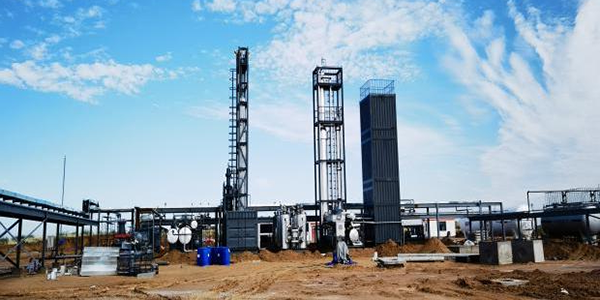
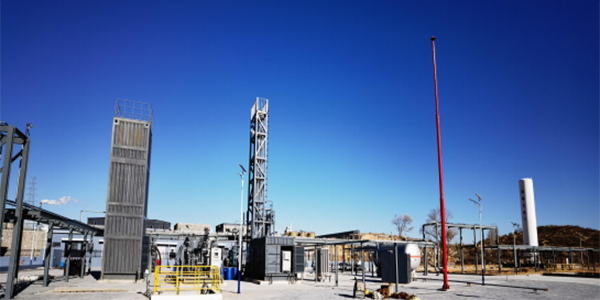
Equipment manufacturers are also moving away from one-size-fits-all designs. Instead, they offer skid-mounted, containerized systems that can be deployed in weeks, not months. This flexibility is a direct result of the latest technology in biogas production applied to engineering and manufacturing.
1. AI-Driven Process Control in Biogas Upgrading
One of the biggest pain points in biogas upgrading is maintaining stable output when feed gas quality fluctuates. Farms and landfills rarely produce consistent biogas. Methane content can swing between 45% and 65% within a day.
Enter AI-powered control systems. The latest technology in biogas production now includes machine learning algorithms that predict composition changes based on historical data and live sensor inputs. A German equipment maker, for instance, recently released a PSA system that uses neural networks to adjust cycle times every 30 seconds.
Results? Methane recovery rates climbed above 99% in field tests, and energy use dropped by 18%. For plant operators, this means less downtime and fewer manual adjustments. The system also logs performance anomalies, alerting technicians before a failure occurs.
2. Next-Gen Membrane Materials with Higher Selectivity
Membrane separation has been around for decades, but old polymer membranes suffered from two flaws: low CO₂/CH₄ selectivity and rapid fouling. The latest technology in biogas production has solved both issues with mixed-matrix membranes (MMMs).
These new membranes embed metal-organic frameworks (MOFs) or zeolites into a polymer matrix. One Danish supplier now offers a commercial MMM that achieves a CO₂/CH₄ selectivity of 55, compared to 30 for standard membranes. That means less methane lost to the permeate stream.
Moreover, the surface chemistry resists condensation of water vapor and trace siloxanes. In a six-month trial at a Dutch wastewater treatment plant, the MMM module showed only 2% performance drop, while conventional membranes lost 15%. Equipment manufacturers are rapidly adopting this latest technology in biogas production to shrink their system footprints.
3. Cryogenic Upgrading with Integrated CO₂ Liquefaction
Cryogenic separation was once considered too expensive and energy-intensive for small to medium biogas plants. But new designs have changed that equation. The latest technology in biogas production now includes compact cryogenic units that not only produce 99% pure biomethane but also capture liquid CO₂ as a saleable byproduct.
How does it work? The biogas is cooled to -85°C under pressure. CO₂ freezes out as a solid or liquid, while methane stays gaseous. A Swedish manufacturer recently launched a containerized cryogenic unit that uses a patented heat exchanger network to recover 90% of the cooling energy.
Compared to water scrubbing, this system uses 30% less electricity per cubic meter of biomethane. And because CO₂ is captured as a high-purity liquid (food-grade quality), operators can sell it to greenhouses or beverage companies. This dual-revenue model is why many plant owners now ask equipment suppliers about the latest technology in biogas production in cryogenics.
4. Biological Methanation – Direct Hydrogen Injection into Anaerobic Digesters
Biological methanation is not entirely new, but recent breakthroughs have made it commercially viable. Instead of removing CO₂, you add hydrogen (from electrolysis) to convert CO₂ into additional methane. The latest technology in biogas production here involves trickle-bed reactors and in-situ hydrogen injection within the main digester.
A Swiss consortium demonstrated a system where hydrogen is bubbled through the digester at controlled rates. Specialized hydrogenotrophic archaea consume the H₂ and CO₂ to produce methane. The result is a 40% increase in total methane output from the same organic feedstock.
For equipment makers, this means designing hydrogen distribution manifolds, gas recirculation loops, and safety interlocks that meet ATEX standards. Several US manufacturers now offer retrofittable hydrogen injection skids. They integrate seamlessly with existing anaerobic digesters, turning a simple biogas plant into a power-to-gas facility. If you want to stay competitive, this latest technology in biogas production is where R&D dollars are flowing.
5. Electrochemical Upgrading – No Moving Parts, No Solvents
Imagine upgrading biogas with no compressors, no rotating equipment, and no chemical solvents. That’s the promise of electrochemical CO₂ separation. The latest technology in biogas production includes solid-state electrochemical cells that use voltage to drive CO₂ through a selective ion-conducting membrane.
A startup in California has field-tested a 50 Nm³/h unit. Raw biogas enters one side of the cell, and an applied potential of 1.8V pushes CO₂ ions across the membrane. The remaining methane stream exits at 98% purity with less than 0.5% methane slip.
Because there are no moving parts, maintenance costs are near zero. The only consumable is the electrode catalyst, which lasts over 20,000 hours. Equipment manufacturers are exploring hybrid systems where electrochemical cells handle bulk CO₂ removal, and a small PSA polishes the final product. This latest technology in biogas production is still maturing, but early adopters report payback periods under three years.
6. Modular, Remote-Monitored PSA Systems with Rapid Changeover
Pressure swing adsorption has been a workhorse for decades, but traditional PSA units are heavy on valves and require skilled operators. The latest technology in biogas production has introduced modular PSA skids with remote monitoring and automatic valve sequencing.
One Italian manufacturer now ships PSA units that fit inside a 20-foot container. Each module handles 100 Nm³/h of raw biogas. You can stack four modules to process 400 Nm³/h. The control system uses predictive maintenance algorithms – it tells you exactly when a valve will fail, based on cycle count and pressure data.
What’s truly new is the rapid adsorbent changeover design. Instead of taking the whole unit offline for two days, you swap pre-filled cartridges in under two hours. A single technician can do it with a pallet jack. For plant operators in remote locations, this latest technology in biogas production means uptime above 98% and fewer emergency service calls.
Final Thoughts: Why the Latest Technology in Biogas Production Matters for Equipment Manufacturers
If you design, build, or sell biogas upgrading systems, you cannot ignore these six shifts. The latest technology in biogas production is moving toward higher efficiency, lower methane slip, and smarter automation. Membrane selectivity has doubled. Cryogenic units now capture saleable CO₂. Electrochemical cells promise zero moving parts.
Equipment buyers are no longer satisfied with 1980s technology. They want data-driven, modular, and low-maintenance solutions. As a manufacturer, your challenge is to integrate these advances without blowing up costs. Start by retrofitting one subsystem – say, replace your old PLC with an AI controller, or test a mixed-matrix membrane cartridge.
The companies that adopt the latest technology in biogas production today will dominate the biomethane market tomorrow. Those that hesitate will lose bids to more agile competitors. The good news? The core technologies are proven. Now it’s about smart packaging and reliable field support.
Frequently Asked Questions (FAQ)
Q1: What is the single most efficient latest technology in biogas production for upgrading to biomethane right now?
A1: Based on 2025 field data, cryogenic upgrading with integrated CO₂ liquefaction offers the highest overall efficiency when you factor in energy use, methane recovery (>99.5%), and byproduct revenue. However, for plants under 200 Nm³/h, next-gen membrane systems (mixed-matrix membranes) provide better cost efficiency because they have lower capital costs and no moving parts.
Q2: How does the latest technology in biogas production reduce methane slip compared to older systems?
A2: Older water scrubbers and PSA systems often had methane slip rates of 2–5%. The latest technology uses multi-stage membrane cascades, AI-controlled PSA cycle timing, and electrochemical cells that physically prevent methane from crossing the membrane. For example, new PSA units with real-time composition feedback keep slip below 0.5%. Cryogenic systems freeze CO₂ so effectively that methane loss is virtually zero.
Q3: Can I retrofit the latest technology in biogas production into my existing 10-year-old upgrading plant?
A3: Yes, but it depends on the component. You can easily add AI control software to an existing PSA or membrane system – most modern PLCs have open communication ports. Swapping old polymer membranes for mixed-matrix membrane cartridges is also a direct retrofit. However, converting to electrochemical or cryogenic systems requires new vessels and piping, so it’s better to plan that for a full rebuild.
Q4: What is the typical payback period for investing in the latest technology in biogas production equipment?
A4: Payback varies by technology and plant size. For AI-driven control upgrades, payback is often 6–12 months from energy savings alone. Mixed-matrix membrane retrofits pay back in 18–24 months due to higher methane output. Cryogenic units with CO₂ sales can achieve payback in 2–3 years. Electrochemical systems are still premium-priced, so expect 3–4 years unless electricity is very cheap.
Q5: Which region leads in adopting the latest technology in biogas production for upgrading equipment?
A5: Europe remains the leader, especially Germany, Denmark, and Sweden, because of strong biomethane grid injection mandates and carbon taxes. However, North America is catching up fast – the US Inflation Reduction Act has spurred investments in membrane and cryogenic upgrades. China is also rapidly deploying PSA systems with AI control, mainly for industrial biogas from food waste. For equipment manufacturers, the hottest market right now is India, where new livestock waste policies are driving demand for compact, low-cost upgrading solutions.