


News
We'll get back to you as soon as possible.
Biogas CNG Plant: Produce Renewable Vehicle Fuel from Organic Waste
Around the world, fleet operators and waste managers are discovering a reliable way to cut fuel costs and lower emissions: building a biogas cng plant. Instead of letting organic waste rot in landfills, these facilities capture the natural gas released during digestion. Then they upgrade it to pure methane and compress it into compressed natural gas (CNG). The result is a low-carbon fuel that can power trucks, buses, and even cars. For businesses that generate food waste, manure, or crop residues, a biogas cng plant turns a disposal problem into a profit center.
Many operators hesitate because they remember older biogas systems that were finicky and expensive. That has changed. Modern equipment, like the membrane separators and steam explosion reactors from OPM (a member of the Chongqing Gearbox group), deliver high methane yields with minimal downtime. When you combine efficient pretreatment, robust upgrading, and smart compression, a biogas cng plant can pay for itself in just a few years. Below we break down the technology, costs, and practical steps to get started.
Why a biogas cng plant Beats Flaring or Electricity Generation
Many small biogas plants simply flare the gas or run a generator. Flaring wastes the energy. Electricity generation loses efficiency and requires expensive grid connections. In contrast, upgrading to CNG captures the highest value for the gas. CNG sells at a premium to natural gas, especially in transportation markets.
A biogas cng plant also fits perfectly with existing fueling infrastructure. Many truck stops and municipal bus depots already have CNG dispensers. You can deliver the biomethane directly by pipeline or even in tube trailers. The fuel is carbon-neutral because the CO₂ released when burning it was originally captured by plants. Some projects even qualify for carbon credits or renewable fuel credits like D3 RINs under the US Renewable Fuel Standard.
Financially, the numbers work well for medium to large waste streams. A facility processing 50 tons of food waste per day can produce enough biomethane to fuel 50 heavy trucks daily. With diesel prices volatile, switching to homegrown CNG provides a hedge. And as carbon taxes rise, the value of renewable CNG will only increase.
Core Technology: From Raw Biogas to Pipeline-Grade CNG
Building a biogas cng plant requires five main steps: feedstock pretreatment, anaerobic digestion, biogas upgrading, compression, and storage. Each step must work smoothly to get a high-quality fuel.
Pretreatment (Steam Explosion)
Lignocellulosic materials
like straw, corn stalks, or bagasse resist bacterial breakdown. Without
pretreatment, digesters take 60 days to break them down, and methane yield is
low. OPM’s steam explosion reactor solves this. High-pressure steam is applied,
then suddenly released. The explosive decompression ruptures cell walls. The
resulting slurry mixes completely with water, eliminating floating layers and
blockages. Fermentation time drops from 60 days to just 3 to 7 days. This
reduces the required digester volume by 90%, slashing capital costs.
Anaerobic Digestion
In the digester, bacteria convert
organic matter into raw biogas (50–65% methane, 35–45% CO₂, plus trace H₂S).
Modern digesters use mixing and heating to speed up the process. With good
pretreatment, you get higher gas yields per ton of feedstock.
Biogas Upgrading (Membrane Separation)
This is the heart
of a biogas cng plant. Raw biogas must be cleaned to remove CO₂, H₂S, and
moisture. OPM’s three-stage membrane system does this efficiently. The membranes
selectively permeate CO₂ and impurities, leaving a methane stream with less than
2% CO₂. The system fits inside a 40-foot container, making it mobile and easy to
install. Unlike water scrubbing or PSA, membrane systems have no moving parts,
require no chemicals, and consume less electricity. H₂S is removed in the same
skid, so no separate desulfurization step is needed.
Compression and Storage
After upgrading, the biomethane
is compressed to 3,600 psi (250 bar) using a CNG compressor. The compressed gas
is stored in cascades of cylinders. From there, it can be dispensed directly
into vehicle tanks or loaded into tube trailers for transport. The same
compressor can also feed the gas into a natural gas pipeline if grid injection
is more profitable.
Choosing the Right Equipment for Your Biogas CNG Plant
Not all upgrading systems are equal. When you plan a biogas cng plant, look for proven components that minimize operating costs. Here are key selection criteria:
Methane Purity – For vehicle fuel, you need at least 96% methane. OPM’s membrane systems deliver 98%+ with less than 2% CO₂. That meets EN 16723 and ASTM D4806 standards.
Energy Efficiency – Membrane upgrading consumes about 0.2 to 0.3 kWh per cubic meter of raw biogas. That’s half the energy of water scrubbing. Ask for a performance guarantee.
Footprint and Modularity – A containerized system allows you to expand easily. You can start with one 40-ft container and add more as gas volume grows. OPM’s units are pre-piped and pre-wired, so installation takes days, not months.
Durability in Harsh Conditions – Biogas contains corrosive H₂S. Make sure the membrane housing and valves are made of 316 stainless steel. OPM uses marine-grade materials because their parent company builds gearboxes for ships and wind turbines.
Low Maintenance – Bearings and gearboxes are common failure points. OPM pellet mills and other rotating equipment use gearboxes with wind-turbine-grade precision (gear accuracy 0.08 μm). No bearings inside roller shells means no grease cost and longer life. The gearbox warranty is the longest in the industry.
Integration with CO₂ Recovery – An optional CO₂ liquefaction module captures the separated CO₂. You can sell liquid CO₂ to beverage companies, greenhouses, or for enhanced oil recovery. This improves the overall carbon intensity score and adds another revenue stream.
Feedstock Flexibility: What Can You Put Into a Biogas CNG Plant?
One advantage of modern plants is the wide range of organic waste they can handle. Common feedstocks include:
• Food waste from restaurants, supermarkets, and food processors.
•
Agricultural residues – corn silage, wheat straw, rice straw, manure.
•
Wastewater sludge from municipal treatment plants.
• Landfill gas – though
this has higher nitrogen and oxygen levels, requiring PSA plus membrane
treatment.
• Industrial organic waste – from breweries, dairies, and biofuel
plants.
OPM’s steam explosion pretreatment is especially valuable for high-fiber feedstocks like straw. Without explosion, those materials would take months to digest and leave a lot of methane trapped. With it, degradation time falls to a few days, and methane harvest rises by 11% or more.
For wet feedstocks like food waste, a simple macerator may be enough. But mixing different waste types (co-digestion) often gives the best biogas yields. A well-designed biogas cng plant can adjust its feed blend to maximize gas production based on seasonal availability.
Costs and Payback Period for a Biogas CNG Plant
Capital costs vary widely based on scale and site conditions. For a plant processing 20,000 tons of organic waste per year (about 50 tons per day), total installed cost typically falls between $3 million and $6 million. This includes the digester, upgrading system, compressor, and storage.
The key to fast payback is low operating expenses and high methane yield. Membrane systems cut electricity use. Steam explosion reduces digester volume and retention time. OPM’s pellet mills for digestate solid processing create a second revenue stream (organic fertilizer pellets).
Here is a realistic scenario: A plant with 1,000 m³/hr raw biogas flow produces about 600 m³/hr of biomethane after upgrading. At a CNG sales price of $1.20 per gasoline gallon equivalent (GGE), that equals roughly $0.45 per cubic meter. Annual revenue from gas alone is about $2.3 million. Add in gate fees for waste reception ($30–50 per ton) and CO₂ sales, and payback drops to 3–5 years. With available grants or carbon credits, it can be even shorter.
Compare that to flaring: zero revenue. Or electricity: typical efficiency is only 35%, so you lose 65% of the energy value. CNG utilization is nearly efficient because the fuel goes directly into an engine.
Real-World Examples: Operating Biogas CNG Plants
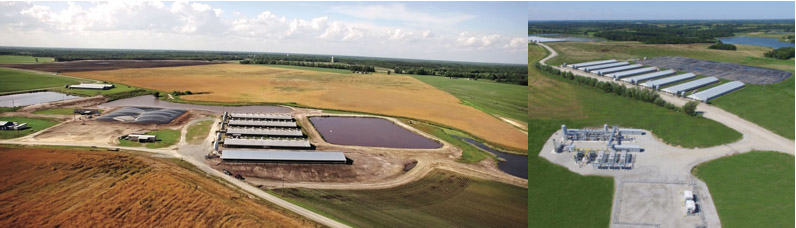
Several OPM customers have built successful facilities. In Europe, a cooperative of 200 dairy farmers installed a membrane upgrading plant to convert manure and grass silage into CNG. They fuel their milk trucks and tractors with it, saving 70% on diesel costs. The digestate is pelletized and sold as organic fertilizer.
In Southeast Asia, a palm oil mill uses steam explosion to treat empty fruit bunches. The biogas cng plant produces enough biomethane to run 50 trucks that transport palm oil to the port. The mill’s wastewater treatment pond used to emit foul odors; now it generates profit.
In North America, a landfill gas project combined PSA with membrane technology to handle high nitrogen content. The upgraded gas is compressed into CNG and sold to a nearby transit authority. The project earned carbon offsets under California’s Low Carbon Fuel Standard (LCFS).
These examples show that the technology works in different climates, feedstocks, and regulatory environments. The key is selecting a supplier with proven turnkey capability. OPM has over 150 turnkey projects worldwide, including pellet mills, steam explosion reactors, and upgrading plants.
How to Start Your Own Biogas CNG Plant Project
Ready to move forward? Follow this step-by-step approach:
1. Feedstock assessment – Measure how many tons per day of organic waste you can secure. Sign long-term supply agreements with restaurants, farms, or municipalities.
2. Gas utilization agreement – Find a buyer for the CNG. This could be your own fleet or a nearby fueling station. Pipeline injection may be an alternative if gas price is attractive.
3. Technology selection – Choose a supplier like OPM that offers integrated design: pretreatment + digester + membrane upgrading + compression. Single-source supply avoids finger-pointing during commissioning.
4. Permitting – Biogas cng plants need air permits, wastewater permits, and fuel certifications. Start early.
5. Financing – Many banks offer green energy loans. Also look for USDA grants, EPA’s RFS credits, or state-level incentives.
6. Construction and commissioning – With containerized systems, construction is fast. OPM provides on-site technical support and training.
Do not underestimate the importance of robust after-sales support. Choose a manufacturer that stocks spare parts and offers remote monitoring. OPM’s gearboxes are designed for 15-year lifespan, and the company provides warranty coverage that is unmatched in the industry.
The transition to renewable CNG is accelerating. Fleet owners want low-carbon fuel, and waste producers want to avoid landfill fees. A biogas cng plant bridges that gap perfectly. With modern upgrading technology, the economics are better than ever. The only question now is: will you be an early adopter or a late follower?
Frequently Asked Questions (FAQ)
Q1: What purity of methane does a biogas CNG plant need to produce
vehicle fuel?
A1: Most vehicle engines require at least 96% methane
with less than 2% CO₂ and no hydrogen sulfide. OPM’s membrane upgrading achieves
98%+ methane, exceeding the standard for CNG. The gas must also be dried to a
dew point of -40°C to prevent freezing in high-pressure storage.
Q2: Can a biogas CNG plant process food waste and agricultural
residues together?
A2: Yes, co-digestion often improves gas yields
because different waste types balance nutrients and pH. However, high-fiber
materials like straw need steam explosion pretreatment first. OPM’s reactor
works for both wet and dry feedstocks, making co-digestion straightforward.
Q3: How much does it cost to maintain a membrane upgrading
system?
A3: Membrane systems have very low maintenance costs. You
should replace the membrane modules every 5–8 years, depending on gas
cleanliness. Annual costs are typically 1–2% of the initial equipment price.
There are no chemical purchases, and only occasional filter changes. Compare
that to water scrubbing, which requires treating the scrubbing water and
replacing packing material.
Q4: Is a biogas CNG plant profitable without government
subsidies?
A4: Yes, if you have low-cost feedstock and a nearby CNG
buyer at retail prices. Many plants today operate profitably with gate fees for
waste and CNG sales at $1.50–2.00 per GGE. Subsidies like RINs or LCFS credits
are a bonus but not required. The key is scale: plants processing over 30,000
tons of waste per year usually see payback under 5 years.
Q5: What is the typical lifespan of a biogas CNG
plant?
A5: With proper maintenance, the anaerobic digester and
concrete work last 20+ years. Membrane skids and compressors are typically
replaced after 10–15 years. OPM’s gearboxes are rated for 15 years minimum. Many
plants built in the early 2000s are still running with upgraded controls. The
longest-lived components are the storage tanks and piping, which can last 30
years.
Q6: Do I need to remove siloxanes and H₂S before membrane
upgrading?
A6: Yes, but OPM’s three-stage membrane system includes
an integrated H₂S removal stage. Activated carbon or iron sponge polishes the
gas before it enters the membranes. Siloxanes (from personal care products)
require additional activated carbon. A gas analysis will tell you which
contaminants are present. Most food waste has low siloxanes, while landfill gas
has higher levels.
Q7: Can I expand my biogas CNG plant later if more waste becomes
available?
A7: Absolutely. Choose modular equipment like
containerized membrane units. You can install one 40-ft container for 200 m³/h
of raw gas, then add a second unit when waste volumes increase. OPM’s steam
explosion reactors are also modular. Plan your digester with extra hydraulic
retention time capacity from the start, or build a second digester tank
later.
For a detailed quote on a biogas cng plant tailored to your feedstock and location, contact OPM’s engineering team. They provide free feedstock analysis and a full economic projection.