


News
We'll get back to you as soon as possible.
How to Maximize Methane Yield and Purity in a Modern Biogas Production Plant
Industrial carbon reduction and renewable gas integration rely heavily on the conversion of organic waste into high-value energy streams. Operating a biogas production plant requires a comprehensive understanding of biological decomposition, physical separation, and chemical gas conditioning. Raw biogas, primarily composed of methane and carbon dioxide, must undergo thorough processing to meet the standards required for grid injection or vehicle fuel. By addressing process mechanics and upgrading methodologies, operators can secure reliable biogas yields and maintain consistent gas purity.
Feedstock Characterization and Pre-Treatment Protocols
The performance of any anaerobic digestion system is directly tied to the quality and preparation of the incoming raw materials. Different organic waste streams present unique physical and chemical characteristics that dictate the design of the processing equipment.
Organic Fraction of Municipal Solid Waste
Municipal organic waste contains high levels of biodegradable matter but is often contaminated with plastics, metals, and glass. Processing this stream requires mechanical separation systems, including trommel screens, magnet separators, and hydro-pulpers, to isolate the organic slurry. Maintaining a consistent total solids content is necessary to prevent mechanical wear on downstream pumps and mixers.
Agricultural Residues and Livestock Manure
Lignocellulosic materials such as straw, corn stover, and animal manure offer substantial biogas potential but feature complex structural matrices. Mechanical maceration using high-shear shredders reduces particle size to under 12 millimeters, increasing the specific surface area available for enzymatic attack during hydrolysis. Thermal pre-treatment, operating at temperatures between 140°C and 160°C, can further break down hemicellulose bonds, facilitating faster biological degradation.
Industrial Wastewater Sludge
Sewage sludge from industrial or municipal treatment facilities is characterized by high water content and variable chemical oxygen demand. Thermal hydrolysis processes are frequently applied to break cell walls in secondary sludge, releasing soluble organic compounds. This step lowers the viscosity of the digestate, allowing higher organic loading rates within the digester vessels.
Biochemical Process Dynamics within a Biogas Production Plant
The conversion of solid organic matter into gaseous fuel occurs inside anaerobic bioreactors through four interconnected biochemical phases. Each phase is carried out by distinct groups of microorganisms that require specific environmental conditions to thrive.
Hydrolysis: Extracellular enzymes secreted by hydrolytic bacteria break down complex polymers (proteins, carbohydrates, lipids) into soluble monomers (amino acids, sugars, fatty acids). This phase serves as the rate-limiting step for complex lignocellulosic feedstocks.
Acidogenesis: Acidogenic bacteria convert the soluble monomers into volatile fatty acids, alcohols, lactic acids, along with carbon dioxide and hydrogen gas.
Acetogenesis: Acetogenic microflora metabolize the volatile fatty acids into acetic acid, carbon dioxide, and hydrogen. This step is sensitive to hydrogen partial pressure, requiring syntrophic relationships with hydrogen-consuming partners.
Methanogenesis: Strictly anaerobic archaea convert acetic acid, hydrogen, and carbon dioxide into methane. Methanogenesis is highly sensitive to pH variations and requires a stable operational environment.
Maintaining biological balance requires continuous monitoring of operating parameters. Mesophilic operations (37°C to 41°C) offer high biological stability and lower sensitivity to temperature fluctuations. Thermophilic operations (50°C to 55°C) accelerate metabolic rates and improve pathogen destruction, though they require more precise heat management. The ratio of volatile fatty acids to total inorganic carbon must be kept within a target range of 0.3 to 0.4 to prevent reactor acidification.
Gas Purification and Upgrading Engineering
Raw biogas exiting the digester cannot be used directly in high-value applications due to the presence of carbon dioxide, water vapor, hydrogen sulfide, and trace contaminants. Removing these elements is a key focus of downstream engineering design.
Before carbon dioxide separation can occur, primary purification must address hydrogen sulfide and moisture. Hydrogen sulfide is highly corrosive to piping, compressors, and membranes. Biological desulfurization, utilizing Thiobacillus bacteria under controlled oxygen injection, offers a low-cost primary removal method. For deeper purification, dry chemical adsorption beds utilizing iron oxide or active carbon are installed to reduce hydrogen sulfide concentrations to single-digit parts per million. Moisture removal is completed via gas cooling and condensation, utilizing chilling units to lower the gas dew point to 4°C.
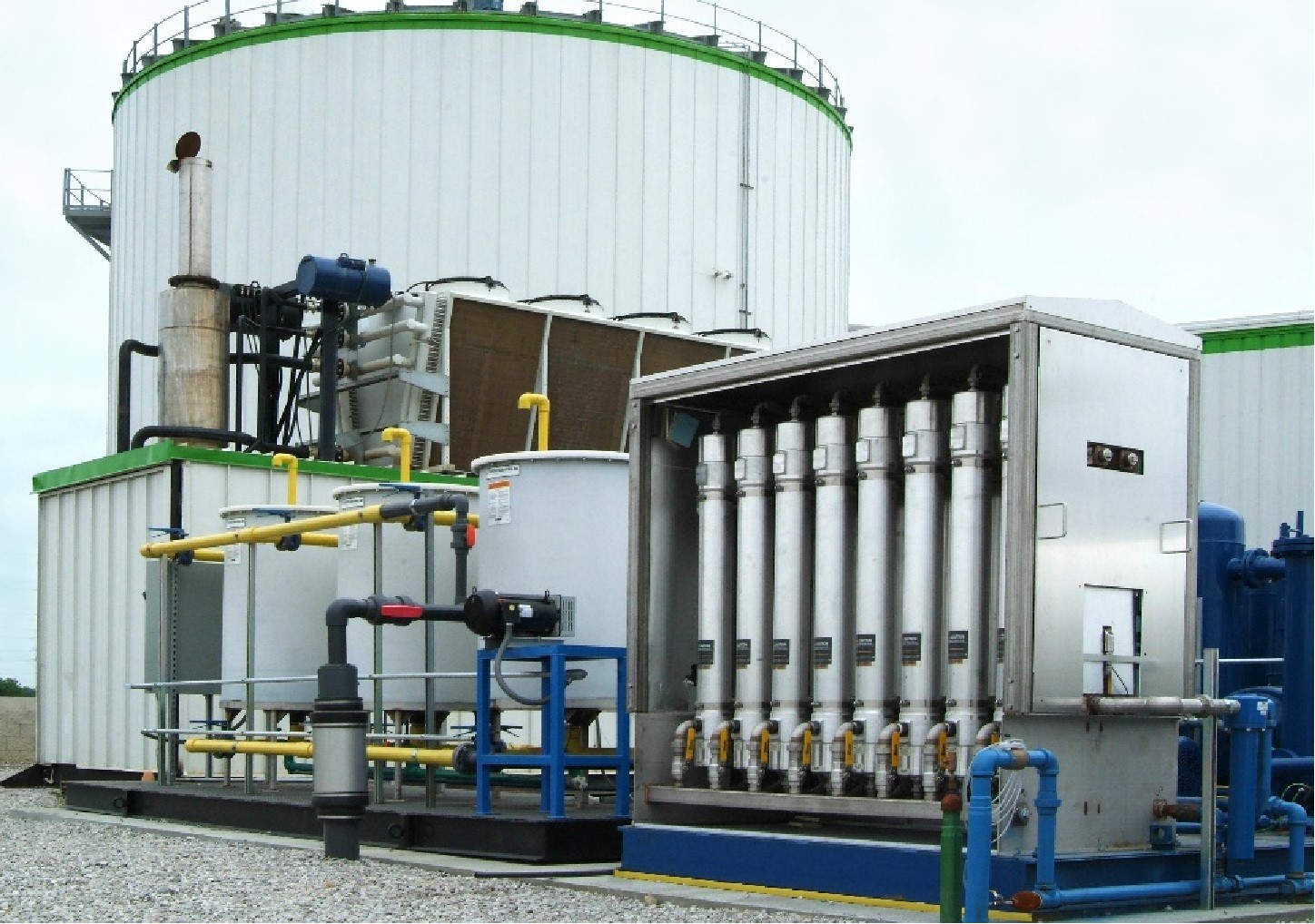
Once primary contaminants are removed, carbon dioxide separation elevates the energy content of the gas. Polymeric membrane separation is widely integrated into a modern biogas production plant to achieve pipeline-grade biomethane purity. This method exploits the differing permeation rates of gases through hollow-fiber membranes, where carbon dioxide passes through the polymer material faster than methane under high pressure.
Alternative upgrading systems include Pressure Swing Adsorption and physical water scrubbing. Pressure Swing Adsorption utilizes carbon molecular sieves to adsorb carbon dioxide at pressures between 4 and 8 bar, releasing it during a vacuum regeneration step. Water scrubbing relies on the higher solubility of carbon dioxide in water compared to methane, utilizing high-pressure absorption columns to separate the two gases. Selecting the appropriate upgrading setup depends on raw flow rates, targeted methane recovery efficiency, and local utility infrastructure.
Residual Management and Process Stability
Downstream operations must manage the liquid and solid digestate produced during the anaerobic digestion cycle. Digestate represents a nutrient-rich byproduct that requires proper processing to prevent environmental accumulation issues.
Mechanical dewatering using decanter centrifuges or screw presses separates the digestate into solid and liquid fractions. The solid fraction, rich in phosphorus and organic matter, is suitable for direct agricultural application or composting. The liquid fraction contains high levels of ammonium nitrogen, which can lead to biological inhibition if recycled back to the digester without treatment. Ammonium stripping towers or reverse osmosis filtration systems are often employed to recover nitrogen as concentrated ammonium sulfate, creating a commercial-grade fertilizer while reducing the hydraulic load on wastewater facilities.
Process instability inside the reactor often manifests as foaming or volatile fatty acid accumulation. Foaming can block gas off-takes and damage biological support structures. This is managed by implementing mechanical foam breakers, adjusting the organic loading rate, or dosing organic anti-foaming agents. Frequent chemical analysis of the digestate allows operators to detect imbalances before biological activity is compromised.
Industrial Applications and Distribution
The end-use application of the refined biomethane determines the purification standards and compression stages required at the outlet of the facility.
For injection into natural gas grids, biomethane must match the heating value, Wobbe index, and pressure of the local network. This process requires continuous gas chromatography to verify methane concentrations, typically requiring levels above 96%. Oxygen and nitrogen levels must also be strictly regulated to prevent degradation of pipeline materials.
When configured as vehicle fuel (Bio-CNG), the biomethane is compressed to 200 to 250 bar using multi-stage reciprocating compressors. For heavy-duty transport, cryogenic liquefaction systems can cool the biomethane to -162°C, producing Liquefied Biomethane (Bio-LNG), which offers higher energy density for long-haul logistics. When designing a biogas production plant for agricultural residues or industrial wastewater, selecting the appropriate distribution route dictates the design parameters of the refining system.
Engineering Inquiry and Collaboration
Developing a reliable waste-to-energy facility involves detailed sizing, biochemical modeling, and custom gas treatment integration. To evaluate your project specifications, feedstock characteristics, or upgrading requirements for a biogas production plant, please contact our engineering division. Our team provides specialized design assessments and system configurations tailored to your operational parameters.
Frequently Asked Questions
Q1: What is the optimal temperature range for anaerobic digestion?
A1: Anaerobic digestion is typically operated under either mesophilic conditions (37°C to 41°C) or thermophilic conditions (50°C to 55°C). Mesophilic systems offer greater biological resilience and lower thermal energy demands, making them suitable for most agricultural and municipal waste streams. Thermophilic systems deliver faster reaction kinetics and superior pathogen reduction, though they demand precise heat management and are more sensitive to chemical shifts.
Q2: How does siloxane contamination affect upgrading equipment?
A2: Siloxanes, commonly found in organic waste derived from municipal and industrial sources, volatilize into the biogas stream. During combustion or upgrading, they break down to form micro-crystalline silica deposits on valves, heat exchangers, and compressor pistons. These deposits cause severe abrasive wear and thermal insulation on heat-transfer surfaces, requiring active carbon or silica gel filtration beds to remove them prior to gas compression.
Q3: What is the difference between raw biogas and biomethane?
A3: Raw biogas is the direct product of anaerobic digestion, containing approximately 50% to 70% methane, 30% to 50% carbon dioxide, and trace amounts of water vapor, hydrogen sulfide, and siloxanes. Biomethane is the refined product of gas upgrading, where carbon dioxide and other trace elements are removed, raising the methane content to over 96% to match the physical properties of natural gas.
Q4: How can a biogas facility manage high nitrogen feedstocks like poultry manure?
A4: High-nitrogen materials can lead to ammonia accumulation, which inhibits methanogenic activity when free ammonia concentrations exceed 200 mg/L. This is managed by adjusting the carbon-to-nitrogen ratio using co-substrates high in carbon, such as agricultural straw or maize silage. Additionally, mechanical dilution, temperature reduction, or nitrogen stripping of the liquid digestate can stabilize the biological process.
Q5: How does the scale of operation influence technology selection for a biogas production plant?
A5: Smaller operations often favor simple biological desulfurization and direct combustion in combined heat and power units due to lower initial capital expenditure. Medium to large facilities benefit from advanced membrane separation or pressure swing adsorption systems, as high gas throughput justifies the implementation of precise separation processes to generate high-purity biomethane for grid injection.