


News
We'll get back to you as soon as possible.
Anaerobic Digester System Design: Process Parameters That Determine Biogas Yield and Quality
For industrial facilities processing organic waste streams, the selection and configuration of an anaerobic digester system directly influences methane yield, effluent quality, and operational stability. While the biological pathway—hydrolysis, acidogenesis, acetogenesis, and methanogenesis—remains consistent across most installations, the physical design and control strategy determine whether a plant achieves 85% or 95% of its theoretical gas production potential. This article examines the engineering decisions that separate high-performance digesters from underperforming assets, with emphasis on mixing regimes, thermal management, and feedstock preparation.
Core Design Variables in an Anaerobic Digester System
Every anaerobic digester system operates within a constrained set of biological and physical parameters. Deviations outside optimal ranges trigger volatile fatty acid accumulation, pH depression, or methanogen inhibition. The following variables require continuous monitoring and, where necessary, active control.
Organic Loading Rate and Hydraulic Retention Time
Organic loading rate (OLR) expresses the mass of volatile solids fed per unit reactor volume per day, typically measured in kg VS/m³·d. Hydraulic retention time (HRT) denotes the average period substrate remains inside the reactor. These two parameters form an inverse relationship for a given reactor volume—increasing OLR shortens HRT unless volume expands. For mesophilic operation (35–40°C), a conservative OLR of 2–3 kg VS/m³·d with HRT of 20–30 days suits high-solids feedstocks such as food waste or manure. Low-solids substrates like wastewater sludges tolerate OLR up to 4–5 kg VS/m³·d with HRT reduced to 12–18 days.
Process engineers evaluate OLR and HRT together through the specific methanogenic activity (SMA) test, which quantifies the maximum substrate conversion rate per unit of biomass. Systems designed without SMA data often operate below capacity, wasting reactor volume, or above threshold, triggering acidification. A properly sized anaerobic digester system matches feed pump scheduling to the measured SMA, allowing gradual OLR increases during ramp-up phases.
Temperature Regime Selection
Temperature impacts both reaction kinetics and microbial community composition. Three thermal bands exist:
Psychrophilic (10–25°C): Low heating cost but prolonged HRT (50–70 days) and reduced gas yield per unit volume. Suitable for uncovered lagoons in temperate climates where land availability offsets slower kinetics.
Mesophilic (35–42°C): Most common for industrial digesters. Balances energy input against conversion efficiency. Stable operation achievable with simple heat exchangers using engine jacket water.
Thermophilic (50–60°C): Higher specific gas production and pathogen reduction but increased ammonia toxicity risk and greater heating demand. Thermophilic systems require tighter pH control and more robust mixing to prevent hot spots.
Transitioning between thermal regimes in an existing anaerobic digester system demands a stepped temperature change of no more than 1°C per day to avoid shock loading the archaeal population. Direct steam injection offers rapid heating but dilutes the substrate, altering HRT calculations. External plate heat exchangers provide more precise control, though they add pumping complexity.
Mixing and Mass Transfer Considerations
Substrate stratification, dead zones, and short-circuiting reduce effective reactor volume. Mixing addresses these issues by maintaining uniform temperature, pH, and substrate concentration. Three mixing technologies dominate the industrial scale:
Mechanical agitators: Submerged impellers or propeller mixers provide directional flow. Energy consumption ranges 5–8 W/m³. Blade design and rotational speed influence shear stress on microbial flocs—excessive shear disrupts syntrophic partnerships.
Gas recirculation: Compressed biogas injected through bottom diffusers creates buoyancy-driven flow. This method doubles as a cleaning mechanism for membrane surfaces in integrated systems. Compressor maintenance and biogas condensation represent operational considerations.
Hydraulic mixing: Recirculation pumps withdraw digestate and reinject it through nozzles. Simple and reliable, but limited to tanks with low solids concentration (TS < 8%).
Selecting a mixing strategy requires balancing capital cost, energy consumption, and solids-handling capability. For high-solids feedstocks (TS > 12%), mechanical mixers with low-speed, high-torque drives outperform gas recirculation, which suffers from bubble coalescence and channeling. Computational fluid dynamics (CFD) modeling assists in predicting mixing efficiency before fabrication, reducing the risk of unanticipated dead zones.
Gas Handling and Biogas Upgrading Integration
Raw biogas from the digester contains 50–65% methane, 30–45% carbon dioxide, and trace hydrogen sulfide, ammonia, and siloxanes. Direct combustion in a combined heat and power (CHP) unit requires minimal treatment—only moisture removal and H₂S scrubbing to protect engine components. For grid injection or vehicle fuel, the gas must be upgraded to biomethane (≥96% CH₄). The connection between the anaerobic digester system and the upgrading plant influences overall efficiency through pressure management and gas composition stability.
Pressure fluctuation in the digester headspace affects the solubility of CO₂ and H₂S, which in turn shifts the equilibrium of the carbonate buffer system. Maintaining a slight positive pressure (5–10 mbar) prevents air ingress while avoiding excessive compression loads on downstream upgrading equipment. Water scrubbing, pressure swing adsorption, and membrane separation each impose specific inlet conditions—the digester gas outlet must deliver consistent flow and composition to maximise the performance of the selected upgrading technology. Detailed specifications for integrating gas treatment can be found at biogas upgrading plants, where engineering data for various unit operations are provided.
Feedstock Pre-Treatment and Process Stability
Raw organic substrates rarely enter the digester in an ideal state. Particle size reduction, solids separation, and nutrient balancing form the pre-treatment phase. For lignocellulosic materials, thermal hydrolysis (160–180°C, 30–60 minutes) breaks lignin bonds, increasing the accessible surface area for hydrolytic enzymes. The energy input for thermal pre-treatment typically recoups itself through a 20–30% increase in methane yield—a relationship validated across multiple feedstocks including corn silage, straw, and food processing residues.
Trace element supplementation addresses nutrient deficiencies that constrain methanogenic activity. Nickel, cobalt, molybdenum, and selenium serve as cofactors for key enzymes in the methanogenesis pathway. A feedstock with low trace element concentration (e.g., pure glycerol or wastewater sludge) may require dosing at 0.1–1 mg/L to maintain specific activity. Conversely, manure and food waste often contain sufficient trace metals, and overdosing leads to toxicity rather than benefit. Regular digestate sampling and inductively coupled plasma (ICP) analysis guide the dosing strategy.
Monitoring and Control Architecture
Manual grab sampling cannot capture the dynamic behavior of an anaerobic digester system. Online sensors for pH, redox potential, temperature, and biogas flow rate provide real-time data, but the most valuable parameter—volatile fatty acid (VFA) concentration—remains difficult to measure continuously. Near-infrared (NIR) spectroscopy and Fourier-transform infrared (FTIR) analyzers offer indirect VFA estimation with appropriate calibration models. These instruments reduce laboratory turnaround from hours to minutes, enabling early intervention before pH drops below 6.8.
Control algorithms range from simple PID loops for temperature to model predictive control (MPC) that adjusts feed rate based on predicted gas production. MPC implementation requires a reliable process model, which can be derived from historical data or first-principles kinetics. For facilities without advanced automation, rule-based control—such as stopping feed when VFA exceeds 1,500 mg/L as acetic acid equivalent—provides a practical safeguard against process failure.
Industrial Applications Across Sectors
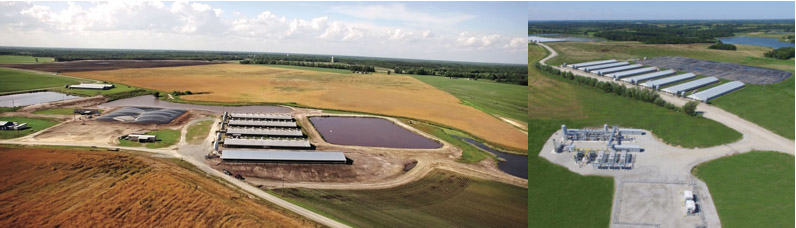
The anaerobic digester system configuration changes with the waste stream and end-use requirements. Agricultural operations processing livestock manure and energy crops prioritize low capital expenditure and simple operation, often using plug-flow or covered lagoon designs. Food and beverage manufacturers face variable organic loads and high solids content, favouring complete-mix reactors with robust pumping systems. Municipal wastewater treatment plants integrate digesters to stabilise primary and secondary sludges, with the biogas offsetting plant electrical demand.
Each application imposes distinct demands on mixing, heating, and solids handling. A digester designed for pig slurry (TS 3–5%) cannot treat brewery spent grain (TS 15–20%) without significant modifications to the feed system and mixing equipment. This specificity underscores the importance of feedstock characterisation during the design phase—proximate analysis, elemental composition, and biochemical methane potential (BMP) tests form the foundation of a defensible design basis.
Operational data from full-scale installations confirm that digesters fed with mixed substrates (co-digestion) often achieve higher specific yields than single-feedstock systems. Co-digestion balances carbon-to-nitrogen ratios, dilutes inhibitory compounds, and improves buffering capacity. However, the mixing ratio requires optimisation through laboratory batch tests before scale-up—a step frequently overlooked in projects with tight schedules.
Common Challenges and Mitigation Strategies
Foaming, scum layer formation, and ammonia inhibition represent the most frequent operational disruptions. Foaming arises from surface-active compounds in the feedstock or from excessive gas production rates. Mechanical foam breakers, antifoam agents, or reduced mixing intensity provide temporary relief; permanent solutions involve feedstock pre-treatment to remove surfactants. Scum accumulation at the liquid surface insulates the reactor, reducing heat transfer and creating odour pathways. Intermittent high-speed mixing or dedicated scum pumps manage this issue.
Ammonia inhibition occurs when protein-rich substrates are digested under thermophilic conditions. Free ammonia (NH₃) concentration above 150 mg/L suppresses methanogenic activity. Acclimation of the microbial population to gradual ammonia increases sometimes extends the tolerance threshold, but the more reliable approach involves co-digestion with carbon-rich materials (e.g., straw or paper waste) to adjust the C/N ratio.
Frequently Asked Questions
Q1: What is the optimal pH range for an anaerobic digester system?
A1: The optimal pH range is 6.8 to 7.4. Methanogenic archaea perform best near neutrality. Values below 6.5 or above 8.0 inhibit enzyme activity and reduce methane production. Alkalinity (expressed as CaCO₃) should exceed 2,500 mg/L to buffer against VFA accumulation.
Q2: How does the choice of mixing method affect biogas output?
A2: Mixing influences mass transfer, temperature uniformity, and substrate accessibility. Poor mixing creates dead zones where volatile solids accumulate without undergoing digestion, reducing effective reactor volume. Gas recirculation mixes efficiently but may cause foam formation with certain feedstocks. Mechanical mixing provides more control but higher maintenance requirements.
Q3: What feedstocks are unsuitable for anaerobic digestion?
A3: Materials with high lignin content (woody biomass), extremely low moisture (below 50% TS), or high concentrations of heavy metals or disinfectants inhibit digestion. Poultry litter with high ammonia content and citrus peel with d-limonene also pose toxicity risks without appropriate pre-treatment.
Q4: How frequently should digestate samples be analysed?
A4: For stable operation, weekly sampling for pH, VFA, alkalinity, and ammonia provides sufficient data. When changing feedstocks or increasing OLR, daily sampling for the first week, then tapering to bi-weekly, helps detect trends early. Biological activity changes slowly—rapid swings indicate a failure in mixing or heating rather than microbial shift.
Q5: Can an anaerobic digester system handle variable organic loads?
A5: A well-designed system accommodates daily load variations of ±20% without operational issues. Beyond this range, flow equalisation tanks or buffer storage helps stabilise feed. For facilities with seasonal feedstock changes (e.g., agricultural harvest cycles), having dual feed lines and multiple storage silos allows gradual transition between substrates.
Q6: What is the typical lifespan of a digester tank and its internal components?
A6: Steel tanks with proper corrosion protection last 20–25 years. Concrete tanks exceed 30 years but require crack monitoring. Internal components such as mixers, pumps, and heat exchangers have shorter service intervals—5 to 10 years—depending on wear from solids abrasion and chemical exposure.
For further technical specifications, process modelling support, or assistance with integrating your anaerobic digester system with gas upgrading equipment, please send an inquiry to our engineering team. We provide detailed mass and energy balances, P&ID diagrams, and site-specific recommendations based on your feedstock analysis.