


News
We'll get back to you as soon as possible.
PSA Biogas Upgrading: How Pressure Swing Adsorption Technology Delivers High-Purity RNG
When project developers evaluate technologies for renewable natural gas production, one method consistently stands out for its ability to achieve exceptionally high methane purity with minimal moving parts. PSA biogas upgrading has become the technology of choice for facilities that require pipeline-grade or vehicle-fuel-grade renewable natural gas. The principle behind it is deceptively simple: using pressure to separate gases based on molecular characteristics. But the manufacturing precision required to build reliable pressure swing adsorption systems is anything but simple.
Understanding PSA biogas upgrading starts with recognizing the challenge it solves. Raw biogas typically contains 50-70% methane, with carbon dioxide making up most of the remainder, plus trace contaminants. Traditional upgrading methods can struggle to push methane concentrations beyond 95%. PSA technology, however, routinely achieves 98-99.5% methane purity. This performance gap explains why PSA biogas upgrading equipment is increasingly specified for projects with strict gas quality requirements.
How Pressure Swing Adsorption Separates Methane from CO2
The core mechanism behind PSA biogas upgrading relies on adsorbent materials—typically carbon molecular sieves or zeolites—that have a higher affinity for carbon dioxide than for methane. When raw biogas enters a pressure vessel filled with these materials, CO2 molecules become trapped in the microscopic pores while methane flows through. The system then depressurizes to release the captured CO2, regenerating the adsorbent for the next cycle.
This cyclical process happens across multiple vessels operating in staggered phases. While one vessel is in adsorption mode, others are undergoing regeneration. The timing and pressure management are critical. Manufacturers of PSA biogas upgrading systems invest heavily in valve technology and control logic to ensure seamless transitions between phases. Any delay or mistiming results in methane slip or product gas contamination.
Adsorbent Media Quality Determines System Performance
Not all adsorbents perform equally in PSA biogas upgrading applications. The selectivity of the media—how strongly it attracts CO2 versus methane—directly affects recovery rates. Leading equipment manufacturers source specially formulated zeolites with pore structures optimized for biogas compositions. These materials must also withstand thousands of pressure cycles without degrading.
Moisture presents a particular challenge. Water vapor can compete for adsorption sites, reducing CO2 capture efficiency. High-quality PSA biogas upgrading systems incorporate pre-treatment stages to dry the incoming gas before it reaches the adsorbent beds. This upfront investment in drying equipment pays off through extended adsorbent life and consistent product purity over years of operation.
Valve Technology and Cycle Control
The mechanical heart of any PSA biogas upgrading system lies in its valve array. Fast-acting, high-cycle valves control the flow of gas into and out of each adsorption vessel. A typical system may cycle through pressurization, adsorption, depressurization, and purge phases every few minutes. Valves must operate reliably through millions of cycles without leaking.
Manufacturers with expertise in PSA biogas upgrading often design custom valve manifolds that minimize dead volume—the space where gas can accumulate and cause purity fluctuations. They also integrate pressure transducers and flow meters at key points to provide real-time feedback to the control system. This closed-loop control enables automatic adjustments when feed gas composition changes, maintaining product specifications without operator intervention.
Integration with Biogas Pretreatment Systems
Raw biogas almost never enters a PSA biogas upgrading system directly. Pretreatment is essential. Hydrogen sulfide must be reduced to single-digit parts per million levels to prevent damage to adsorbents and downstream equipment. Siloxanes, commonly found in landfill gas, require activated carbon filtration to avoid fouling the adsorbent pores.
A well-designed PSA biogas upgrading facility incorporates these pretreatment steps as integrated modules. Equipment manufacturers increasingly offer complete skid-mounted solutions that include desulfurization, drying, filtration, and the PSA unit itself. This modular approach simplifies installation and ensures that all components are properly sized and matched. For operators, dealing with a single equipment provider for the entire PSA biogas upgrading train reduces coordination headaches and creates clear accountability for system performance.
Energy Efficiency Compared to Other Technologies
One often-overlooked advantage of PSA biogas upgrading is its energy profile. Unlike water scrubbing systems that require significant pumping energy, or cryogenic units that demand substantial refrigeration power, PSA operates primarily on compression energy. The electrical consumption typically ranges from 0.2 to 0.3 kWh per standard cubic meter of raw biogas processed.
Manufacturers have further improved energy efficiency through heat recovery designs. The compression stage generates heat that can be captured and used for pretreatment drying or facility heating. Some PSA biogas upgrading installations now achieve net energy consumption below 0.18 kWh per cubic meter—a benchmark that improves overall project carbon intensity scores. For developers seeking environmental credit certification, these efficiency gains translate directly into higher value for the renewable fuel produced.
Containerized Systems for Rapid Deployment
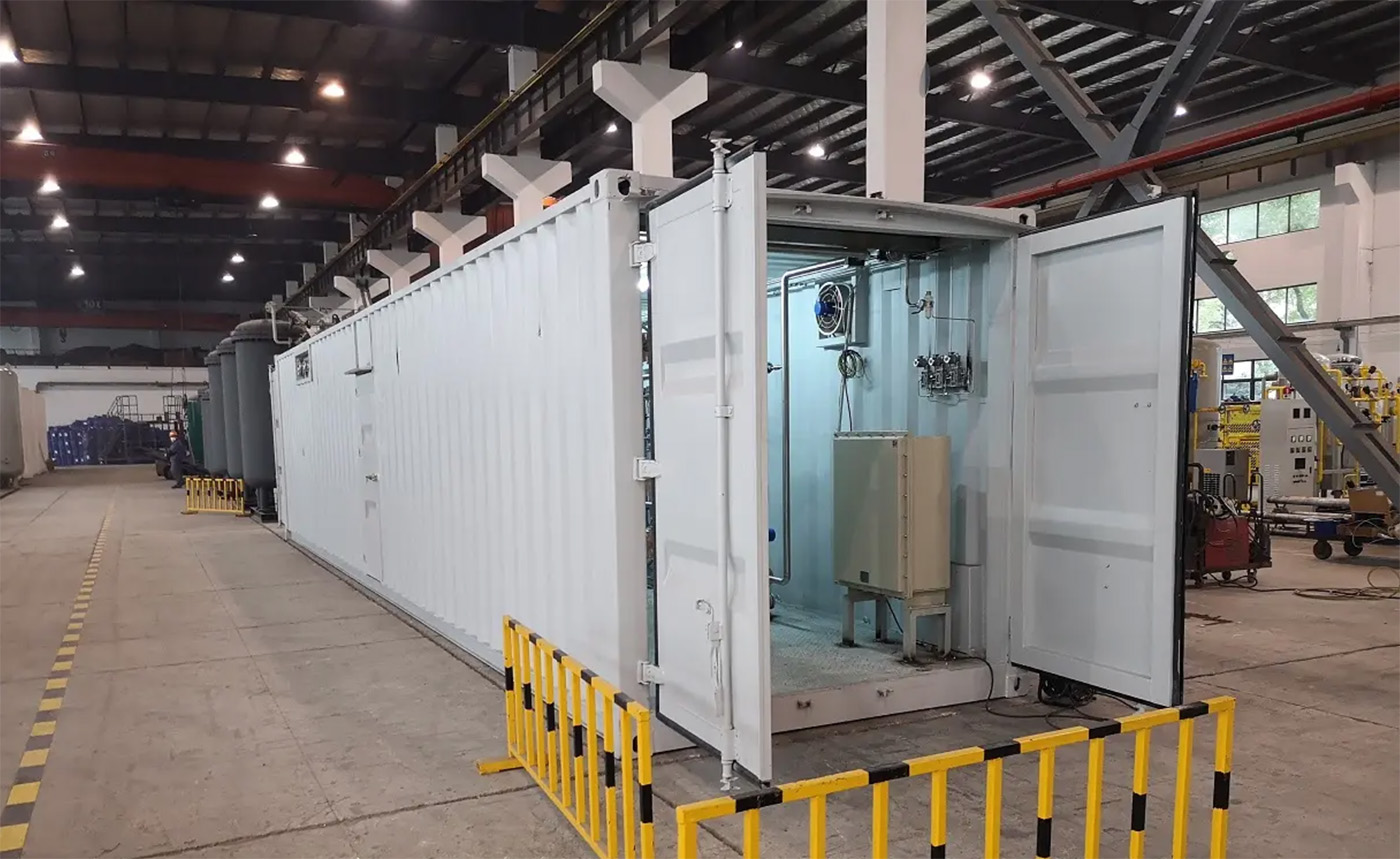
Time-to-market pressures in the renewable energy sector have driven manufacturers to develop containerized PSA biogas upgrading solutions. These systems arrive at the project site fully assembled, piped, and wired inside standard shipping containers. Site preparation involves little more than setting the containers on a prepared pad and connecting utilities.
This approach reduces construction timelines from months to weeks. For landfill gas projects or agricultural digesters where gas production is already underway, containerized PSA biogas upgrading units can begin generating revenue much sooner than stick-built alternatives. Manufacturers offering these solutions also benefit from standardized production lines, which improve quality control and reduce costs compared to custom-engineered systems.
Handling Variable Feedstock Compositions
Biogas composition varies widely depending on the feedstock. Landfill gas may contain oxygen and nitrogen from air infiltration. Agricultural digesters produce gas with relatively stable methane content but variable hydrogen sulfide levels. Food waste digesters often generate high CO2 concentrations. PSA biogas upgrading systems must accommodate these differences.
Advanced control software now allows PSA systems to adapt to changing feed conditions automatically. When sensors detect elevated oxygen or nitrogen levels, the system can adjust cycle timing to maintain methane purity. Some manufacturers have developed dual-mode systems that switch between different operating strategies based on real-time gas analysis. This flexibility is particularly valuable for facilities that accept multiple feedstock types over time.
Applications Beyond Pipeline Injection
While grid injection remains the largest market for PSA biogas upgrading, other applications are growing rapidly. Renewable natural gas for heavy-duty truck fueling requires even higher purity standards than pipeline gas. Many transport fleets specify methane content above 98% to ensure consistent engine performance and emissions compliance.
PSA biogas upgrading systems excel in these demanding applications. Their ability to produce consistent, high-purity gas makes them suitable for fueling stations where product quality directly affects vehicle operations. Manufacturers now offer integrated systems that include compression, drying, and odorization specifically configured for transport applications. These PSA biogas upgrading solutions help fleet operators meet sustainability targets while maintaining operational reliability.
Maintenance Considerations for Long-Term Operation
Maintenance requirements for PSA biogas upgrading systems differ from other upgrading technologies. The adsorbent media represents the primary consumable, with typical service life ranging from 5 to 10 years depending on feed gas quality and operating conditions. Valve maintenance is the other major consideration—specifically the replacement of valve seats and seals at recommended intervals.
Manufacturers with robust service networks provide remote monitoring capabilities that track valve cycle counts and adsorbent performance indicators. This data allows operators to schedule maintenance proactively rather than reacting to unexpected failures. For PSA biogas upgrading projects where production uptime directly correlates with revenue, these predictive maintenance features offer significant value.
Cost Structure and Economic Viability
The capital cost of PSA biogas upgrading equipment typically falls between water scrubbing and cryogenic systems. Operating costs are dominated by electricity consumption and periodic adsorbent replacement. However, the higher methane recovery rates—often 2-3% higher than membrane systems—can significantly impact project economics over a 20-year operating life.
Developers evaluating PSA biogas upgrading should model the trade-off between initial capital expenditure and long-term revenue. The incremental methane captured by a high-recovery PSA system may generate additional revenue that exceeds the upfront cost premium within the first few years. Manufacturers can provide detailed performance guarantees that help secure financing by reducing technology risk for lenders and equity investors.
Common Questions About PSA Biogas Upgrading
Q1:
What methane purity can I expect from a commercial PSA biogas upgrading
system?
A1: Commercial PSA biogas
upgrading systems typically achieve methane purity
between 96% and 99.5%, depending on the system design and number of adsorption
stages. Single-stage systems generally produce 96-98% purity, sufficient for
most pipeline injection applications. Two-stage or multi-stage systems can
achieve 99%+ purity required for vehicle fuel applications. The exact purity
also depends on feed gas composition and system operating parameters.
Q2:
How often does adsorbent media need replacement in PSA
systems?
A2: Adsorbent media in PSA biogas
upgrading systems typically lasts 5 to 10 years under
normal operating conditions. Factors that shorten media life include high
moisture content in the feed gas, presence of siloxanes or other contaminants,
and operating at temperatures outside the recommended range. Regular monitoring
of product purity and cycle performance helps operators identify when adsorbent
replacement is approaching. Some manufacturers offer adsorbent sampling ports
that allow lab analysis without shutting down the system.
Q3:
What is the typical energy consumption for PSA biogas upgrading
equipment?
A3: Modern PSA biogas
upgrading systems consume between 0.18 and 0.30 kWh
per standard cubic meter of raw biogas processed. The lower end of this range is
achievable with heat recovery designs and efficient compressors. Compared to
water scrubbing (0.25-0.35 kWh) and cryogenic systems (0.40-0.60 kWh), PSA
offers a favorable energy profile. Manufacturers can provide site-specific
energy estimates based on feed gas composition and target product
purity.
Q4:
Can PSA biogas upgrading handle landfill gas with oxygen and nitrogen
content?
A4: Yes, PSA biogas
upgrading systems can process landfill gas containing
oxygen and nitrogen, but these components affect system design. Oxygen and
nitrogen are not efficiently separated by standard adsorbents and will
concentrate in the methane product. For landfill gas with significant air
infiltration, manufacturers may recommend additional treatment steps or modified
cycle configurations. Some PSA systems incorporate nitrogen rejection
capabilities specifically designed for landfill gas applications.
Q5:
What warranties and performance guarantees do manufacturers
offer?
A5: Reputable PSA biogas
upgrading equipment manufacturers typically offer
warranties covering materials and workmanship for 12 to 24 months. More
importantly, they often provide performance guarantees for methane purity,
methane recovery rate, and energy consumption. These guarantees are usually
validated during a performance test conducted after installation. For project
financing, these guarantees provide critical risk mitigation. Buyers should
ensure performance guarantees are tied to specific operating conditions that
match their site parameters.
The selection of upgrading technology shapes every aspect of a renewable natural gas project, from capital costs to operational complexity to revenue potential. PSA biogas upgrading has earned its reputation as a reliable, high-performance solution for facilities that demand consistent product quality. The technology’s ability to achieve methane purities above 98% with relatively simple mechanical systems makes it attractive for both pipeline injection and vehicle fuel applications.
Equipment manufacturers have refined PSA biogas upgrading systems over decades of industrial gas separation experience. Today’s offerings incorporate advanced valve technology, intelligent control systems, and modular designs that reduce installation time and operational risk. For developers evaluating new projects, the combination of proven technology, energy efficiency, and scalability positions PSA systems as a compelling choice.
As renewable natural gas markets continue to expand and purity requirements become more stringent, the role of PSA biogas upgrading equipment will only grow. Facilities that invest in high-quality PSA systems today position themselves to meet evolving regulatory standards while maximizing the value of their renewable fuel production. The technology has moved beyond being simply an alternative—it has become a standard against which other upgrading methods are measured.