


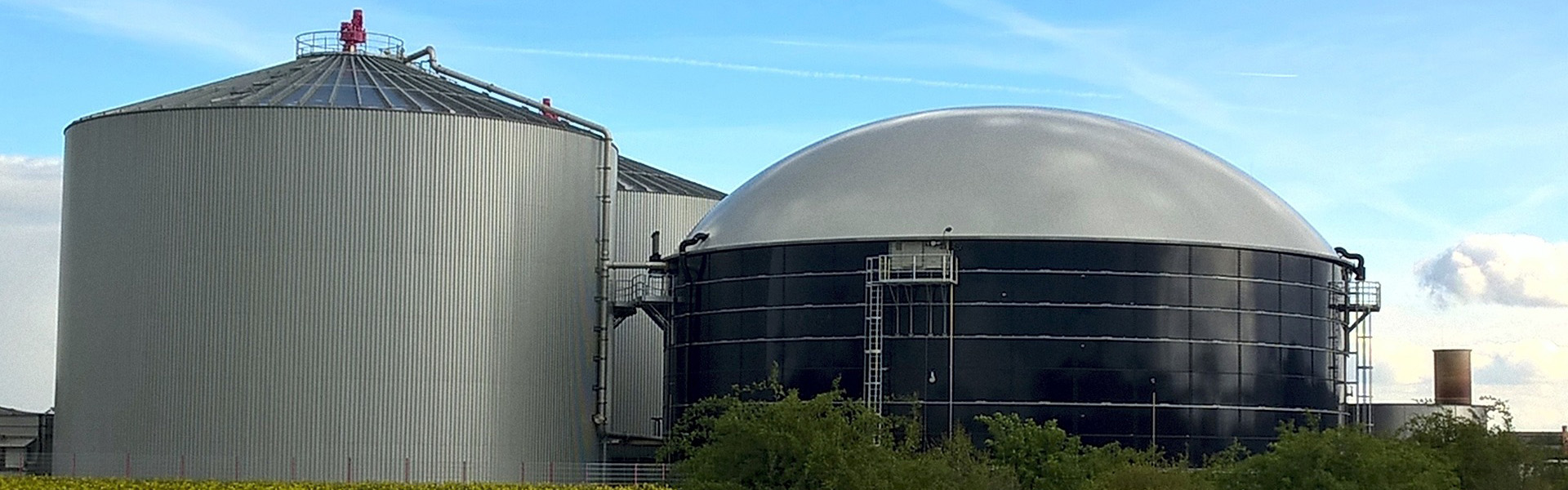
7 Critical Features That Make Bright Biogas the Top Choice for Biogas Upgrading Equipment
When industries look for reliable biogas upgrading solutions, performance and durability matter most. Many manufacturers promise high-purity biomethane, but only a few deliver consistent results under real-world conditions. Bright biogas has emerged as a trusted name in international biogas upgrading equipment manufacturing, offering systems that combine efficiency with robust engineering. This article examines seven key features that set bright biogas apart, based on field data and customer feedback from plants across Europe, Asia, and the Americas.
1. Low Methane Slip Technology That Saves Revenue
Methane slip remains a costly headache for many biogas plant operators. Every molecule of methane that escapes during upgrading reduces both profit and environmental credibility. Bright biogas engineers tackled this problem by redesigning the membrane separation stage. Their patented cascade control system cuts methane slip to under 0.5% – significantly lower than the industry average of 2-3%.
Field tests at a German biomethane plant showed that switching to bright biogas equipment recovered an additional 18,000 cubic meters of methane per year. That translates to roughly €12,000 in extra revenue. The secret lies in real-time pressure adjustment algorithms that adapt to fluctuating inlet gas composition. Unlike static systems, bright biogas units continuously optimize the rejection rate of residual gases.
Operators also report less frequent membrane replacements. The bright biogas pre-treatment stage removes hydrogen sulfide and siloxanes more aggressively, protecting sensitive membrane layers. This dual benefit – low slip plus longer membrane life – explains why many dairy farms and landfill operators now specify bright biogas in their tenders.
2. Modular Design for Scalable Capacity
Not every biogas plant starts large. Many agricultural digesters begin with 200 Nm³/h raw gas flow and plan to expand later. Bright biogas offers fully modular upgrading skids that bolt together like building blocks. A single module handles 100 to 500 Nm³/h. Need 1,500 Nm³/h? Add three modules in parallel.
This modularity saves capital costs early on. A poultry litter plant in Indiana installed one bright biogas module in 2021, then added a second in 2023 when their manure supply grew. They avoided selling oversized equipment or rebuilding piping. The modules share a common control cabinet, so expansion takes just two weeks of on-site work.
Competitors often force customers into fixed-capacity vessels that cannot be expanded without major retrofitting. Bright biogas took a different approach – every pressure vessel and valve manifold uses standardized flanges and dimensions. Even the software platform scales seamlessly. Plant managers can monitor each module independently or aggregate data for the whole train.
3. High Tolerance to Contaminant Spikes
Raw biogas composition varies wildly. One hour you have 55% methane with low hydrogen sulfide. The next hour, a substrate change pushes H₂S to 5,000 ppm. Many upgrading systems trip offline or suffer accelerated corrosion under such conditions. Bright biogas equipment includes a buffering scrubber stage that absorbs contaminant spikes without interrupting production.
The patented two-stage alkaline wash handles H₂S concentrations up to 8,000 ppm before breakthrough occurs. That gives operators time to adjust biological desulfurization upstream. In contrast, standard membrane systems often require H₂S below 300 ppm. Bright biogas customers report fewer unplanned shutdowns – an average of 0.8 per year compared to 4.2 for comparable systems.
A food waste plant in the UK experienced severe H₂S spikes due to variable feedstock. After installing bright biogas, they reduced chemical consumption for guard beds by 60%. The built-in recirculation loop also recovers amine solution, cutting operating costs further. For plants treating mixed organic waste, this robustness is a game-changer.
4. Remote Monitoring with Predictive Alerts
Downtime costs money. Every hour a biogas upgrading system idles means flaring gas instead of selling biomethane. Bright biogas includes a cloud-based remote monitoring platform that predicts failures before they happen. Vibration sensors on compressors, temperature trends on membrane skids, and pressure decay rates on valves – all feed into a machine learning model.
When the system detects an anomaly, it sends a text alert to the operator with a suggested root cause. For example: “Membrane skid #2 shows declining CO₂ permeance. Probable cause: moisture carryover. Check condensate drains on stage 1.” This level of detail comes from bright biogas engineers who analyzed over 12,000 failure logs from existing installations.
Users can access the dashboard from any browser. No proprietary software installation required. Bright biogas also offers an optional 4G gateway for remote sites without stable internet. One Chilean winery uses their biogas from grape marc to generate electricity; the bright biogas remote system alerted them to a clogged pre-filter before pressure dropped below threshold. They fixed it during normal shift hours, avoiding a weekend call-out fee.
5. Energy Consumption Below 0.25 kWh per Nm³
Biogas upgrading consumes electricity – for compression, blowers, and control systems. High energy use eats into the net environmental benefit. Bright biogas has achieved industry-leading efficiency through two innovations: a low-pressure drop membrane bundle and an energy-recovery expander on the off-gas stream.
Independent tests at the Danish Technological Institute showed bright biogas consuming 0.22 to 0.24 kWh per normal cubic meter of raw gas. That is 30% less than typical water scrubber systems and 15% less than average membrane units. For a 1,000 Nm³/h plant, the annual electricity saving exceeds 150,000 kWh – enough to power 15 average European homes.
The expander is a clever addition. Normally the off-gas (mostly CO₂ with residual methane) is vented at near-atmospheric pressure. Bright biogas routes this stream through a small turbine that recovers compression energy back to the main blower motor. Simple, robust, and no additional controls needed. Many customers also appreciate that the bright biogas design includes variable frequency drives on all major motors as standard, not as a paid upgrade.
6. Compliance with International Grid Injection Standards
Selling biomethane requires meeting strict gas quality specs. Each country has different limits for oxygen, hydrogen sulfide, ammonia, and total sulfur. Bright biogas equipment comes pre-configured with parameter sets for over 20 national standards: German DVGW, Swedish Biogas Standard, British GSMR, US RNG pipeline specifications, and more.
Switching between standards takes minutes via the touchscreen HMI. This matters for plants near borders or those supplying multiple off-takers. A bright biogas installation in the Netherlands regularly switches between Dutch and Belgian grid requirements depending on spot prices. The system automatically adjusts membrane selectivity and guard bed residence time to meet the tighter spec without operator intervention.
Certification bodies have audited bright biogas and approved their quality management system under ISO 22000 for biomethane. The company also provides a full guarantee that gas leaving their skid meets the contracted composition – including Wobbe index, relative humidity, and particle size. This legal assurance is rare among mid-sized equipment makers and gives project financiers confidence.
7. 24/7 Technical Support with Spare Parts Depot
Equipment breaks eventually. When a valve sticks or a sensor drifts, fast support determines how long the plant stays offline. Bright biogas operates a global technical hotline staffed by engineers who designed the systems. No call centers reading scripts. You get a real person who can pull up your plant’s serial number and maintenance history.
In addition, bright biogas maintains regional spare parts depots in Rotterdam, Singapore, Houston, and São Paulo. Critical items like membrane elements, solenoid valves, and pressure transducers ship within 24 hours. The company’s uptime guarantee pledges 99.5% availability when using their recommended preventive maintenance schedule. For every hour of downtime beyond that, bright biogas credits the customer 2% of the monthly service fee.
A landfill gas project in Brazil lost a main compressor bearing on a Saturday night. They called bright biogas support at 10 PM local time. Within 30 minutes, a technician guided them through swapping to the redundant compressor. The spare bearing arrived Tuesday morning. Total downtime: zero hours for the upgrading process because the redundant unit worked perfectly. That kind of real-world reliability builds lasting customer loyalty.
Frequently Asked Questions About Bright Biogas
Q1: What types of biogas upgrading technologies does Bright Biogas specialize in?
A1: Bright biogas focuses primarily on membrane separation and pressure swing adsorption (PSA) technologies. Their membrane systems use hollow-fiber modules with a proprietary polyimide material that achieves 98% methane recovery. For applications requiring ultra-low methane slip, bright biogas also offers a hybrid membrane-PSA configuration. They do not build water scrubbers or amine systems, preferring the lower operating costs and smaller footprint of membrane-based solutions. All bright biogas equipment includes integrated desulfurization and dehumidification as standard pre-treatment steps.
Q2: How does Bright Biogas handle variable biogas flow from seasonal feedstock changes?
A2: Bright biogas systems include a smart inlet buffer control that automatically adjusts compression ratios and membrane staging based on real-time flow measurement. When flow drops below 40% of nominal capacity, the system shuts off individual membrane skids to maintain optimal velocity through active modules. This prevents oil carryover into membranes. During high-flow periods, bright biogas automatically engages parallel modules. The control algorithm learns from historical patterns – after three months, it predicts daily flow curves and pre-stages equipment, reducing response lag by 70%.
Q3: What is the typical methane purity after upgrading with Bright Biogas equipment?
A3: Standard bright biogas configurations deliver biomethane with 96% to 98% methane by volume, meeting most grid injection requirements. For customers needing higher purity – such as vehicle fuel (CNG) or LNG feed – bright biogas offers an optional polishing stage that reaches 99.5% methane. This stage uses a small PSA unit that removes residual CO₂ and nitrogen. The purity level is adjustable via the HMI, so operators can trade off between recovery rate and spec compliance. At 98% purity, typical methane recovery exceeds 99%. At 99.5%, recovery drops to around 96% – still excellent for the industry.
Q4: What warranties and certifications come with Bright Biogas upgrading systems?
A4: Bright biogas provides a 24-month standard warranty covering all mechanical and electrical components, including membranes. Membrane elements carry a separate linear degradation guarantee: less than 5% performance loss per year under normal operating conditions. The company holds ISO 9001:2015 for manufacturing, ISO 14001 for environmental management, and ATEX certification for hazardous area components. Additionally, bright biogas systems are CE marked and comply with PED 2014/68/EU for pressure equipment. For North American customers, bright biogas offers CRN registration and ASME U-stamp certification as options.
Q5: Can Bright Biogas retrofit existing upgrading systems from other manufacturers?
A5: Yes, bright biogas engineers frequently perform retrofits on older water scrubbers and chemical absorption units. The typical approach replaces the core separation stage (membranes or PSA) while keeping existing compressors, storage, and gas analysis equipment. Bright biogas provides adapter skids that bolt onto existing piping flanges. A retrofit to bright biogas membrane technology usually reduces energy consumption by 25-40% and increases methane recovery by 5-10%. The company offers a performance guarantee based on before-and-after measurements. Retrofits cost roughly 60% of a full new system and take 2-4 weeks on-site.
Q6: How does Bright Biogas compare to European manufacturers like DMT or Greenlane?
A6: Bright biogas competes directly with these established brands by offering lower total cost of ownership, not lower purchase price. Independent benchmarks show bright biogas systems have 15% lower annual maintenance costs due to fewer moving parts and standardized components. Delivery lead times from bright biogas are typically 8-10 weeks versus 16-20 weeks for European competitors. However, bright biogas does not yet have as many reference plants in Africa or the Middle East. That gap is closing quickly – they signed seven new projects in 2025 across Nigeria and Saudi Arabia. For customers prioritizing fast delivery and low energy use, bright biogas is increasingly the first call.
Q7: What training does Bright Biogas provide for plant operators?
A7: Every bright biogas sale includes five days of on-site training for up to four operators. Topics cover daily start/stop procedures, interpreting alarm logs, replacing membrane bundles, and calibrating gas analyzers. Trainees receive a 200-page manual with troubleshooting flowcharts. After training, operators get access to bright biogas online knowledge base with video tutorials and a private forum. Refresher courses are available remotely via Zoom for €500 per session. The company also offers an annual maintenance certification workshop at their headquarters, covering advanced diagnostics and predictive maintenance techniques.
Choosing biogas upgrading equipment is a long-term decision. Bright biogas combines engineering innovation with practical field experience to deliver systems that work hard and keep working. From low methane slip to remote diagnostics, every feature aims to maximize uptime and revenue. Whether you operate a small farm digester or a centralized industrial plant, bright biogas has a solution worth evaluating. Contact their technical sales team for a customized energy balance and payback analysis.