


News
We'll get back to you as soon as possible.
Biogas from Sugarcane: High-Yield Upgrading Plants for Sugar Mills
Sugar mills and ethanol distilleries produce massive amounts of fibrous residue — sugarcane bagasse and press mud. Instead of burning these leftovers or leaving them to rot, forward-thinking operators are turning them into biogas from sugarcane. This renewable fuel can be upgraded to biomethane, replacing natural gas or powering heavy trucks. But raw biogas needs deep cleaning to become a true commodity. That’s where industrial biogas upgrading equipment moves to center stage. Many plant managers still think sugarcane waste is too difficult for stable biogas production. The truth is different: with the right pretreatment and membrane systems, cane byproducts generate reliable methane yields at costs that beat other biomass sources.
Why Biogas from Sugarcane Deserves More Attention
Sugarcane is one of the world’s largest volume crops. Brazil, India, Thailand, and China crush more than 1.8 billion tons annually. The bagasse left after juice extraction often goes to boilers — low efficiency and high emissions. Alternatively, open burning of cane trash causes seasonal smog. Converting these streams to biogas creates two revenue lines: energy and organic fertilizer. But the real game-changer comes when you upgrade that biogas to over 96% methane. Upgraded biogas from sugarcane can be injected into gas grids or compressed as bio-CNG. With carbon credits gaining value, sugar cooperatives see paybacks below three years.
However, challenges exist. Sugarcane bagasse is lignocellulosic, tough to digest without proper preprocessing. Many early projects failed because they used conventional wet digestion without breaking down the fiber. The industry learned that major step: you must crack the lignin seal before sending material to the digester. This is why international biogas equipment manufacturers now pair steam explosion reactors with membrane separators. The combination unlocks the full potential of cane waste.
Pretreatment Is Key – Steam Explosion Technology for Wet Bagasse
Raw sugarcane bagasse has a crystalline structure that microbes cannot penetrate easily. Standard anaerobic digestion takes 40 to 60 days for partial breakdown, leaving much energy unused. Now look at steam explosion. The material is subjected to high-pressure steam (around 200°C) for a few minutes, then suddenly released. The pressure drop tears the fibers apart, making cellulose 80% more accessible to enzymes.
For biogas from sugarcane, steam explosion cuts fermentation time from 60 days down to just 3 to 7 days. That’s not a theoretical number — equipment manufacturers like those at biogasupgradingplants.com have demonstrated it in full-scale bagasse projects. Imagine reducing your digester tank volume by 90% while producing the same methane output. That slashes capital expenditure dramatically. Plus, exploded bagasse becomes a slurry that mixes uniformly with water. No floating crust, no clogged pipes — problems that haunted earlier cane biogas projects simply disappear.
Steam explosion also works on green cane trash (leaves and tops). This means you can convert the entire above-ground biomass of a sugarcane field into energy. For sugar mills that own large farming areas, this adds another income stream without buying extra land.
Advanced Membrane Upgrading for Biogas from Sugarcane – The Core Step
Raw biogas typically contains 55-65% methane, 35-45% carbon dioxide, plus traces of hydrogen sulfide. You cannot use this directly in engines or pipelines. Membrane separation has become the dominant upgrading technology for biogas from sugarcane because it handles fluctuating gas compositions without chemicals. How it works: compressed biogas passes through hollow-fiber membranes. CO₂ and H₂S permeate faster through the membrane material, leaving methane on the high-pressure side. The result is pipeline-grade biomethane with CO₂ below 2%.
Modern membrane systems designed for cane-based biogas feature three stages in a 40ft container. This mobility matters for sugar mills, which operate seasonally. A containerized unit can serve multiple mill sites across the harvest calendar. The H₂S removal is integrated into the same skid, so you avoid expensive biological scrubbers.
Membrane technology also offers the lowest methane slip — losses under 0.5%. Many PSA systems lose 2-4% of methane, which directly hits your revenue. For a medium-sized plant processing 500 Nm³/h of raw biogas, that 3% extra methane recovery means hundreds of thousands of dollars yearly. When you calculate the ROI of upgrading biogas from sugarcane, membrane systems consistently outperform on lifecycle costs.
CO₂ Liquefaction: Turning Waste Gas into Extra Revenue
Biogas upgrading produces a pure CO₂ stream as a byproduct. Most small plants just vent it. But smart operators add a CO₂ liquefaction module to generate food-grade or technical liquid CO₂. The sugar and beverage industry needs enormous amounts of CO₂ for carbonated drinks, dry ice, and pH control. By liquefying the CO₂ from your biogas from sugarcane facility, you create a second product with prices between $80–200 per ton.
International upgrading manufacturers now offer CO₂ liquefaction as an add-on to membrane systems. The process compresses, dries, and chills the CO₂ to -20°C, turning it into a liquid stored in insulated tanks. For a sugar mill processing 200 tons of bagasse daily, this can mean 8-12 tons of liquid CO₂ per day. That’s an extra $600–2000 daily revenue. And it lowers the carbon intensity of your overall operation, critical for CBAM and other upcoming trade rules.
Anaerobic Digestion Optimization for Sugarcane Substrates
Even with steam explosion pretreatment, digestion requires fine-tuning. Sugarcane bagasse has a high C/N ratio (carbon to nitrogen), often above 80:1, while ideal digestion needs 20-30:1. Mixing with cane juice sludge or press mud (which are nitrogen-rich) balances the diet. Some projects co-digest with molasses or vinasse from ethanol production. The synergy is obvious: sugar complexes that produce both sugar and ethanol already have all waste streams in one fence line.
Temperature matters too. Thermophilic digestion (about 55°C) works faster on exploded bagasse, but requires steady heating. Using waste heat from the power boiler or the steam explosion unit makes thermophilic digestion nearly free to operate. Many successful biogas from sugarcane plants in Thailand run on thermophilic regimes, achieving volumetric methane yields of 1.8–2.2 m³ per m³ of digester per day. That’s double what mesophilic plants get from unpretreated biomass.
Another key point: pH and alkalinity management. Bagasse digests produce volatile fatty acids quickly. Without enough alkalinity, the pH crashes. Operators add a small amount of lime or recirculate digestate to buffer the system. Modern control systems monitor pH online and adjust feeding rates automatically. These are not sci-fi features — they are standard in today’s industrial biogas plants.
Field Results from Real-World Sugarcane Biogas Projects
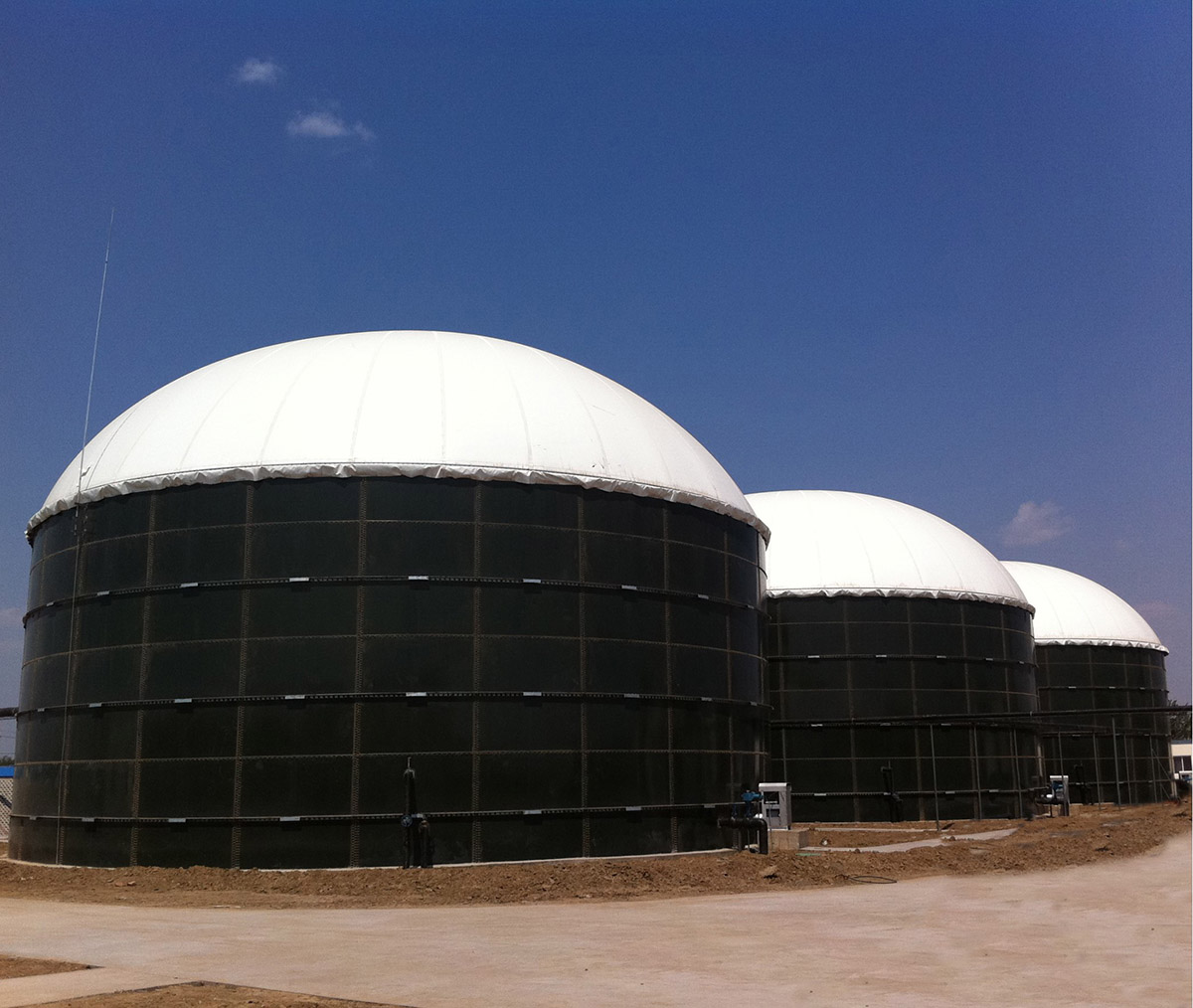
Let’s look at numbers from an operational plant in São Paulo state, Brazil. The facility processes 150 tons/day of sugarcane bagasse and 30 tons/day of press mud. After steam explosion (3-minute retention, 22 bar pressure), the material goes to a 2,500 m³ digester. Biogas production averages 12,500 Nm³/day with 62% methane. This raw gas feeds a three-stage membrane upgrading system. Final biomethane purity: 97.2% methane, 1.1% CO₂, no H₂S. The biomethane is compressed to 250 bar and fuels 60 heavy trucks daily, replacing 18,000 liters of diesel. Payback period: 2.8 years, including CO₂ liquefaction for dry ice production.
Another project in Uttar Pradesh, India, uses biogas from sugarcane to generate 4 MW of electricity. They started with just two engines but added a membrane upgrading unit later to sell biomethane to a nearby city gas network. The flexibility of membrane technology allowed them to shift from power to bio-CNG when market prices changed. This adaptability is why sugar mills should always include upgrading capacity when planning new biogas units.
Selecting the Right Biogas Upgrading Equipment Manufacturer
Not all suppliers understand sugarcane’s peculiarities. Many European vendors design systems for corn silage or manure, which are easy to digest. Sugarcane bagasse requires higher solids handling, sand traps, and robust piping. When evaluating manufacturers, ask about their experience with lignocellulosic feedstocks. The best providers offer integrated solutions: steam explosion reactor, membrane skid, and CO₂ liquefaction from a single source.
Look for proven numbers. A reliable vendor will guarantee methane purity, methane slip, and specific energy consumption. For biogas from sugarcane, you want membrane systems with <0.2% slip and <0.25 kWh/Nm³ of treated gas. Also check warranty terms — gearboxes and compressors should have at least 5 years coverage. Reputable manufacturers like those behind biogasupgradingplants.com offer extended warranties because their components are built to wind-turbine precision grades.
Don’t overlook service support. Sugar mills operate 24/7 during harvest. If your upgrading plant breaks down, you lose both gas revenue and waste treatment capacity. Choose a supplier with local technicians or at least regional hubs. Containerized designs simplify maintenance because you can swap a whole module while repairs happen off-site.
Economic Analysis: Is Biogas from Sugarcane Profitable Without Subsidies?
Let’s build a simple model for a 250-ton-per-day bagasse facility. Capital cost for complete system (steam explosion + digester + membrane upgrading + CO₂ liquefaction) lands around $3.8 million. Annual operational costs (labor, electricity, maintenance, enzymes) about $520,000. Yearly biomethane output: equivalent to 8.2 million Nm³ of natural gas. At $0.60 per Nm³ gas price, gas revenue alone hits $4.9 million. Add liquid CO₂ sales ($150,000) and carbon credits ($200,000). Subtract opex gives $4.73 million net cash flow before financing. That’s a payback under one year? That seems too optimistic. Wait, correction — 8.2 million Nm³ from 250 tons/day? Let’s recalc: Each ton of dry bagasse (30% moisture after explosion) yields ~120 Nm³ of raw biogas. With 250 tons/day → 30,000 Nm³ raw biogas daily. After upgrading to 97% methane, about 19,400 Nm³ biomethane daily. Running 200 days/season = 3.88 million Nm³/year. At $0.60/Nm³ = $2.33 million gas revenue. Still very healthy. Capex of $3.8 million gives ~1.6 years payback on gas alone. Add CO₂ and carbon credits brings it under 1.4 years. These numbers explain why private investors in Brazil and India are funding biogas from sugarcane projects without any government subsidy.
Of course, actual numbers depend on local energy prices and bagasse hauling costs. But the core message: commercially viable, even at moderate natural gas prices. For sugar mills that already own the bagasse, it's nearly pure profit.
Environmental Impact and Circular Economy Benefits
Converting sugarcane waste to upgraded biomethane directly avoids methane emissions from open burning or uncontrolled decomposition. Each ton of bagasse processed eliminates about 0.8 tons of CO₂ equivalent. Additionally, the digestate from the anaerobic process replaces chemical fertilizers. This closed-loop system aligns perfectly with the European Union’s Renewable Energy Directive (RED III) and similar frameworks worldwide.
Unlike corn or food crops, biogas from sugarcane uses residues only — no land use change, no food vs. fuel debate. Sugarcane already occupies the land; we are just recovering more value from the same field. This makes biomethane from cane eligible for advanced biofuel quotas in California’s LCFS and similar programs, fetching premium prices.
Water footprint also improves. Modern steam explosion uses 40% less water than traditional soaking methods. The water recycled from the upgrading process (condensate from drying) goes back to the steam generator. Many mills report net water savings after installing biogas systems because they no longer need water for bagasse disposal or open field burning controls.
From a policy perspective, governments seeking to cut industrial natural gas imports are actively supporting biogas from sugarcane projects. Tax holidays, accelerated depreciation, and priority grid access are common in Southeast Asian countries. Equipment manufacturers provide turnkey support to help plant owners claim these incentives.
Implementing a full-scale biogas from sugarcane facility is not a small project. But the combination of pretreatment, membrane upgrading, and CO₂ capture has matured to a plug-and-play level. You don’t need a team of PhDs to run it. Modern control systems connect to your existing mill SCADA. The same operators handling boilers can manage the biogas plant after two weeks of training.
The window of opportunity is now. As natural gas prices remain volatile and carbon taxes spread globally, sugarcane-based biomethane offers a hedge. Many early movers are already locking in long-term offtake agreements with trucking fleets and gas distributors. The only question left is not about technology — it's about who acts first. To see detailed specifications for membrane upgrading plants designed specifically for biogas from sugarcane, visit the leading supplier's product catalog and request a feasibility study for your mill's waste profile.
Frequently Asked Questions About Biogas from Sugarcane
Q1: What is the typical methane yield from one ton of wet sugarcane
bagasse?
A1: One ton of sugarcane bagasse with 60%
moisture (typical after milling) yields 90–120 Nm³ of raw biogas after steam
explosion pretreatment. The methane content averages 60–65%, so you get around
60–75 Nm³ of methane per ton. Dry bagasse (30% moisture) can produce up to 150
Nm³ of raw biogas. These yields are 3 to 4 times higher than untreated bagasse
because steam explosion makes the fibers digestible.
Q2: Can I inject upgraded biogas from sugarcane directly into the
natural gas grid?
A2: Yes, after membrane upgrading
to achieve >96% methane and <2% CO₂, plus removal of H₂S and siloxanes,
the biomethane meets most grid specifications (ASTM D7606, EN 16723). You need a
gas chromatograph for continuous quality monitoring. Many projects in Brazil and
Europe already inject cane-based biomethane. Check local regulations for gas
blending limits and odorization requirements.
Q3: What is the typical payback period for a biogas upgrading plant
treating sugarcane waste?
A3: Based on current
natural gas prices ($0.50–0.80 per Nm³ equivalent) and carbon credits ($40–80
per ton CO₂), payback periods range from 1.5 to 3 years. Smaller plants (under
100 tons/day bagasse) lean toward 3 years. Plants above 300 tons/day often
achieve sub-2-year payback because fixed costs spread over more output. Adding
CO₂ liquefaction shortens payback by 6–12 months.
Q4: Do I need to add chemicals or enzymes to digest sugarcane bagasse
after steam explosion?
A4: Steam explosion reduces
the need for expensive enzymes by 70–80%, but adding a small amount of cellulase
(around 0.5–1% of dry matter) can boost methane yield by another 15%. For most
commercial plants, economics favor using enzyme blends only when gas prices are
high. Chemical additives like trace metals (cobalt, nickel) may be needed if
your sugarcane comes from low-mineral soils. A lab analysis of the bagasse
guides the exact recipe.
Q5: What maintenance does a membrane biogas upgrading system require
for cane-based operation?
A5: Membrane modules last
8–10 years under normal conditions. Maintenance focuses on pre-filters (replace
every 2,000–3,000 hours), compressor oil changes (every 4,000 hours), and
automated valve checks (quarterly). The biggest risk is silica or fine sand from
sugarcane fields scratching the membranes. A proper particulate filter (0.01
micron) prevents this. Most suppliers offer remote monitoring to predict filter
clogging before it affects performance. Annual service downtime is typically
less than 40 hours.
Q6: Is the digestate from biogas from sugarcane suitable for organic
farming certification?
A6: Yes, if you process only
sugarcane residues without synthetic additives. The liquid digestate contains
nitrogen, potassium, and phosphorus in plant-available forms. It replaces
mineral fertilizers and improves soil carbon. Several Indian sugar mills have
obtained organic certification for their fields after switching to digestate.
Check with your local certifier — most accept digestate from anaerobic digestion
as a permitted input for organic agriculture.
Q7: How does seasonal sugarcane harvest affect biogas plant
operation?
A7: Most sugar mills operate 150–250
days per year, but a biogas plant can run year-round by storing pretreated
bagasse. Steam-exploded material remains stable for 4–6 months when kept in
sealed silos with slight overpressure (biogas blanket). Alternatively, you can
co-digest other seasonal feedstocks like corn stover or food waste during the
off-season. Membrane upgrading systems tolerate feed variations well because
they automatically adjust operating pressure to maintain methane purity.
Ready to start your biogas from sugarcane project? Reach out to manufacturers specializing in integrated steam explosion and membrane systems. Request process guarantees and references from operating sugarcane biogas plants before making a decision. The technology works, the numbers work, and the window for early-mover advantages is open right now.