


News
We'll get back to you as soon as possible.
7 Key Advancements in Equipment Manufacturing for Compressed Biogas Production
The global shift toward renewable energy has placed organic waste management and resource recovery at the center of industrial development. Raw biogas, produced from the anaerobic digestion of agricultural residues, municipal waste, and industrial wastewater, is a highly valuable resource. However, in its raw state, biogas contains significant amounts of carbon dioxide, water vapor, and trace impurities like hydrogen sulfide. To utilize this gas effectively as a vehicle fuel or for grid injection, it must undergo a rigorous purification and compression process. The resulting product, commonly known as compressed biogas, serves as a direct, sustainable alternative to fossil-derived natural gas.
For industrial developers and municipal planners, selecting the right upgrading and compression equipment is critical to achieving long-term operational success. The manufacturing of these systems has evolved considerably over the last decade, transitioning from customized, high-maintenance installations to highly standardized, efficient, and modular systems. This article explores the primary technological advancements in upgrading equipment design that are currently driving the global production of this renewable fuel.
What is Compressed Biogas and Why Does Upgrading Matter?
Before examining manufacturing advancements, it is necessary to understand the transformation raw biogas undergoes. Raw biogas typically consists of 50% to 70% methane, with the remainder being mostly carbon dioxide. To produce high-quality compressed biogas, the methane content must be increased to at least 95%, depending on regional regulatory standards. This concentration process is known as upgrading.
Upgrading removes non-combustible carbon dioxide and harmful contaminants that could damage downstream equipment. Once the gas reaches the required purity, it is compressed to high pressures—typically between 200 and 250 bar. This high pressure increases the energy density of the gas, making the storage, transport, and utilization of compressed biogas economically viable for transport fleets and industrial distribution networks.
1. Membrane Separation Technology for High-Purity Output
Membrane separation has become one of the most widely adopted technologies in modern upgrading plants. This process relies on the physical principle of selective permeation. Polymeric hollow fiber membranes are engineered to allow smaller molecules, like carbon dioxide and water vapor, to pass through their walls quickly, while retaining the larger methane molecules under pressure.
Equipment manufacturers have made significant strides in improving membrane durability and selectivity. Modern multi-stage membrane configurations allow operators to achieve methane recovery rates exceeding 99%. By optimizing the flow paths and pressure differentials within the membrane housing, manufacturers have minimized methane slip—the unwanted loss of methane in the exhaust gas. This high level of efficiency makes membrane systems a highly competitive option for producing consistent compressed biogas from varying raw feedstocks.
2. Water Scrubbing Systems: Traditional Reliability Meets Modern Efficiency
Water scrubbing is another established method used to separate methane from carbon dioxide. This process takes advantage of the fact that carbon dioxide is significantly more soluble in water than methane is, especially at elevated pressures. Raw biogas is pressurized and introduced at the bottom of a scrubbing column, while water is sprayed from the top, absorbing the carbon dioxide as it trickles down.
Recent advancements in water scrubbing equipment focus primarily on reducing utility consumption. Manufacturers now integrate advanced regeneration systems that strip the absorbed carbon dioxide from the water using air or vacuum pressure, allowing the water to be recycled continuously within a closed loop. For projects aiming to produce compressed biogas with minimal chemical additives, water scrubbing remains a robust and environmentally friendly choice.
3. Pressure Swing Adsorption (PSA) for Flexible Operations
Pressure Swing Adsorption (PSA) utilizes specialized adsorbent materials, such as activated carbon, zeolites, or carbon molecular sieves, to trap carbon dioxide, nitrogen, and oxygen under high pressure. When the pressure is reduced, the adsorbed gases are released, regenerating the adsorbent material for the next cycle.
Modern PSA systems are highly valued for their ability to handle fluctuations in raw gas composition. Manufacturers have integrated fast-switching pneumatic valves and sophisticated control systems to optimize the adsorption cycles. This ensures that the production of compressed biogas remains stable even when the quality of the incoming raw biogas varies due to seasonal changes in feedstock digestion.
4. Heat Recovery and Energy Integration in Upgrading Plants
A common challenge in operating gas upgrading and compression facilities is the energy required to run compressors, pumps, and temperature control systems. To address this, equipment manufacturers are placing a stronger emphasis on energy recovery systems. The compression of upgraded biomethane generates a substantial amount of thermal energy that historically went to waste.
By integrating liquid-to-liquid heat exchangers into the compressor cooling loops, modern plants can capture this waste heat and redirect it. This thermal energy can be used to heat the anaerobic digesters, preheat incoming feedstocks, or support local district heating networks. Integrating these recovery systems directly reduces the overall operational cost of producing compressed biogas, making the entire project more economically sustainable.
5. Advanced Monitoring Solutions for Reliable compressed biogas Delivery
Maintaining a consistent gas composition is critical when delivering biomethane to natural gas grids or vehicle refueling stations. Even minor deviations in gas quality can lead to equipment corrosion or safety shutdowns. To prevent these issues, modern upgrading plants are equipped with continuous online analytical instrumentation.
These monitoring systems measure key parameters, including methane concentration, carbon dioxide levels, moisture content, and trace amounts of oxygen and hydrogen sulfide. Manufacturers integrate these sensors with Programmable Logic Controllers (PLCs) that can automatically adjust operating pressures, flow rates, or recirculation cycles in real-time. This level of automation ensures that the output of compressed biogas consistently complies with local gas quality standards without requiring continuous manual intervention.
6. Modular and Skid-Mounted Equipment Configurations
In the past, building a biogas upgrading facility required extensive on-site civil engineering, piping, and electrical installation. This approach often led to project delays and unpredictable installation costs. Today, the industry has shifted heavily toward modular, skid-mounted equipment designs.
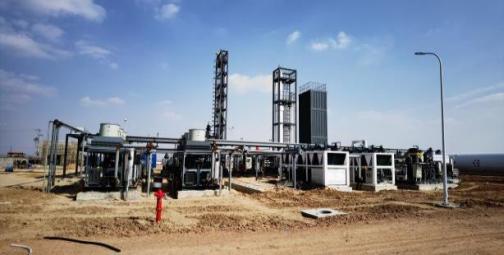
Manufacturers pre-assemble, pipe, wire, and factory-test entire upgrading and compression systems on structural steel skids before shipping them to the site. This modular approach significantly reduces the time needed for installation and commissioning. Whether a project requires a small-scale system for a dairy farm or a large-scale plant for municipal waste treatment, modular designs provide a predictable and scalable path to starting compressed biogas production.
7. Corrosion Prevention and Materials Science
Raw biogas is naturally corrosive, primarily due to the presence of hydrogen sulfide combined with water vapor, which can form sulfuric acid. If not managed properly, this acidity can degrade piping, valves, and compression cylinders over time. Consequently, materials selection is a critical focus area for equipment manufacturers.
The use of high-grade stainless steels (such as 316L), specialized polymers, and protective internal coatings has become standard in critical sections of upgrading plants. By protecting the equipment from internal corrosion, manufacturers can extend the operational lifespan of the machinery and reduce the frequency of unscheduled maintenance. This focus on material durability ensures that the systems responsible for compressing and delivering compressed biogas remain operational for decades.
Selecting the Right Upgrading Partner
Choosing the appropriate upgrading technology and equipment manufacturer is a multi-faceted decision. Factors such as raw gas composition, local utility costs, space availability, and target gas specifications must all be carefully balanced. A successful project requires collaboration with a manufacturer that understands both the biological origin of the gas and the mechanical precision required for high-pressure gas processing.
Working with experienced engineers allows operators to customize pre-treatment systems, select the most efficient separation technology, and integrate reliable compression systems tailored to their specific project flow rates. This collaborative approach minimizes risk and maximizes the long-term return on investment for the production facility.
The production of compressed biogas represents a highly practical pathway for reducing carbon emissions across both the transport and industrial sectors. Through continuous improvements in membrane selectivity, water scrubbing efficiency, automated process controls, and modular manufacturing, equipment providers have made upgrading systems more accessible and reliable than ever before. As global standards for renewable fuels become more stringent, the role of advanced engineering in biogas upgrading will continue to be a foundational element of the global energy transition.
Frequently Asked Questions
Q1: What is the difference between raw biogas and compressed biogas?
A1: Raw biogas is the direct product of anaerobic digestion, containing roughly 50% to 70% methane, along with carbon dioxide, water, and impurities. Compressed biogas is the purified biomethane that has undergone an upgrading process to remove carbon dioxide and contaminants, bringing the methane purity to over 95%, and then pressurized for storage or transport.
Q2: Why is methane slip a concern in upgrading plants?
A2: Methane slip refers to the small percentage of methane that is lost along with the waste carbon dioxide during the separation process. Methane is a potent greenhouse gas, so minimizing slip is essential to maximize both the environmental benefits and the financial yield of the plant. Modern equipment designs aim to keep methane slip well below 1%.
Q3: Can compressed biogas be used in standard natural gas vehicles?
A3: Yes, once upgraded and compressed to the correct pressure (usually 200 to 250 bar), it meets the same quality standards as fossil-based compressed natural gas (CNG). Vehicles designed to run on CNG can use upgraded biogas without any modifications to their engines or fuel systems.
Q4: How long do upgrading membranes typically last?
A4: Under normal operating conditions and with proper pre-treatment to remove harmful compounds like hydrogen sulfide and volatile organic compounds (VOCs), high-quality polymeric membranes typically have an operational lifespan of 5 to 10 years before they require replacement.
Q5: What pre-treatment steps are required before the gas enters the upgrading system?
A5: Pre-treatment typically includes cooling the gas to condense and remove water vapor, passing it through active carbon filters to remove hydrogen sulfide and siloxanes, and particulate filtration. These steps are necessary to protect the sensitive upgrading membranes or chemical solvents from damage and fouling.