


News
We'll get back to you as soon as possible.
Biomethane Refineries in 2026: Advanced Gas Separation and Pipeline Injection Engineering for Industrial Biogas Plants
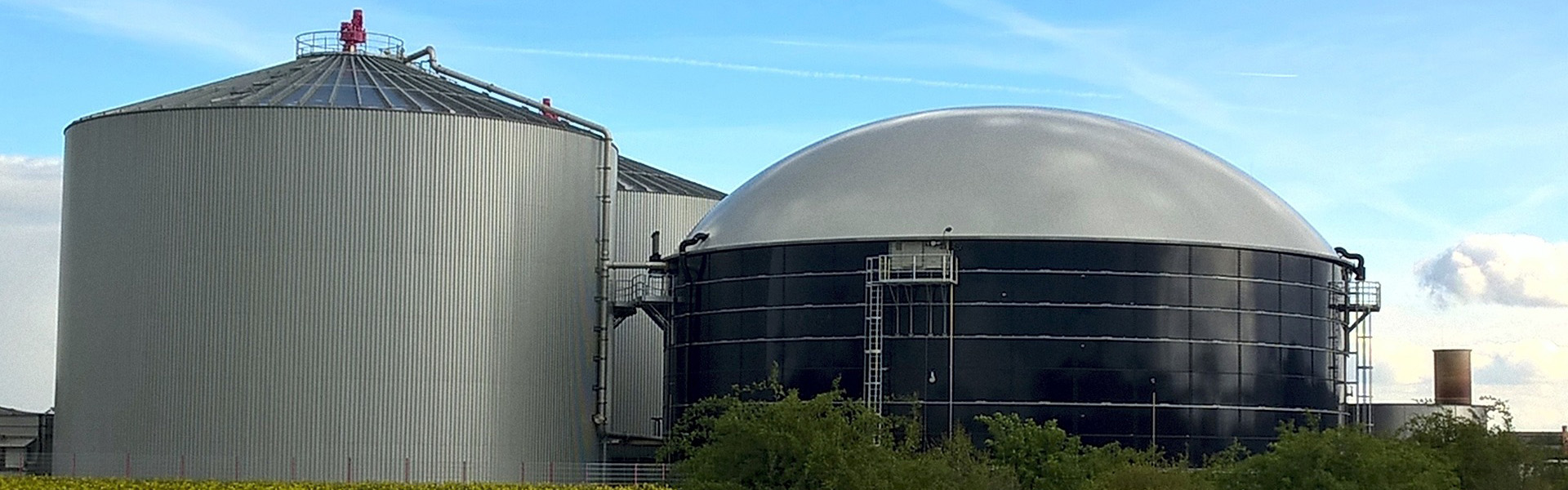
Biological gas generation represents a core pillar of modern circular energy systems, converting organic waste streams into high-energy gaseous fuel. Raw biogas produced via anaerobic digestion consists primarily of methane ($CH_4$, 50%–70%) and carbon dioxide ($CO_2$, 30%–50%), alongside trace quantities of water vapor, hydrogen sulfide ($H_2S$), ammonia ($NH_3$), siloxanes, and volatile organic compounds (VOCs). Transitioning raw gas into pipeline-grade biomethane or bio-LNG requires precise engineering controls and sequential unit operations. Modern industrial biogas plants utilize sophisticated gas processing architectures to maximize methane recovery, protect downstream infrastructure from chemical degradation, and ensure strict compliance with international gas injection standards.
Anaerobic Digestion Kinetics and Substrate Pretreatment
The efficiency of methane synthesis depends on the biochemical dynamics within the anaerobic digestion reactor. The biological breakdown of complex organic matter proceeds through four distinct, interconnected metabolic stages:
Hydrolysis: Extracellular enzymes secreted by hydrolytic bacteria break down complex polymers—such as proteins, carbohydrates, and lipids—into soluble monomers like amino acids, monosaccharides, and long-chain fatty acids.
Acidogenesis: Acidogenic microorganisms convert soluble monomers into volatile fatty acids (VFAs), short-chain organic acids, alcohols, lactic acids, carbon dioxide, and molecular hydrogen.
Acetogenesis: Acetogenic bacteria metabolize VFAs and organic acids into acetate, carbon dioxide, and hydrogen gas, forming the immediate precursors for methanogenesis.
Methanogenesis: Methanogenic archaea reduce acetate (acetoclastic methanogenesis) or combine carbon dioxide with hydrogen gas (hydrogenotrophic methanogenesis) to yield purified methane and water vapor.
Substrate composition dictates gas production potential and digestion kinetics. Agricultural residues, food waste, sewage sludge, and industrial organic effluents require specific carbon-to-nitrogen ratios ($C:N$ between 25:1 and 30:1) to sustain bacterial equilibrium. High volatile solids (VS) loading rates demand continuous monitoring of total alkalinity and VFA-to-alkalinity ratios to prevent reactor acidification.
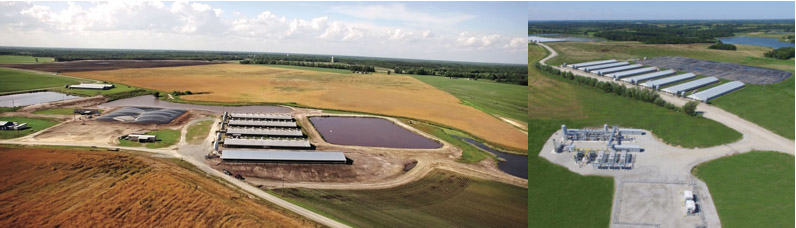
Pretreatment technologies expand organic surface area and disrupt recalcitrant lignocellulosic structures prior to digestion. Mechanical maceration reduces particle size, expanding biological surface area for enzymatic hydrolysis. Thermal hydrolysis processes (THP) apply elevated temperatures ($150^\circ C$ to $180^\circ C$) under elevated pressures to hydrolyze cellular structures, lowering slurry viscosity and accelerating volatile solids destruction. Industrial agricultural and municipal biogas plants integrate multi-stage continuous stirred-tank reactors (CSTR) or plug-flow digesters to preserve hydraulic retention times and maximize total gas yield.
Raw Gas Pre-Conditioning and Contaminant Removal
Raw biogas exiting anaerobic digesters is fully saturated with water vapor and contains aggressive corrosive compounds that damage downstream upgrading equipment. Deep gas conditioning must precede carbon dioxide separation.
Hydrogen Sulfide ($H_2S$) Removal
Hydrogen sulfide concentrations range from 100 ppm to over 10,000 ppm depending on substrate sulfur content. Left unmanaged, $H_2S$ forms sulfurous and sulfuric acid upon condensation, destroying downstream pipework and upgrading media.
Biological Desulfurization: Micro-aeration injects controlled volumes of air (1%–5%) into the digester headspace, allowing sulfur-oxidizing bacteria ($Acidithiobacillus$) to convert $H_2S$ into elemental sulfur. External biological trickling filters utilize packed media beds colonized by bio-films to achieve high removal efficiencies without contaminating main gas streams with excess nitrogen.
Chemical Scrubbing: Liquid chelated iron scrubbers or sodium hydroxide absorption towers selectively react with $H_2S$, forming solid iron sulfides or soluble sodium salts. These systems deliver rapid reaction kinetics and handle extreme contaminant surges.
Dry Iron Oxide Adsorption: Fixed-bed iron sponge or iron oxide-impregnated media beds bind hydrogen sulfide molecules chemically. These non-regenerative or thermally regenerative media beds serve as polishing stages to reduce $H_2S$ concentrations below 5 ppm.
Siloxane and Volatile Hydrocarbon Management
Siloxanes—organosilicon compounds common in municipal solid waste and wastewater treatment streams—volatilize during digestion. Upon combustion in engines or boilers, siloxanes transform into abrasive silicon dioxide ($SiO_2$) deposits that cause mechanical wear and surface abrasion. Removal requires chilling raw gas to low dew points ($2^\circ C$ to $-20^\circ C$) via mechanical refrigeration units to condense volatile species, followed by passage through deep beds of virgin coconut-shell activated carbon or synthetic zeolites engineered for selective trace compound adsorption.
Methane Upgrading and Carbon Dioxide Separation Technologies
Upgrading raw biogas into high-purity biomethane ($>97\%$ $CH_4$) requires the continuous removal of carbon dioxide. The choice of gas separation technology depends on feed gas volume, contaminant profile, electrical demand, and site utilities.
Membrane Separation
Polymeric hollow-fiber membrane systems exploit differential gas permeation rates based on molecular kinetic diameters ($CO_2 = 3.3$ Å versus $CH_4 = 3.8$ Å). Operating at feed pressures between 8 bar and 16 bar, $CO_2$, water vapor, and residual $H_2S$ permeate through the polymer matrix rapidly, while $CH_4$ remains in the retentate stream at pressure.
Modern multi-stage membrane configurations feature feed-and-bleed loops, sweep gas streams, and secondary recovery stages to recycle permeate gas, minimizing overall methane slip to below 0.5%. Polyimide and cellulose acetate membranes provide superior selectivity, resistance to chemical oxidation, and sustained mechanical durability under continuous operational stress. Large-scale biogas plants select multi-stage membrane systems due to their compact footprint, operational simplicity, and absence of chemical consumables.
Chemical Absorption (Amine Scrubbing)
Amine scrubbing relies on reversible chemical reactions between $CO_2$ and liquid amine solutions, typically aqueous Monoethanolamine (MEA), Methyldiethanolamine (MDEA), or proprietary amine formulations. Gas enters an absorber column from the bottom, flowing counter-currently to the lean amine solvent. The solvent selectively reacts with $CO_2$ molecules, leaving high-purity biomethane ($>99.5\%$ $CH_4$) at the column overhead.
The rich amine liquid flows to a stripper column, where thermal energy ($110^\circ C$ to $160^\circ C$) breaks the amine-$CO_2$ chemical bond, releasing pure $CO_2$ and regenerating the solvent for continuous re-use. Amine systems deliver high recovery efficiency, near-zero methane loss ($<0.1\%$), and robust tolerance to residual oxygen, though they demand a stable thermal supply for column regeneration.
Pressure Swing Adsorption (PSA)
PSA systems utilize physical adsorption phenomena across porous solid materials, such as carbon molecular sieves (CMS) or synthetic zeolites. Gas flows under elevated pressure through a adsorbent bed that selectively retains $CO_2$, $N_2$, and water molecules while permitting methane to pass through. Once the bed saturates, pressure drops, releasing the trapped $CO_2$ off-gas.
Industrial PSA units employ multiple parallel vessels (typically 4 to 6 beds) operating in synchronized cycles of pressurization, equalization, depressurization, and vacuum regeneration. Modern automation sequencing ensures steady biomethane delivery pressure and consistent gas purity.
Physical Solvent Absorption and Water Washing
Physical absorption processes dissolve $CO_2$ into liquid media at elevated pressures and lower temperatures without chemical bonding. High-pressure water scrubbing (HPWS) utilizes water as a solvent, taking advantage of $CO_2$'s higher solubility in water relative to $CH_4$. Organic solvents like Polyethylene Glycol Dialkyl Ethers offer enhanced $CO_2$ solubility, lowering circulating solvent volume requirements. Solvents are regenerated in flash towers through depressurization and air stripping.
Pipeline Injection, Compression, and Grid Quality Compliance
Biomethane must satisfy stringent gas quality parameters specified by transmission system operators (TSO) or distribution system operators (DSO) prior to grid injection. Continuous quality validation prevents off-spec gas from compromising pipeline infrastructure.
Calorific and Wobbe Index Adjustment: Biomethane must match the heating values of local natural gas grids. If the gross calorific value (GCV) or Wobbe Index falls below specification, propane or LPG enrichment systems inject measured quantities of heavy hydrocarbons to increase energy density.
Gas Chromatographic Analysis: Online process gas chromatographs continuously monitor methane percentage, carbon dioxide limits ($<1.0\%$ to $<2.5\%$), oxygen levels ($<10$ ppm to $<0.5\%$), total sulfur, and moisture dew points. Automated fast-acting isolation valves divert off-spec gas back to digester headspaces or thermal oxidizers.
Odorization: Natural biomethane lacks odor. Injection skids add sulfur odorants—such as Tetrahydrothiophene (THT) or mercaptan blends—at controlled, flow-proportional injection rates to facilitate downstream leak detection in public municipal networks.
Multi-Stage Gas Compression: Gas pressure must match local line pressure, ranging from 1–8 bar for local distribution grids up to 30–80 bar for high-pressure regional transmission lines. Variable-frequency drive (VFD) oil-free reciprocating compressors or flooded screw compressors with oil-separation stages provide reliable pressure amplification.
Integrating robust gas monitoring loops ensures that high-capacity biogas plants maintain uninterrupted grid access while adhering to safety compliance framework protocols.
Automation Protocols and Integrated System Instrumentation
Modern biomethane refineries demand centralized digital supervision to ensure consistent output quality under fluctuating feedstock conditions. Integrated Programmable Logic Controllers (PLCs) and Distributed Control Systems (DCS) monitor physical process variables throughout the biogas processing chain.
Instrument arrays track differential pressure across membrane modules, column temperature gradients, gas dew point thresholds, continuous flow rates, and ambient volatile gas limits. Embedded feedback loops automatically adjust compressor operational speeds, valve positions, and solvent circulation rates in response to feed gas fluctuations. Distributed SCADA systems record real-time operational data, facilitating predictive maintenance strategies and automated performance verification across industrial scale biogas plants.
Engineering Consultation and System Specification Guidance
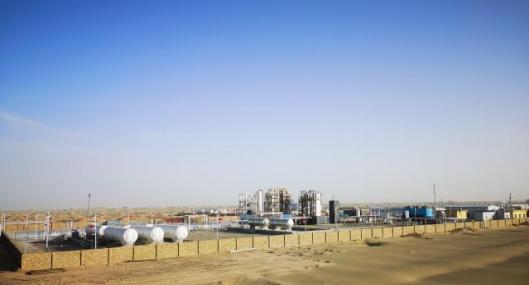
Developing an industrial-scale biomethane processing facility requires precise mechanical engineering, custom chemical column scaling, thermodynamic balancing, and full component selection tailored to specific feedstock compositions and local utility requirements. Experienced engineering teams provide complete technical support across project development phases, including mass-balance calculations, separation efficiency modeling, modular skid architecture layout, and complete gas upgrading system supply.
Submit a technical inquiry today to connect with senior gas separation engineers, obtain custom system layouts, or evaluate precise biomethane processing equipment specifications for prospective prospective industrial biogas plants.
Frequently Asked Questions
Q1: How do variations in raw gas methane concentration affect
upgrading system design?
A1: Fluctuations in raw gas methane content
directly impact the volumetric loading and separation duty required from
upgrading systems. Membrane systems accommodate varying $CH_4/CO_2$ ratios by
utilizing variable-frequency drive gas compressors and automated pressure
control valves that modulate retentate flow rates, maintaining product purity
without altering physical hardware configuration.
Q2: What methane purity levels are attainable with multi-stage
membrane separation?
A2: Multi-stage hollow-fiber membrane systems
typically achieve biomethane purity levels between 97% and 99.5% $CH_4$. By
configuring secondary and tertiary sweep gas loops, systems efficiently separate
$CO_2$ while restricting total methane loss within permeate off-gas streams to
less than 0.5%.
Q3: What methods are utilized to eliminate siloxanes from landfill
and wastewater gas streams?
A3: Siloxane removal involves a primary
deep-chilling stage operating between $-10^\circ C$ and $-20^\circ C$ to
condense moisture and heavy siloxane fractions, followed by passage through
temperature-swung regenerated media or virgin coconut-shell activated carbon
beds engineered for high-affinity organosilicon physical adsorption.
Q4: What is methane slip, and how is it managed across different
upgrading technologies?
A4: Methane slip represents the unrecovered
fraction of $CH_4$ that escapes into the $CO_2$ vent stream during upgrading. It
is minimized by employing multi-stage membrane recycle circuits, optimized
thermal amine regeneration loops, or by routing depressurized off-gas streams to
regenerative thermal oxidizers (RTOs) or dual-fuel burners.
Q5: How is digestate processed and stabilized following the anaerobic
digestion sequence?
A5: Digestate exiting the primary anaerobic
reactor undergoes mechanical solid-liquid separation via screw presses or
decanter centrifuges. The resulting solid fraction undergoes composting or dry
maturation for agricultural use, while the liquid fraction undergoes nitrogen
stripping, reverse osmosis filtration, or direct land application as an organic
nutrient source.