


News
We'll get back to you as soon as possible.
Biochemical Mechanics of Industrial Anaerobic Digestion Systems
Industrial anaerobic digestion represents a precise biochemical engineering process that converts complex organic feedstocks into energy-dense methane gas streams. Operating in an oxygen-free environment, microbial communities degrade complex organic polymers through successive enzymatic and metabolic reactions. Modern industrial operations rely on this biological conversion process to achieve high-volume waste stabilization, carbon neutralization, and renewable energy extraction. Designing an operational infrastructure around anaerobic digestion requires detailed understanding of feedstock rheology, microbial kinetics, biochemical equilibrium, and downstream gas refinement.
When operating a large-scale biogas plant, facility operators must maintain dynamic control over multiple biological parameters. Organic material flows through carefully regulated environment conditions to maximize methane production while minimizing process downtime. Understanding these foundational mechanics forms the prerequisite for integrating continuous feed systems with downstream biogas processing, grid injection, or compressed natural gas distribution units.
The Four-Stage Biochemical Decomposition Matrix
The total conversion of complex organic matter into biomethane occurs via four linked metabolic stages: hydrolysis, acidogenesis, acetogenesis, and methanogenesis. Each phase relies on distinct groups of microorganisms that require specific environmental conditions to maintain high conversion efficiency.
1. Hydrolysis
Hydrolysis serves as the primary rate-limiting step for high-solids organic substrates. Extracellular enzymes secreted by hydrolytic bacteria—such as cellulases, proteases, and lipases—break complex insoluble polymers down into soluble monomers.
Proteins undergo cleavage into amino acids.
Complex carbohydrates and lignocellulosic materials disassemble into monosaccharides and disaccharides.
Lipids convert into long-chain fatty acids (LCFA) and glycerol.
Because structural polymers like cellulose and hemicellulose possess dense crystalline matrices, physical, thermal, or enzymatic pre-treatment methodologies often augment this initial stage to accelerate enzymatic accessibility.
2. Acidogenesis
Soluble monomers produced during hydrolysis pass through bacterial cell membranes to undergo acidogenic fermentation. Acidogenic organisms convert sugars, amino acids, and fatty acids into volatile fatty acids (VFAs), including butyric, propionic, and valeric acids, along with lactic acid, alcohols, carbon dioxide, and molecular hydrogen.
Rapid acidogenesis can lead to organic acid accumulation within the digester liquid phase. If substrate loading rates exceed the processing capacity of downstream organisms, the resulting drop in system pH can suppress the overall biological system.
3. Acetogenesis
Acetogenic bacteria convert short-chain volatile fatty acids and alcohols into acetic acid, hydrogen gas, and carbon dioxide. This intermediary stage acts as a operational bridge between organic acid production and final methane synthesis.
Syntrophic relationships drive acetogenesis. Acetogenic bacteria can only proceed with short-chain fatty acid oxidation when partial pressures of molecular hydrogen remain extremely low. Methanogenic organisms must rapidly consume excess hydrogen to maintain thermodynamically favorable conditions for acetogenic metabolism.
4. Methanogenesis
The final pathway relies on strictly anaerobic archaea to synthesize methane. Methanogenic species split into two primary metabolic pathways:
Acetoclastic Methanogenesis: Archaea convert acetic acid into methane and carbon dioxide. This pathway typically accounts for two-thirds of total methane production in conventional anaerobic digestion systems.
Hydrogenotrophic Methanogenesis: Archaea reduce carbon dioxide using molecular hydrogen as an electron donor to produce methane and water.
Methanogens demonstrate high sensitivity to pH fluctuations, free ammonia levels, and heavy metal concentrations. Maintaining target operational parameters within the digestion vessel ensures steady methane output.
Operational Parameters and Environmental Controls
Sustaining peak biomethane generation across an industrial biogas plant requires rigorous control over physical and chemical parameters within the digestion reactors.
Thermal Regimes: Mesophilic vs. Thermophilic Processing
System designers select operating temperatures based on substrate characteristics and facility throughput demands.
Mesophilic Operation (35°C to 40°C): Offers elevated biological stability, lower thermal input requirements, and resistance to environmental fluctuations. Mesophilic cultures exhibit higher tolerance to volatile fatty acid spikes and ammonia toxicity.
Thermophilic Operation (50°C to 55°C): Yields faster reaction kinetics, shorter hydraulic retention times, and higher pathogen destruction rates. However, thermophilic archaea demand higher thermal energy input and exhibit heightened sensitivity to environmental shifts.
Carbon-to-Nitrogen Ratio and Ammonium Balance
Microbial communities require a balanced balance of nutrients to sustain metabolic activity. The optimum Carbon-to-Nitrogen (C:N) ratio for anaerobic digestion lies between 20:1 and 30:1.
Excessive nitrogen levels—often present in poultry manure or high-protein food waste—lead to elevated free ammonia (NH3) formation inside the reactor. Free ammonia penetrates microbial cell membranes, disrupting intracellular ion balances and inhibiting methanogenesis. Conversely, insufficient nitrogen limits cellular growth, reducing the total concentration of active enzymes and slowing substrate throughput.
Volatile Fatty Acids and Buffering Capacity
Monitoring the balance between Volatile Fatty Acids (VFA) and Total Inorganic Carbon (TIC)—frequently expressed as the VFA/TIC ratio—provides operational visibility into reactor stability. Target operational ratios generally range from 0.15 to 0.30.
A sudden rise in the VFA/TIC ratio indicates that acidogenesis is outstripping methanogenic consumption. Bicarbonate buffering capacity acts as an internal cushion against pH depression. Maintaining total alkalinity between 3,000 mg/L and 5,000 mg/L (as CaCO3) prevents rapid acidification and protects methanogenic populations from activity suppression.
Integration of Anaerobic Digestion with Advanced Gas Upgrading Systems
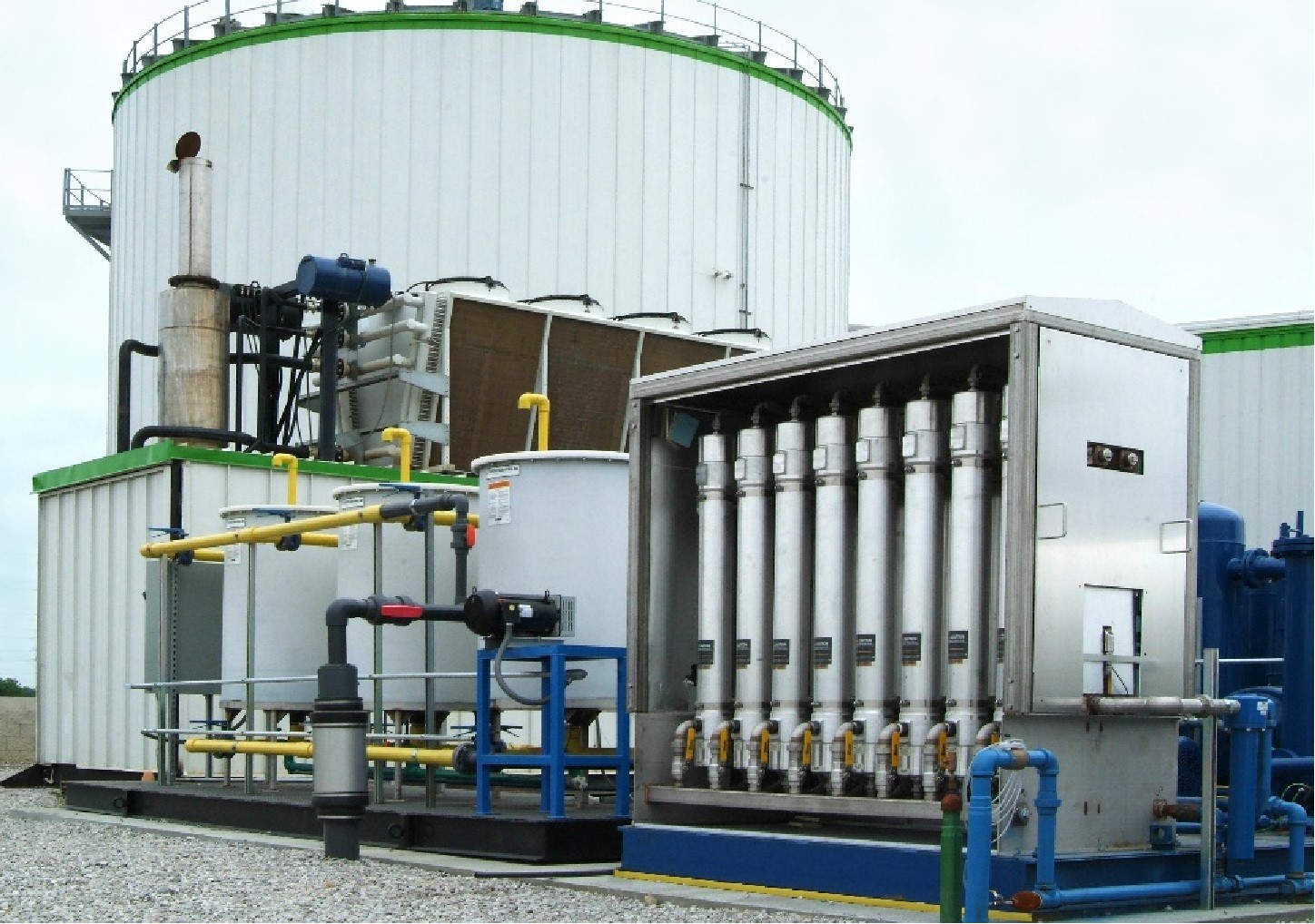
Raw gas generated through anaerobic digestion typically contains 50% to 70% methane (CH4), 30% to 50% carbon dioxide (CO2), alongside moisture, hydrogen sulfide (H2S), siloxanes, and nitrogen compounds. To convert raw gas into commercial-grade biomethane or pipeline-quality renewable natural gas (RNG), facilities pair the primary digestor with downstream biogas upgrading systems.
A continuous flow from the biogas plant requires consistent desulfurization, moisture extraction, and carbon dioxide separation. Eliminating impurities prevents internal component corrosion and brings the gas composition up to commercial standards.
Desulfurization and Trace Contaminant Removal
Hydrogen sulfide presents a strong corrosive threat to downstream compressors, power generators, and upgrading membranes. Systems utilize several desulfurization methods depending on inlet gas concentrations:
In-Situ Micro-Aeration: Controlled dosing of minute oxygen quantities into the digester headspaces enables sulfur-oxidizing bacteria to convert H2S into elemental sulfur.
Biological Trickling Filters: Packed media beds housing specialized bacteria strip H2S from raw gas streams without requiring synthetic chemical additions.
Dry Chemical Adsorption: Media beds using iron sponge, activated carbon, or metal oxides adsorb low-to-medium concentrations of H2S and volatile siloxanes prior to secondary membrane separation.
Carbon Dioxide Separation Technologies
Isolating methane from carbon dioxide forms the final phase of biomethane processing. Primary separation methodologies implemented across commercial facilities include:
Membrane Separation: Polymeric hollow-fiber membranes exploit differential gas permeability to isolate CO2 from CH4 under high operating pressures. Methane yields frequently exceed 99% when utilizing multi-stage membrane configurations.
Water Wash / Chemical Scrubbing: Physical or chemical solvents absorb carbon dioxide selectively, releasing purified biomethane at high recovery rates.
Pressure Swing Adsorption (PSA): Synthetic zeolites or carbon molecular sieves selectively adsorb CO2 molecules under high pressure, releasing purified CH4 during pressure relief cycles.
Industrial Substrate Conditioning and Reactor Designs
Selecting the appropriate digestion architecture depends directly on the total solids (TS) content, rheology, and origin of the target feedstock.
Industrial setups categorized by solids content include:
Wet Digestion Systems (Liquid Feedstocks): Designed for feedstocks containing less than 10% total solids, such as liquid manure, municipal wastewater sludge, and processed food effluent. These systems utilize Continuously Stirred Tank Reactors (CSTR) equipped with high-torque mechanical mixing or hydraulic recirculation to ensure homogenous substrate distribution.
Dry Digestion Systems (High-Solids Feedstocks): Tailored for feedstocks containing 15% to 35% total solids, including agricultural residues, stackable organic waste, and municipal solid organics. Dry digestion systems utilize plug-flow reactors or batch-style tunnel digesters, requiring less operational water for diluting raw input stream matrices.
Implementing targeted pre-treatment processing improves total bioconversion efficiency when processing complex or lignocellulosic feedstocks in a modern biogas plant. Methods like thermal hydrolysis expose feedstocks to high temperature and pressure, weakening tough cell walls and making organic content readily available for hydrolytic bacteria.
Monitoring Parameters for Continuous Operation
Maintaining biological process balance across high-throughput industrial reactors requires real-time monitoring and data assessment. Key performance parameters include:
Gas Composition Tracking: Continuous infrared detection of CH4 and CO2 ratios alongside electrochemical monitoring of H2S and O2 levels provides immediate indications of biological activity shifts.
Hydraulic Retention Time (HRT) and Organic Loading Rate (OLR): Regulating the daily feed volume relative to working reactor capacity prevents system overloading. Maintaining calculated OLR thresholds prevents localized acid buildup.
Digestate Quality Evaluation: Periodic sampling of liquid digestate for total nutrient retention (N-P-K), ammonium content, and residual volatile solids content verifies full organic conversion efficiency.
Combining precise raw input monitoring with automated feeding loops ensures stable conditions within the anaerobic digestion environment, yielding reliable gas output for downstream upgrading facilities.
Frequently Asked Questions
Q1: What is the main difference between mesophilic and thermophilic anaerobic digestion?
A1: Mesophilic digestion operates between 35°C and 40°C, offering process stability, lower heating requirements, and resilience against environmental changes. Thermophilic digestion operates between 50°C and 55°C, yielding faster microbial kinetics, higher methane production rates per unit volume, and superior pathogen reduction, but requires higher thermal inputs and tighter operational controls.
Q2: How does volatile fatty acid (VFA) accumulation impact digester performance?
A2: Rapid organic substrate breakdown by acidogenic bacteria can produce volatile fatty acids faster than methanogenic archaea can consume them. Excessive VFA build-up consumes the liquid buffer capacity, depressing pH levels and inhibiting methanogenic activity, which can stall biomethane generation if left uncorrected.
Q3: What methods are used to desulfurize raw gas in high-capacity facilities?
A3: Modern operations utilize biological trickling filters, micro-aeration inside the digester headspace, iron sponge adsorption vessels, and specialized impregnated activated carbon beds to strip hydrogen sulfide from raw gas streams before it reaches compression and membrane upgrading equipment.
Q4: Why is the Carbon-to-Nitrogen (C:N) ratio critical for substrate blending?
A4: The optimal C:N ratio for digestion organisms ranges from 20:1 to 30:1. Excessive nitrogen leads to free ammonia formation, which inhibits methanogenic archaea. Insufficient nitrogen starves the microbial community of essential building blocks required for enzyme production and cell growth, reducing conversion efficiency.
Q5: How does a modern biogas plant integrate raw gas generation with biomethane grid injection?
A5: A high-performing biogas plant pairs primary anaerobic reactors with trace contaminant removal systems, gas drying units, and membrane separation technologies. This arrangement removes moisture, hydrogen sulfide, and carbon dioxide, producing pipeline-compliant biomethane that meets grid injection specifications.
Industrial Technical Inquiry and System Procurement
Engineering robust anaerobic digestion facilities and high-efficiency biogas upgrading infrastructure requires rigorous process modeling, detailed substrate analysis, and customized system selection. Standard equipment design strategies often fall short when handling variable organic waste profiles, challenging operational thermal loads, or stringent pipeline injection standards.
Our engineering team works directly with industrial project developers, plant operators, EPC contractors, and municipality directors to deliver tailored processing designs. We analyze your substrate parameters, target throughput requirements, and localized environmental specifications to deliver matched biogas upgrading systems and process equipment.
Contact our technical engineering department today to discuss your project parameters, request a comprehensive process review, or submit a formal inquiry sheet for custom biogas upgrading and processing systems.