


News
We'll get back to you as soon as possible.
5 Engineering Benchmarks Defining the Most Efficient Biogas Plant
Maximizing biochemical conversion and methane output requires deep alignment between biological kinetics, fluid mechanics, and separation thermodynamics. Designing the most efficient biogas plant involves more than basic anaerobic digestion; it requires an integrated engineering approach that captures every standard cubic meter of biomethane while minimizing parasitic self-consumption. Modern RNG (Renewable Natural Gas) and biomethane infrastructure demands exact process control to maintain steady methane purity, minimize emissions slip, and sustain continuous operational uptime.
High-yield bioenergy generation depends on continuous degradation pathways, advanced agitation systems, balanced thermal envelopes, and modern multi-stage gas upgrading systems. Industrial facilities that consistently meet or exceed projected biomethane outputs treat biological stabilization and physical gas separation as a single, connected thermodynamic system.
Biological Kinetics and Biochemical Substrate Processing
The conversion of complex organic substrates into energy-dense methane proceeds via a sequence of distinct biological phases: hydrolysis, acidogenesis, acetogenesis, and methanogenesis. Each step relies on distinct microbial consortia with specific environmental requirements. Substrate preparation determines the rate of the primary hydrolytic phase, which often acts as the rate-limiting step when handling lignocellulosic fiber, agricultural residues, or dense manure slurries.
Facilities focused on performance incorporate advanced pretreatment systems to alter cellular structures before raw biomass enters the primary digester tanks. Mechanical macerators, hydrodynamic cavitation reactors, and thermal pressure hydrolysis break open complex polymers into soluble chemical oxygen demand (COD). This surface area expansion allows hydrolytic enzymes direct access to cellulose and hemicellulose matrices, reducing overall residence time requirements.
Carbon-to-Nitrogen Balancing: Operating within a strict C:N ratio window of 25:1 to 30:1 prevents high ammonia levels from arresting methanogenic enzyme activity while maintaining sufficient nitrogen for microbial reproduction.
Volatile Fatty Acid Control: Continuous online titration of the volatile fatty acid to alkalinity ratio (FOS/TAC) keeps the digestion system below 0.30, preserving bicarbonate buffering against organic overload shocks.
Trace Element Dosing: Micro-metering bio-available cobalt, nickel, molybdenum, and selenium maintains essential enzymatic cofactors responsible for methyl-coenzyme M reductase activity in methanogens.
Thermodynamic Stabilization: Choosing between mesophilic (38°C to 42°C) and thermophilic (52°C to 56°C) ranges requires tight tolerance limits. Fluctuations must stay below 0.5°C per day to prevent microbial shock and process upsets.
Substrate rheology directly affects biological activity. Viscous fluids limit substrate transfer to active cell surfaces, lowering gas production rates. Measuring effective viscosity and feeding frequency allows operators to prevent localized acidification zones, maintaining balanced reaction rates across the entire digester volume.
Digester Vessel Hydrodynamics and Mixing Mechanics
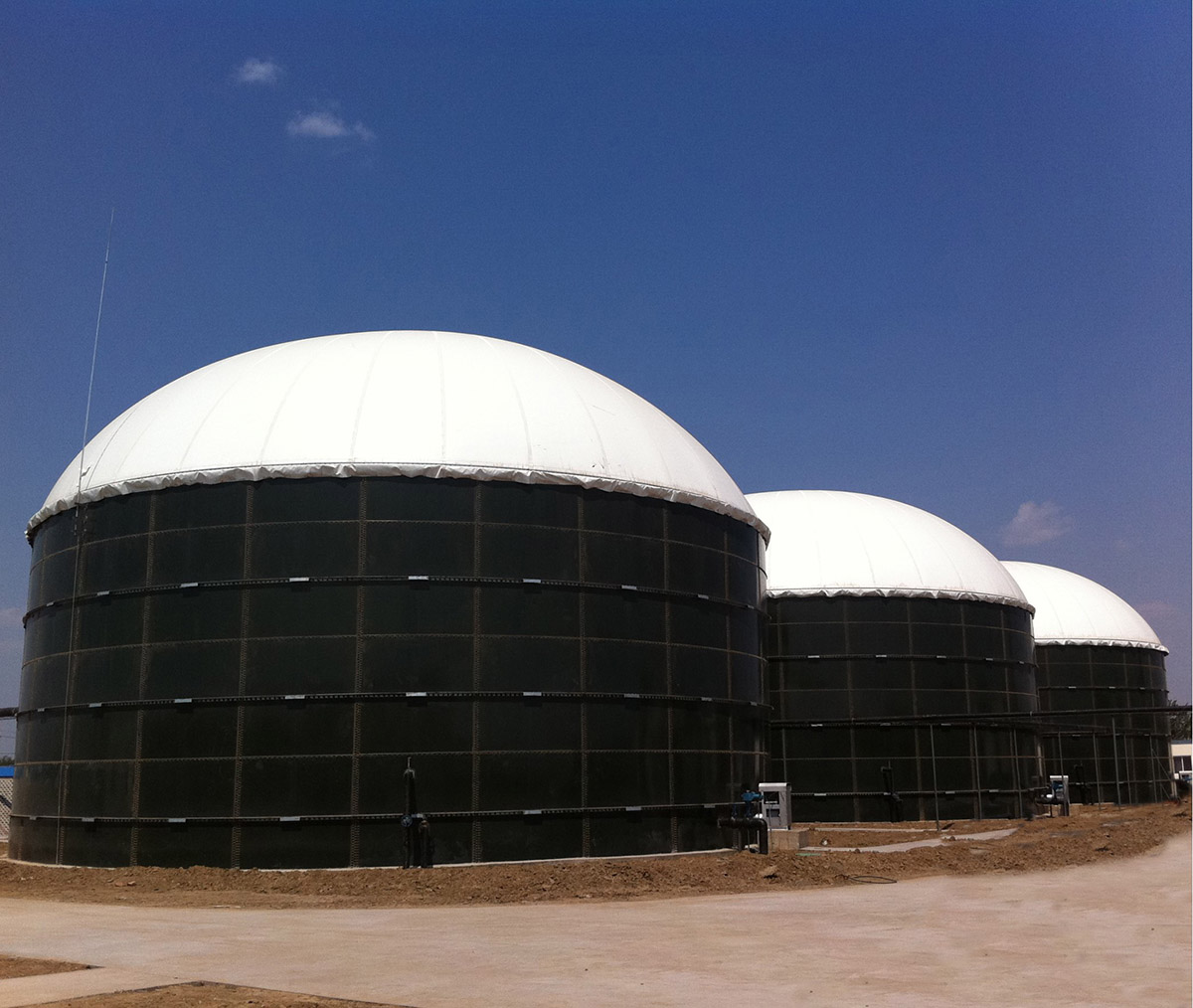
Uniform biological activity requires complete physical blending without generating excessive fluid shear that disrupts syntrophic microbial colonies. Incomplete mixing creates dead settling zones, stratified temperature layers, and short-circuiting channels where fresh substrate exits before achieving full volatile solids degradation. Eliminating these operational issues is a core focus when designing the most efficient biogas plant.
Computational fluid dynamics (CFD) modeling dictates agitator positioning, blade geometry, and impellor speeds based on specific substrate characteristics. Mixing configurations combine slowly rotating, large-diameter mechanical impellers with centrally located draft tubes or targeted high-volume substrate re-circulation jets. This layout maintains structural suspension across variable dry-matter contents without demanding excessive motor power.
Eliminating Sedimentation: Continuous low-shear sweep profiles keep heavy sands, grits, and inert mineral particulates suspended for steady removal via automated floor-scrapers.
Crust Disruption: Variable-pitch, surface-level impellers continuously break fibrous scums and floating lipid caps, preventing structural resistance against releasing generated biogas bubbles.
Heat Exchanger Placement: External shell-and-tube heat exchangers with counter-current flow patterns prevent localized thermal overheating, protecting delicate biological consortia from thermal shock.
Hydraulic Retention Tuning: True plug-flow digester designs, or multi-stage continuous stirred-tank reactors (CSTR) running in series, narrow the hydraulic residence time (HRT) distribution curve to ensure thorough organics conversion.
Stratification monitoring systems using multiple vertical temperature sensors and level transmitters track interior flow dynamics in real time. Maintaining reliable vessel mixing avoids unnecessary thermal energy losses, ensuring steady biochemical conversion rates year-round.
Advanced Biogas Upgrading Technologies: Comparative Separation Kinetics
Crude biogas leaves the anaerobic digestion envelope saturated with moisture and laden with carbon dioxide (35% to 45%), hydrogen sulfide (50 to 10,000 ppm), siloxanes, and volatile organic contaminants. Transforming this raw output into pipeline-quality RNG requires separating carbon dioxide while driving methane recovery rates toward complete capture. The primary difference separating an average facility from the most efficient biogas plant is the choice and operation of this upgrading train.
Modern operations prioritize two primary separation mechanisms: gas-permeation multi-stage polymer membranes and chemical solvent absorption (amine scrubbing). Selecting between these approaches depends on operational priorities, access to waste heat, and target biomethane outlet pressures.
Multi-Stage Membrane Permeation: Hollow-fiber polyimide membranes use differences in molecular permeation rates to process gas streams. Smaller, highly soluble carbon dioxide molecules permeate rapidly through polymer walls under pressure, while larger, non-polar methane molecules stay retained within the high-pressure fiber core. Modern three-stage cascades recycle the intermediate permeate stream back through the primary feed compressor, driving final methane slip below 0.5% without consuming water or chemical consumables.
Regenerative Amine Scrubbing: Systems using activated aqueous methyl diethanolamine (MDEA) or piperazine blends bind carbon dioxide chemically through reversible, temperature-dependent reactions. This process achieves methane purities over 99.5% with near-undetectable methane slip (<0.1%). The solvent is continuously regenerated through thermal stripping, making this method ideal when digester systems generate surplus thermal energy.
Pressure Swing Adsorption (PSA): Using engineered carbon molecular sieves (CMS), PSA systems extract carbon dioxide under variable cyclic pressure conditions. Achieving target recovery requires continuous desorption cycles and accurate valving to minimize methane release during the blowdown depressurization phase.
Upstream of the main separation array, deep gas conditioning is mandatory. Chilled condensation drying drops the pressure dew point below -20°C, followed by non-regenerative impregnated activated carbon beds that strip hydrogen sulfide and trace siloxanes to sub-ppm thresholds. Protecting downstream separation media from particulate matter, free liquids, and sulfur compounds preserves separation selectivity and prolongs component life.
Minimizing Parasitic Energy Loads and Waste Heat Integration
Net biomethane yield directly reflects overall efficiency: gross energy output minus total parasitic power, internal mechanical consumption, and parasitic heat requirements. Modern gas production facilities integrate heat and power systems to extract usable energy from secondary process streams.
High-efficiency facilities recover thermal energy from biogas compressor jackets and post-compression cooling stages to satisfy digester heating requirements. Using heat pumps and multi-pass shell-and-tube heat exchangers reduces reliance on external thermal utility supplies. Variable frequency drives (VFDs) paired with high-efficiency IE4 or IE5 electric motors adjust power draw to match fluctuating gas volumes and changing substrate viscosities.
Compressor Energy Recovery: Screw and reciprocating compressors generate substantial heat during stage compression. Liquid cooling circuits route this thermal energy into primary digester loops or building comfort systems.
Pressure Energy Capture: High-pressure off-gas streams leaving membrane separation systems can run through micro-expansion turbines, harvesting kinetic pressure energy to partially offset the parasitic draw of primary compressors.
Off-Gas Mitigation: Upgrading system tail gas contains residual carbon dioxide, trace methane slip, and carrier vapors. Directing this stream through regenerative thermal oxidizers (RTO) or thermal catalytic oxidizers destroys residual hydrocarbons and provides usable high-temperature process heat.
Automated Predictive Pumping: Progressive cavity and rotary lobe pumps operate on automated duty cycles managed by real-time mass-flow meters, avoiding dead-heading conditions and lowering continuous motor loads.
Minimizing parasitic electrical consumption below 0.25 kWh per standard cubic meter of crude biogas processed is a core benchmark for the most efficient biogas plant. Balancing process heat, mechanical pumping requirements, and gas upgrading power creates an operation capable of exporting the highest possible percentage of methane energy to the downstream customer network.
Real-Time Analytical Monitoring and Closed-Loop Process Automation
Operating an advanced gas facility at peak yields requires comprehensive instrumentation and modern control systems. Biological and separation systems cannot perform smoothly with infrequent manual grab-sampling. State-of-the-art installations combine distributed control systems (DCS) with supervisory control and data acquisition (SCADA) platforms to monitor critical parameters in real time.
Optical NDIR (non-dispersive infrared) sensors and process micro-gas chromatographs continuously read methane, carbon dioxide, oxygen, and hydrogen sulfide levels across multiple extraction points: the digester headspace, after the moisture condenser, following the carbon beds, and at the final biomethane injection skid. Automated control loops make immediate process adjustments based on real-time data:
Compressor variable-speed drives modulate throughput to maintain flat, stable digester headspace pressures, preventing vacuum conditions or gas flare releases.
Automated substrate feeding valves adjust loading ratios based on real-time biological data, keeping volatile acid levels within safe operating parameters.
Membrane stage pressure-relief loops adjust recycle rates to counter changes in raw gas carbon dioxide levels, ensuring continuous biomethane purity.
Automated three-way reject valves isolate and divert off-specification gas back into raw gas buffers in milliseconds, protecting downstream distribution networks.
Combining real-time process monitoring with closed-loop controls eliminates operational swings. Sustained steady-state operation reduces equipment wear, extends membrane life, and guarantees reliable export capacity for grid injection or high-pressure vehicle refueling.
Grid Injection Protocols, Virtual Pipelines, and RNG Offtake
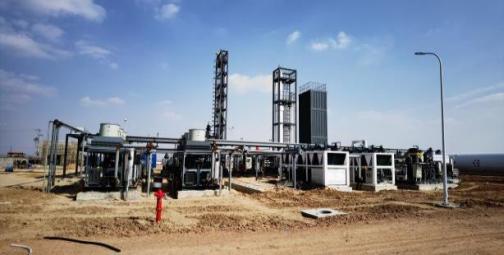
Exporting biomethane requires meeting strict utility pipeline specifications and transport standards. Before gas enters transmission lines, its heating value and physical properties must align with local gas specifications. Conditioning systems trim the Wobbe Index via micro-air injection or propane enrichment to ensure the product gas matches the thermal properties of conventional fossil gas.
The injection station measures critical parameters using fiscal-grade custody transfer flow meters, certified gas chromatographs, and precision moisture sensors. Odorization units introduce sulfur-bearing mercaptans or tetrahydrothiophene (THT) proportional to mass flow, ensuring safety compliance across distribution systems. High-reliability offloading architectures incorporate dual-stage pressure control loops, emergency shutdown safety valves (ESDs), and automated return paths that prevent off-spec gas from entering customer pipelines.
When physical pipelines are unavailable, virtual pipeline architectures take over. Specialized multi-stage compressor arrays compress biomethane up to 250 bar into road transport trailers equipped with type IV composite cylinders. These handling workflows preserve low carbon intensity values by combining minimal gas compression losses with efficient transfer sequences.
Frequently Asked Questions
Q1: What methane recovery rate characterizes the most efficient biogas plant?
A1: High-performing facilities consistently achieve
methane recovery rates exceeding 99% across the gas upgrading train, with modern
multi-stage membrane loops and amine scrubbers keeping methane slip below 0.5%
and 0.1%, respectively.
Q2: How does temperature stability impact overall biological
conversion efficiency?
A2: Stable temperatures maintain consistent
biochemical conversion. Methanogenic archaea are sensitive to shifts in their
thermal environment; variations beyond 0.5°C per day can inhibit enzyme
activity, elevate volatile fatty acid levels, and reduce daily methane
yields.
Q3: Why are three-stage membrane systems preferred over standard
two-stage setups?
A3: A three-stage membrane layout routes permeate
gas from the second and third stages back into the primary compression feed.
This configuration recovers slipped methane, keeping total gas loss below 0.5%
without demanding extreme operating pressures.
Q4: How can parasitic electricity consumption be minimized across the
facility?
A4: Parasitic draw drops by pairing premium-efficiency
electric motors (IE4/IE5) with variable-speed drives, utilizing computational
fluid dynamics for optimized digester agitation, capturing waste heat from
compressors for tank heating, and managing pumping cycles with mass-flow
feedback.
Q5: What are the main indicators of process imbalance within the
digester system?
A5: Early warning signs include a rising FOS/TAC
ratio above 0.35, dropping pH, elevated hydrogen sulfide spikes, decreased
methane content in raw biogas, and climbing iso-butyric and iso-valeric volatile
fatty acid levels.
Engineering Consultation and Project Specifications
Every industrial bioenergy project presents unique parameters based on feedstock mixes, operational footprints, and pipeline injection standards. Securing high methane yields demands experienced engineering execution across every phase, from raw substrate rheology to high-pressure gas separation skids.
Submit your project requirements, crude biogas compositions, and site parameters to our engineering team. We will review your operational data and provide a detailed engineering assessment to help you build and operate the most efficient biogas plant for your specific application.