


News
We'll get back to you as soon as possible.
Factory-Built Modular Biogas Plant Systems: Engineering and Scalability
Decentralized production of renewable natural gas (RNG) and electrical power requires process equipment that accommodates local feedstock variations without demanding extensive civil infrastructure. Traditional field-erected anaerobic digestion facilities depend heavily on cast-in-place concrete structures, bespoke piping layouts, and lengthy on-site commissioning phases. In contrast, deploying a modular biogas plant relies on pre-engineered, factory-tested skids that integrate digestion, gas treatment, and process control into standardized functional modules. This industrial manufacturing methodology shifts high-tolerance mechanical and electrical assembly away from the project site into controlled production environments.
The resulting architecture shortens execution cycles, standardizes quality assurance protocols, and simplifies subsequent capacity expansions. By segmenting complex biochemical processes into discrete mechanical packages—slurry preparation, anaerobic conversion, biological or chemical desulfurization, moisture removal, and membrane gas separation—engineering teams achieve repeatable operational performance across heterogeneous agricultural, municipal, and industrial feedstocks.
Structural Architecture and Skid-Mounted Subsystems
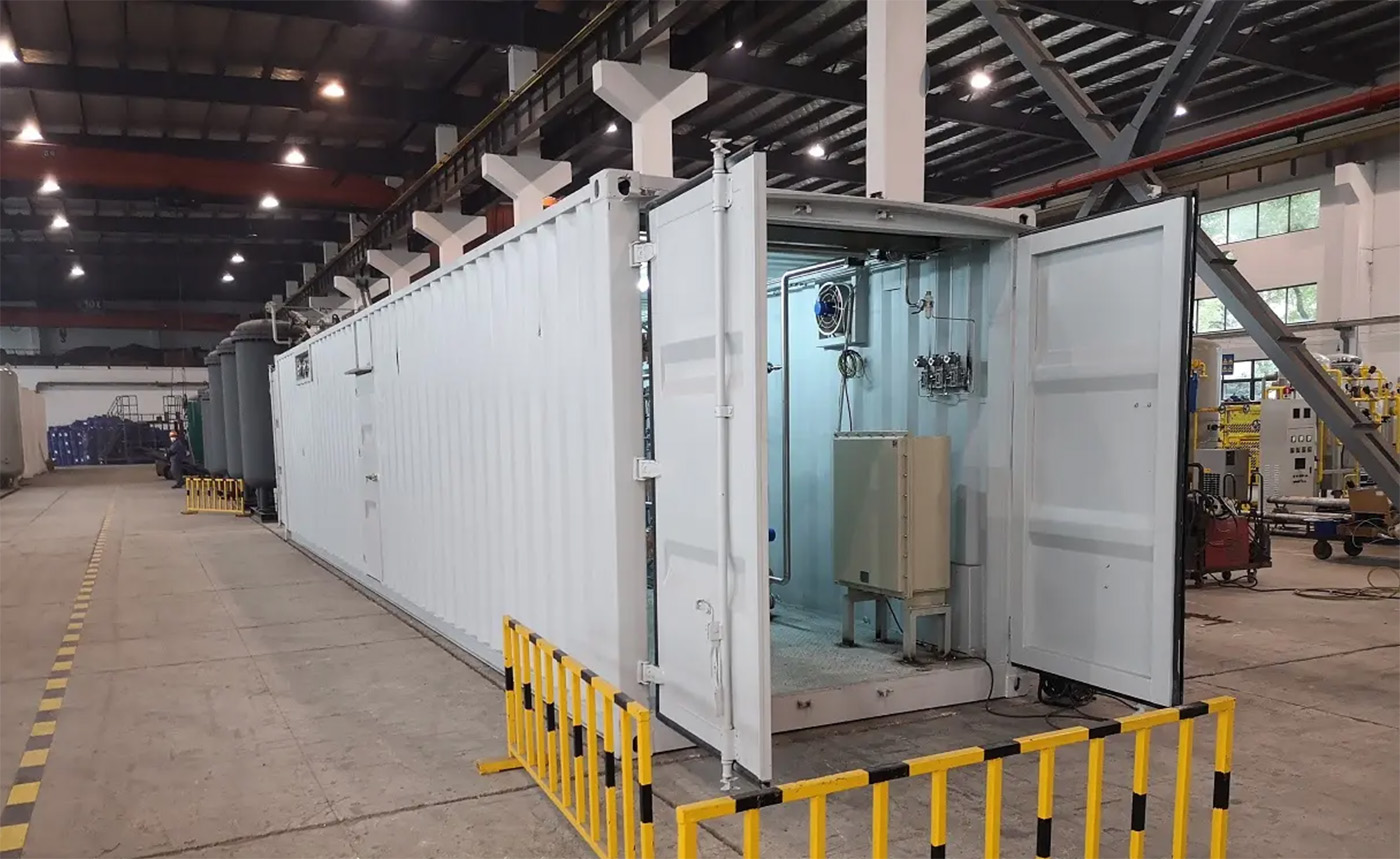
A standardized modular layout avoids the spatial footprint and installation challenges typical of continuous on-site construction. Factory fabrication allows high-alloy piping, precise instrumentation, and automated valving to be assembled under ISO-compliant welding and testing protocols. Subsystems arrive on site within ISO shipping container dimensions or on heavy-duty structural steel skids with pre-installed connection headers.
Feedstock Reception and Conditioning Modules
The entry point of any digestion process must handle specific rheological and structural traits of biological inputs. Factory-assembled feed conditioning blocks combine solid-feed hoppers, positive displacement macerators, and high-torque progressive cavity pumps into a cohesive structural unit.
Particle Reduction: Integrated inline grinders shear fibrous organic matter down to sub-12mm particle diameters, expanding the specific surface area available for enzymatic hydrolysis.
Thermal Pasteurization: Skid-based heat recovery exchangers and holding tanks execute thermal conditioning cycles (e.g., 70°C for 60 minutes) to eliminate pathogen vectors before biochemical conversion, meeting international animal byproduct requirements.
Solids-Liquid Separation and Homogenization: Mixing chambers fitted with submerged choppers maintain total solids (TS) concentrations within target parameters, whether configuring for liquid pumping (4–10% TS) or high-solids plug-flow regimes (15–25% TS).
Biochemical Reactor Blocks: CSTR and Plug-Flow Formats
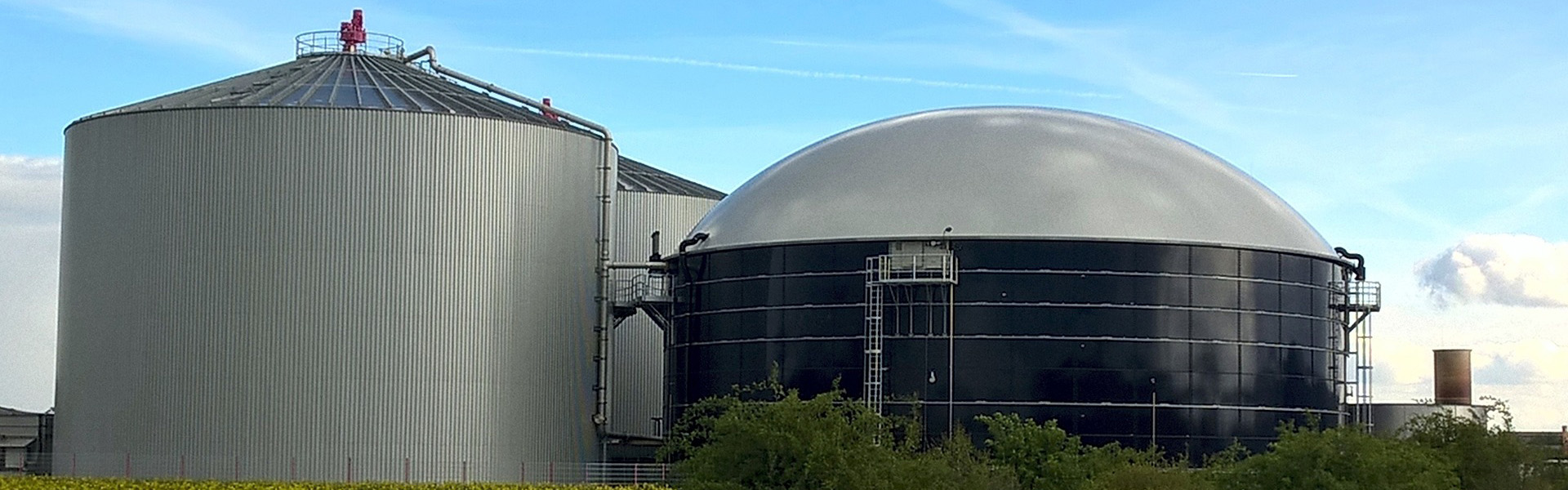
Anaerobic digestion takes place within standardized, insulated digestion modules designed for rapid mechanical coupling. Continuous Stirred-Tank Reactors (CSTR) utilize glass-fused-to-steel bolted panel construction or insulated vertical steel tanks mounted on modular slab foundations. Variable-speed mechanical mixers or draft-tube agitators prevent stratification and the formation of floating crusts, maintaining consistent temperature profiles across mesophilic (37°C to 41°C) or thermophilic (52°C to 56°C) biological zones.
For high-viscosity materials such as dairy manure with heavy bedding or source-separated organics, horizontal plug-flow modules use low-speed axial shafts to push substrate through a linear degradation gradient. This design guarantees designated hydraulic retention times (HRT) without the fluid short-circuiting that can disrupt unbaffled vertical vessels.
Integration of Gas Upgrading and Purification Skids
Raw biogas exiting the reactor headspace contains saturated water vapor, hydrogen sulfide (H2S), siloxanes, and carbon dioxide (CO2). Preparing raw gas for injection into regional natural gas transmission networks or for vehicle fuel use requires a compact, interconnected purification chain. Within a modular biogas plant, these stages are delivered as fully piped, drop-in processing skids.
Primary Desulfurization and Moisture Extraction
Bulk H2S removal occurs either inside the primary vessel via micro-aeration or externally within dedicated biological scrubbing columns packed with high-surface-area polymer media. Biological scrubbers facilitate the oxidation of sulfides to elemental sulfur through sulfur-oxidizing bacteria, reducing downstream consumable chemical volumes.
Post-scrubbing, the gas passes into a gas conditioning skid where cyclonic moisture separators and mechanical chillers drop gas temperatures below 5°C. This forces water condensation and extracts moisture-soluble contaminants. Coalescing filters down to 0.1-micron ratings, followed by dual-bed activated carbon vessels, absorb trace siloxanes, halogenated hydrocarbons, and remaining H2S molecules to protect high-tolerance membrane polymers or compression equipment downstream.
Membrane Gas Separation Modules
Selective permeation through hollow-fiber polymer membranes has become the dominant technology for CO2 removal in skid-mounted installations due to its high footprint-to-throughput efficiency. Gas pressurization occurs through integrated rotary screw compressors fitted with variable-frequency drives that match output to live digester gas yields.
Permeability Selectivity: Polyimide or polysulfone membrane bundles isolate CO2 and H2O, which permeate through fiber walls rapidly, while CH4 is retained in the high-pressure bore stream.
Multi-Stage Cascade Arrays: By implementing three-stage or partial recycle configurations, the system holds methane recovery rates above 99.2%, generating an off-gas stream that can be routed to thermal oxidizers or carbon capture skids.
Grid Injection Interface: Upgraded biomethane passes through automated gas chromatographs checking calorific value, Wobbe Index, and residual oxygen fractions before routing through odorization, metering, and pipeline pressure regulation assemblies.
Biological Process Stability and Control Instrumentation
Maintaining stable anaerobic digestion within the compact dimensions of a modular biogas plant requires precise instrument feedback. Factory-wired low-voltage control cabinets house programmable logic controllers (PLCs) interfaced with analytical instrumentation across fluid and vapor loops.
Optical and electrochemical sensors continuously log pH, oxidation-reduction potential (ORP), and volatile fatty acid to chemical alkalinity ratios (FOS/TAC). Real-time telemetry monitors biological performance indicators without requiring daily laboratory titration. If VFA levels climb unexpectedly due to an organic overload, the automated control sequence curtails feed pump cycles, increases recirculation loops, and recalibrates buffer injection automatically to prevent volatile acid buildup from inhibiting methanogenic archaea.
Thermal management loops use plate-and-frame heat exchangers linked to process boilers or combined heat and power (CHP) jacket-water connections. Variable-flow secondary pumps circulate glycol loops through internal heating jackets, holding reactor core temperatures within ±0.5°C of setpoint values, avoiding the thermal shocks that undermine mesophilic or thermophilic bacterial populations.
Digestate Treatment and Secondary Resource Separation
Anaerobic decomposition converts organic carbon into gaseous fuel while leaving an effluent rich in plant-available nitrogen, phosphorus, and potassium. In a modern modular biogas plant, digestate management avoids expansive open-air storage lagoons by routing active digestate through automated dewatering packages.
Inline progressive cavity pumps push digestate through a continuous mechanical screw press or a decanter centrifuge skid. Solid separation splits the stream into a fibrous, stackable cake (25–35% dry matter) suitable for automated composting or direct agricultural field spreading, and a clarified liquid phase. The liquid fraction can route into modular reverse osmosis or ultrafiltration skids to generate clean discharge water alongside a concentrated liquid ammonium sulfate fertilizer stream. This mechanical fractionation eliminates regional nutrient oversaturation and avoids extensive storage footprint demands.
Site Preparation, Civil Works, and Interconnection
Because the main equipment skids are built, wired, and pressure-tested prior to shipment, civil construction requirements remain focused on base infrastructure. Foundations consist primarily of standard reinforced concrete slabs designed to carry equipment deadloads and dynamic equipment forces, avoiding the massive underground vaulting and complex subterranean piping required by older infrastructure designs.
All skids feature standardized mechanical connection manifolds, including ANSI or DIN flange terminations, along with common terminal junction boxes for instrumentation and three-phase power feeds. Piping runs between processing skids utilize pre-fabricated, insulated utility bridges carrying thermal lines, pressurized gas, digestate slurries, and electrical trays. This plug-and-play layout allows complete mechanical interconnection within weeks rather than months, speeding up the transition to the Site Acceptance Testing (SAT) protocol.
Operational Advantages Over Monolithic Civil Designs
Shifting from monolithic, field-poured digesters to modular configurations fundamentally changes project execution economics and technical adaptability.
Phased Throughput Expansion: Operators can commission a base processing capacity matching initial feedstock volumes and append secondary digestion or upgrading skids later as organic waste volumes scale upward.
Consistent Quality Control: Welding, electrical termination, pipe fitting, and structural coatings occur within climate-controlled factories under standardized quality management frameworks, avoiding weather delays and uneven site workmanship.
High Equipment Relocatability: For specialized industrial waste contracts or intermediate-term processing operations, skid-based modules can be disconnected, decommissioned, and transported to alternative locations with minimal structural loss.
Reduced Footprint: Vertical integration of pumping, heat exchange, and electrical systems into stacked or containerized footprints minimizes the total land surface area required for plant construction.
Selecting Configurations for Project Demands
Selecting appropriate equipment modules requires an accurate inventory of the raw substrate stream. Total solid content, chemical oxygen demand (COD), presence of long-chain fatty acids, and inert material loads each dictate the choice between high-torque dynamic mixers, plug-flow digesters, or standard vertical CSTR tanks.
For operations generating variable gas output, gas storage systems incorporate double-membrane gasholders integrated directly atop digester tanks or mounted as standalone low-pressure balance vessels on concrete pads. Membrane upgrading systems must also include variable displacement compressors or staging trains to maintain gas velocities across hollow-fiber bundles, ensuring methane purity stays within transmission specification even during seasonal feedstock lulls.
To determine the exact module configurations, hydraulic retention profiles, and gas purification steps appropriate for your specific feedstock analysis and site layouts, connect directly with our application engineering department. We review raw substrate data, provide mass-energy balance calculations, and generate layout drawings tailored to your production objectives.
Frequently Asked Questions
Q1: What is the typical installation timeline for a modular biogas plant compared to a traditional civil-constructed facility?
A1: A traditional civil-constructed facility typically requires between 14 and 24 months for site preparation, concrete curing, structural assembly, pipe fitting, and commissioning. A modular plant shortens this timeline to roughly 4 to 8 months on-site. Because major equipment skids, digestion vessels, and purification modules are pre-assembled and pre-wired in a factory environment, site works take place concurrently with equipment fabrication, reducing total project duration.
Q2: Can modular systems handle mixed or heterogeneous feedstocks effectively?
A2: Yes. Modular layouts accommodate varying feedstocks through specialized pre-treatment blocks. High-solids agricultural residues, food processing wastes, and animal slurries can be conditioned through tailored maceration, high-solids blending, and thermal pasteurization modules prior to entering the digestion stage. Processing parameters such as organic loading rates (OLR) and hydraulic retention times (HRT) can be adjusted through automated feed pump schedules to maintain continuous biochemical stability.
Q3: How does membrane separation within a modular skid achieve pipeline-spec biomethane?
A3: Skid-mounted membrane systems use specialized polymer hollow fibers engineered to exploit differences in gas molecule permeation rates. Carbon dioxide, water vapor, and oxygen pass through the polymer matrix much faster than methane. By staging these membranes in two- or three-step cascade arrays with intermediate recycle loops, the system strips out CO2, yielding a product gas with methane concentrations above 97% to 99%, meeting natural gas grid injection requirements.
Q4: What civil infrastructure must be prepared before equipment delivery?
A4: Civil requirements are limited to flat, reinforced concrete slab foundations designed to support designated point loads, containment curbing where mandated by environmental codes, utility tie-in points (water, three-phase power, drainage), and cleared access corridors for crane-assisted placement of containers or skids. Complex underground trenches and specialized subterranean concrete basins are avoided.
Q5: How is capacity scaled if feedstock supplies increase over time?
A5: Capacity expansion takes place through parallelization. Because the control architecture, fluid manifolds, and gas handling systems are standardized, operators can add another digestion module, an extra membrane module rack, or a complementary dewatering skid alongside operating units. This avoids downtime on the existing process train, allowing progressive capacity expansion as feedstock supply grows.
Submit Project Specifications for Technical Evaluation
Implementing an effective anaerobic processing and biomethane recovery strategy begins with empirical data. Forward your project specifications—including daily feedstock composition, continuous volumetric flow rates, total solids (TS) and volatile solids (VS) percentages, and targeted gas utilization (such as pipeline injection or direct energy production)—to our engineering staff.
Our technical team will run mass-energy balances, evaluate necessary pre-treatment and purification configurations, and deliver a detailed engineering proposal built around our high-efficiency equipment modules. Submit an inquiry today to review process flow diagrams, footprint plots, and deployment schedules tailored to your site parameters.