


News
We'll get back to you as soon as possible.
7 Modern Engineering Breakthroughs Defining the Latest Technology in Biogas Production
Industrial waste management and renewable energy generation have converged around refined anaerobic conversion pathways. Historically, anaerobic digestion suffered from feedstock conversion ceilings, biological sensitivity, and parasitic energy demands during gas refinement. Recent advancements across biochemical engineering, membrane materials science, and reactor automation have fundamentally altered this paradigm. Integrating the latest technology in biogas production allows operators to process complex lignocellulosic materials, maintain continuous digestion stability, and separate raw digester output into pipeline-quality biomethane with high single-pass recovery rates.
Achieving stable high-volume gas output requires evaluating the entire operational chain, from biomass pretreatment protocols to downstream membrane separation. Facilities are abandoning archaic single-stage stirred-tank designs in favor of compartmentalized, sensor-governed environments capable of handling high organic loading rates without biological souring.
Advanced Feedstock Disintegration and Pretreatment Modules
The rate-limiting step in anaerobic degradation has consistently been the enzymatic breakdown of particulate organic matter, specifically complex polymers such as cellulose, hemicellulose, and lignin. Traditional mechanical maceration reduces particle surface area but fails to disrupt the recalcitrant crystalline structure shielding fermentable carbohydrates.
Thermal hydrolysis processing (THP) now serves as a foundation for modern high-rate industrial operations. Operating within pressure profiles between 4 and 8 bar and temperatures spanning 140°C to 165°C, THP systems subject thick slurry feeds to rapid depressurization. The resulting steam explosion tears cellular membranes apart, solubilizing volatile fatty acid precursors and rendering intracellular material directly accessible to fermentative bacteria. This eliminates hydraulic dead zones in downstream digesters and reduces overall digester volume requirements by half.
Complementing thermal approaches, hydrodynamic cavitation and targeted ultrasonic disruption offer non-thermal cell lysis. Cavitation micro-jets generate localized shear forces exceeding several hundred kilometers per hour at micro-scale, cleaving high-molecular-weight polysaccharides into low-viscosity solutions. Facilities utilizing these fluid-dynamic configurations observe significant viscosity reductions, directly translating to lower parasitic power draws on digester mixing motors while simultaneously accelerating volatile solids destruction.
Bio-enzymatic dosing systems operate alongside these mechanical interventions. Dedicated carbohydrate-active enzyme formulations are introduced via automated micro-metering pumps immediately downstream of primary maceration. These stabilized enzymes target specific beta-1,4-glycosidic bonds, initiating liquefaction prior to the primary acidogenesis stage and bypassing long hydrolytic dwell times.
High-Rate Anaerobic Digestion Architectures
Conventional continuously stirred tank reactors (CSTR) are increasingly replaced by intensified digester architectures that decouple solid retention time (SRT) from hydraulic retention time (HRT). Retaining slow-growing methanogenic archaea within the vessel while rapidly cycling effluent liquids represents a core engineering achievement in continuous biomethane generation.
Anaerobic Membrane Bioreactors (AnMBR)
AnMBR systems integrate low-fouling ultrafiltration or microfiltration hollow-fiber membrane bundles either submerged directly within the digestion basin or positioned in external sidestream skid arrays. By enforcing complete biomass retention, AnMBR units achieve total separation between liquid discharge and active biomass. High organic loading rates—frequently exceeding 15 to 25 kilograms of chemical oxygen demand per cubic meter per day—can be treated without washing out acetoclastic and hydrogenotrophic microbial colonies.
Multi-Stage Temperature-Phased Digestion (TPAD)
Segregating acidogenesis and acetogenesis from the terminal methanogenesis phase solves biological competition conflicts between disparate microbial groups. In modern TPAD configurations:
The initial stage runs under extreme thermophilic conditions (55°C to 60°C) with an acidic pH range of 5.2 to 6.2, accelerating volatile fatty acid synthesis and neutralizing biological pathogens.
Effluent cascades into a secondary mesophilic chamber (37°C to 40°C) held strictly at neutral pH (7.0 to 7.4), providing an environment where methanogens convert acetate and hydrogen without succumbing to volatile fatty acid shock.
Enhanced Granular Sludge Formats
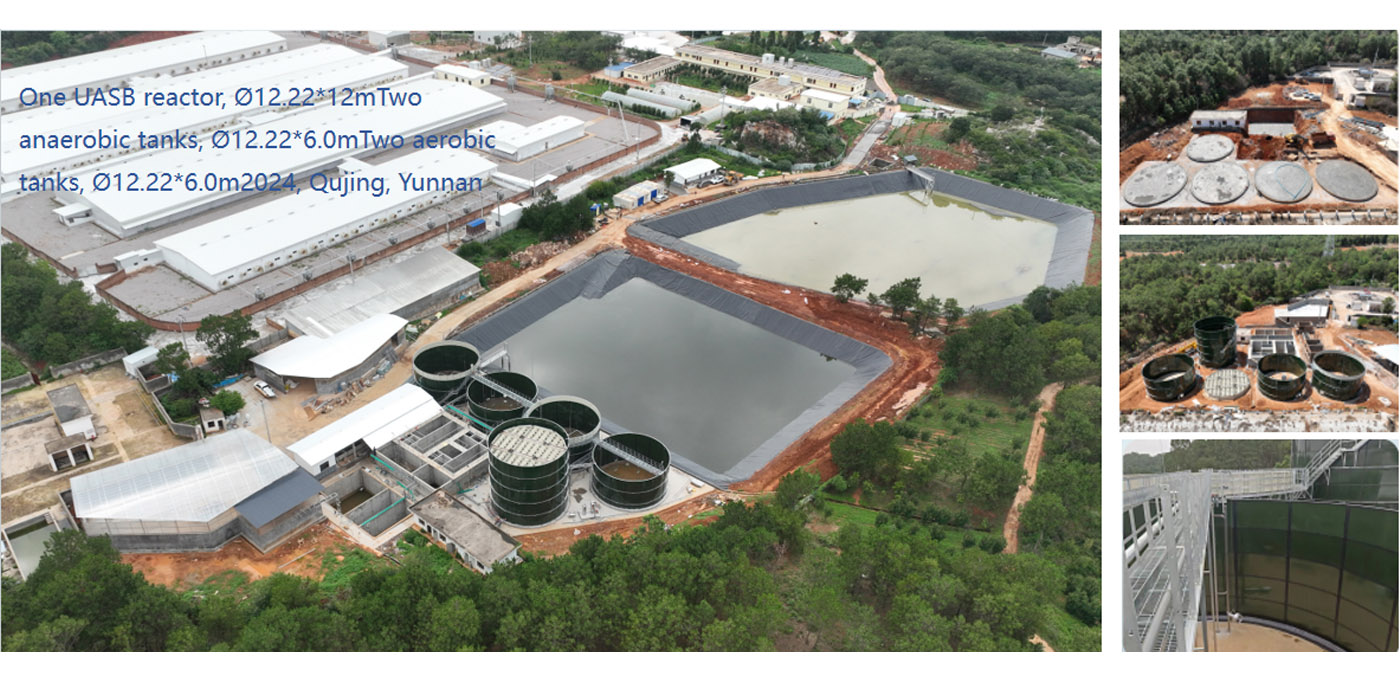
For liquid agro-industrial effluents, modified Upflow Anaerobic Sludge Blanket (UASB) and Expanded Granular Sludge Bed (EGSB) systems exploit self-immobilized dense microbial granules. High upward fluid velocities keep the bed fluid, maximizing mass transfer between wastewater organics and the layered syntrophic communities inside the dense granules. Gas-liquid-solid separators situated at the reactor head disengage gas bubbles instantly, mitigating foam formation and stabilizing gas collection lines.
Gas Upgrading and Separation Engineering
Raw biogas typically contains between 50% and 65% methane, with the remainder predominantly comprised of carbon dioxide alongside trace contaminants such as hydrogen sulfide, volatile organic compounds, moisture, and siloxanes. Transforming this raw stream into biomethane suitable for national transport pipelines requires absolute removal of non-combustible and corrosive fractions.
The latest technology in biogas production relies on multi-stage polymeric hollow-fiber membrane permeation for carbon dioxide removal. Utilizing polyimide or polysulfone materials, these selective membranes exploit differences in molecular permeation rates. Carbon dioxide molecules, possessing a smaller kinetic diameter and higher solubility in the polymer matrix than methane, permeate rapidly across the membrane wall under differential pressures of 12 to 18 bar. Methane molecules are retained in the high-pressure retentate stream.
Modern three-stage cascade membrane configurations routinely deliver methane purity levels above 99.2% with slip values below 0.5%. The off-gas containing residual carbon dioxide and trace methane is continuously recycled into the primary compression stage rather than vented, eliminating greenhouse gas releases and capturing every available hydrocarbon unit.
Upstream of carbon dioxide separation, precision gas cleaning skids address hydrogen sulfide and siloxanes:
Biological Trickling Filters (BTF): Immobilized autotrophic sulfur-oxidizing bacteria (*Thiobacillus* strains) colonize structured plastic packing, neutralizing high levels of H2S down to trace ppm levels without chemical reagents or frequent media replacement.
Regenerative Thermal Catalytic Adsorption: Synthetic zeolites and metal-organic frameworks (MOFs) capture linear and cyclic siloxanes to sub-milligram thresholds, shielding downstream engines, compressors, and catalytic reactors from abrasive silicon dioxide deposition.
Deep-Chilling Condensation: Gas dehumidification down to pressure dew points of -40°C halts pipeline corrosion and ensures optimal inlet conditions for subsequent dry-phase separation membranes.
Biological Methanation and Carbon Valorization
Transforming the biogenic carbon dioxide separated during gas upgrading into additional methane represents an advanced frontier in gas plant architecture. Known as Power-to-Gas or direct carbon methanation, this pathway injects green hydrogen produced via water electrolysis directly into the digestion matrix or into an external column bioreactor.
Hydrogenotrophic methanogens use the Sabatier pathway at biochemical conditions to mediate the following conversion:
CO2 + 4H2 → CH4 + 2H2O
Implementing biological methanation requires overcoming the mass transfer limitation associated with hydrogen gas dissolution in aqueous digestion liquors. Standard sparging methods are insufficient due to the low Henry's Law constant of hydrogen. Consequently, engineers use micro-porous hollow-fiber gas diffusion membranes and high-shear impellers. These elements introduce sub-millimeter hydrogen bubbles, accelerating the liquid-gas mass transfer coefficient (kLa) and allowing methanogens to consume hydrogen and carbon dioxide instantaneously without creating an accumulation of unreacted dissolved gases that could trigger digester foam.
Another dimension of the latest technology in biogas production centers on biological methanation within trickle-bed reactors. In these separate vertical vessels, an immobilized biofilm of specialized thermophilic archaea is trickled with nutrient-rich liquid while an upward gas counterflow of carbon dioxide and hydrogen moves through the inert packing. Because the system is external to the main digester, biological methanation operates independently from upstream feedstock fluctuations, ensuring uninterrupted conversion efficiency.
Advanced Monitoring, Automation, and Process Stabilization
Operational stability in anaerobic facilities is governed by fine margins. In earlier plant generations, biological upsets—such as volatile fatty acid accumulation leading to acidification—were detected only after systemic failure occurred, requiring weeks of downtime to restore the microbial community. Modern production modules use real-time sensor architectures and automated algorithm controls to prevent these destabilization events.
Near-infrared (NIR) spectroscopy probes installed directly within digestion pipelines provide continuous monitoring of feedstock composition, dissolved chemical oxygen demand, and total volatile fatty acids. Concurrently, fast-response online gas chromatography monitors the output gas for minor shifts in trace hydrogen and carbon monoxide levels. An uptick in dissolved hydrogen serves as an immediate indicator of metabolic stress among hydrogenotrophic methanogens long before total volatile fatty acid levels elevate or pH levels decline.
Programmable logic controllers (PLCs) adjust variable-frequency drives (VFDs) on pump skids and agitators based on predictive mathematical models. If volatile acid levels climb within an acidogenesis module, feed rates adjust downward automatically, dilution water injects via secondary bypass lines, and buffer chemistry balances the system without manual operator intervention. Automated slurry recirculators adjust mixing intensity according to real-time rheological data, preventing dead spots while avoiding excessive mechanical shear that could break apart syntrophic microbial flocs.
Industrial System Specifications and Integration Protocols
Specifying the latest technology in biogas production demands a balanced assessment of hydraulic retention times, solids concentration thresholds, and seasonal feedstock variance. Integrating these advanced modular subsystems yields higher biomethane yields per ton of volatile solids, minimal parasitic electrical demand, and continuous compliance with industrial gas grid standards.
When selecting upgrading modules, engineering teams prioritize skid-mounted, factory-tested units designed for plug-and-play field integration. Standardizing modular membrane racks, combined biological desulfurization tanks, and variable-speed multi-stage compressors minimizes civil construction overhead and simplifies future capacity expansions.
Industrial facility planners, municipal utility engineers, and commercial developers seeking to upgrade current biogas production capabilities or evaluate comprehensive system designs can engage our international engineering team. Submit your project raw biogas volumetric flow rates, methane concentration profiles, and specific grid injection standards to receive detailed technical drawings, process flow diagrams, and equipment sizing specifications.
Frequently Asked Questions
Q1: Which core component reflects the latest technology in biogas production for carbon dioxide separation?
A1: Multi-stage polymeric
hollow-fiber membrane systems represent the leading industry approach. They
separate carbon dioxide from methane using differences in molecular permeation
rates without requiring liquid chemical consumables, water scrubbing loops, or
heavy thermal regeneration energy, maintaining methane recovery above 99%.
Q2: How does thermal hydrolysis pretreatment impact anaerobic
digester capacity?
A2: Thermal hydrolysis subjects raw biomass to
temperatures between 140°C and 165°C under pressure, followed by sudden
decompression. This disrupts cellular structures, accelerates the biological
breakdown rate, lowers digestate viscosity, and enables facilities to operate at
much higher organic loading rates within smaller digester tanks.
Q3: What distinguishes biological methanation from standard anaerobic
digestion?
A3: Standard anaerobic digestion breaks down organic
materials through hydrolytic, acidogenic, and acetogenic steps to produce a
blend of methane and carbon dioxide. Biological methanation introduces exogenous
hydrogen into the system, using specialized hydrogenotrophic archaea to convert
the biogenic carbon dioxide into additional methane, effectively maximizing
total output.
Q4: Why are traditional CSTR designs being superseded by AnMBR
technology?
A4: Continuously stirred tank reactors tie solid
retention time directly to hydraulic throughput, making them vulnerable to
biological washout at high flow rates. Anaerobic Membrane Bioreactors use
physical ultrafiltration barriers to retain all active microbial biomass inside
the system, enabling high-rate processing within a much smaller physical
footprint.
Q5: How do modern plants detect and prevent biological
acidification?
A5: Automated processing modules use in-line
spectroscopic monitoring and real-time gas chromatography. By continuously
tracking parameters like intermediate volatile fatty acid to alkalinity ratios
and trace off-gas hydrogen, plant control algorithms proactively adjust feeding
patterns before biological imbalance occurs.