


News
We'll get back to you as soon as possible.
Reliable RNG Turnkey Solutions for Biogas Upgrading & Renewable Natural Gas Plants
The transition toward low‑carbon energy depends heavily on efficient biogas upgrading. rng turnkey solutions offer a seamless path from raw biogas to pipeline‑ready renewable natural gas. For project owners in the agricultural, municipal, and industrial sectors, having a single responsible partner for design, equipment manufacturing, and commissioning reduces risk and shortens time‑to‑revenue.
With decades of experience in the international biogas equipment field, providers of rng turnkey solutions integrate membrane separation, pressure swing adsorption (PSA), and water scrubbers into pre‑assembled units. This article explores the core aspects of these systems, helping you evaluate what fits your specific gas volume and purity targets.
What Defines a True RNG Turnkey Solution?
A genuine turnkey approach covers every stage: feedstock evaluation, biogas pretreatment, upgrading module, compression, grid interconnection, and long‑term service. Unlike piecemeal equipment purchases, rng turnkey solutions guarantee performance specifications and deliver fully operational plants.
Single‑source responsibility – from engineering to performance testing.
Modular, factory‑built designs minimize on‑site construction and weather delays.
Process guarantees for methane purity (>97%) and methane recovery (>99%).
Integration with existing digesters or gas collection systems.
International manufacturers now offer standardized platforms that can be adapted to dairy farms, landfills, and wastewater treatment plants. This plug‑and‑play philosophy reduces engineering overhead and accelerates project timelines.
Core Equipment inside RNG Turnkey Solutions
High‑performance upgrading starts with robust core components. Modern rng turnkey solutions typically include the following subsystems:
Biogas pretreatment: desulfurization (biological or activated carbon), siloxane removal, and moisture separation.
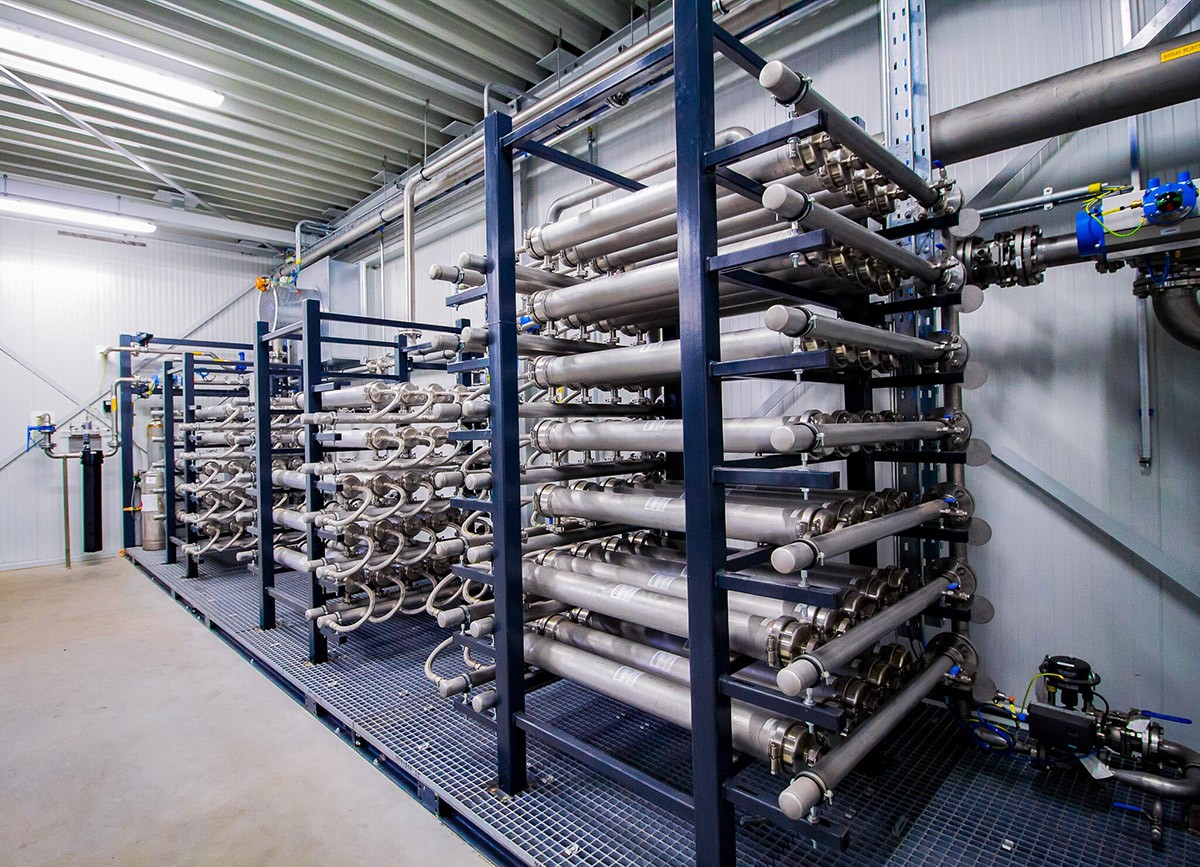
Upgrading technology: membrane skids, PSA vessels, or physical scrubbers – all sized for the client’s flow rate.
Gas conditioning: dew point control, compression to pipeline pressure, and odorization if required.
SCADA & automation: remote monitoring, alarm management, and data logging for carbon credits.
Because the equipment is pre‑assembled and tested at the factory, installation typically takes weeks instead of months. This is a key advantage of selecting mature rng turnkey solutions from established manufacturers.
Why Biogas Producers Prefer Turnkey Delivery
Developers of renewable natural gas projects often face tight deadlines and complex permitting. Engaging a turnkey partner simplifies coordination:
Only one contract for the entire upgrading train.
Faster ramp‑up to full production, improving IRR.
Warranty covers the whole system, not isolated components.
Operator training and documentation are included.
Furthermore, many rng turnkey solutions now incorporate digital twins and predictive maintenance features, ensuring uptime above 95%. For a farm with 500 m³/h of raw biogas, this reliability directly impacts revenue from renewable identification numbers (RINs) or similar incentives.
International Standards & Certifications
Equipment supplied under rng turnkey solutions must comply with regional gas grid codes and safety directives. Reputable providers design to:
ASME / PED / ISO 13623 for pressure systems.
ATEX or NFPA 70 for hazardous areas.
Pipeline quality standards (e.g., < 2% CO₂, < 4 ppm H₂S).
Manufacturing facilities themselves are often ISO 9001 certified, and many hold ISO 14001 for environmental management. When comparing proposals, check that the proposed rng turnkey solutions include all necessary declarations of conformity and third‑party inspections.
Cost Structures and ROI of RNG Turnkey Solutions
Capital expenditure (CAPEX) for a complete upgrading plant depends on capacity, inlet gas quality, and outlet specifications. Typical ranges (2025 market) for rng turnkey solutions:
Small‑scale (50–150 Nm³/h): $1.2M – $2.5M fully installed.
Medium‑scale (250–500 Nm³/h): $2.8M – $4.8M.
Large‑scale (>800 Nm³/h): $5M+ with custom pretreatment.
Operational expenditures (OPEX) are often 2–4% of CAPEX annually, covering membrane replacement, activated carbon, and routine service. The consistent performance of modern rng turnkey solutions ensures payback periods of 3–6 years under most incentive frameworks.
Project Examples: Landfill, Dairy & Industrial Biogas
Landfill gas projects typically require siloxane removal and high methane recovery. One recent rng turnkey solutions delivery in the Midwest USA processes 2,000 scfm, achieving 98.5% methane purity. The plant includes four membrane stages and a cogeneration unit for parasitic loads.
Dairy farms benefit from compact, containerized solutions. In Germany, a 250 Nm³/h rng turnkey solutions unit was installed in six weeks, converting manure‑based biogas into vehicle fuel. The client reported 20% lower capital cost compared to a stick‑built facility.
Industrial food waste often contains high H₂S. A turnkey system in the UK combined biological desulfurization with a PSA skid, handling up to 1,200 ppm H₂S without prior dilution. This demonstrates the flexibility of modern rng turnkey solutions.
Selecting Your RNG Turnkey Partner
Key criteria when evaluating suppliers of rng turnkey solutions:
Track record with similar gas compositions (landfill, manure, industrial).
In‑house manufacturing vs. outsourcing – better quality control.
Service network and response time in your region.
Flexibility to integrate future expandability.
Always request reference sites and, if possible, visit an operating plant. The right partner will offer transparent pricing, clear delivery milestones, and post‑commissioning support.
Future Outlook: RNG Turnkey Solutions and the Energy Transition
As carbon intensity regulations tighten, demand for renewable natural gas will continue to rise. Manufacturers are investing in next‑generation membranes, hybrid PSA‑membrane trains, and fully electrified systems. rng turnkey solutions will likely include carbon capture modules to generate additional revenue from biogenic CO₂. With standardized designs and global supply chains, the cost of upgrading is expected to drop further, making smaller projects economically viable.
In summary, whether you are developing a new biogas upgrading facility or repowering an existing site, integrated rng turnkey solutions offer the fastest, most reliable path to pipeline‑injection or CNG/LNG production. Short project execution times, performance warranties, and simplified operations make this delivery model the industry standard.
Frequently Asked Questions – RNG Turnkey Solutions
Q1: What exactly is included in an RNG turnkey solution?
A1: A complete turnkey package covers engineering, equipment manufacturing, civil works (if agreed), installation, piping, electrical & controls, commissioning, and performance testing. For rng turnkey solutions in biogas upgrading, this also means integrating pretreatment, upgrading, and grid interconnection – you receive a fully operational plant.
Q2: How long does it take to install a turnkey biogas upgrading plant?
A2: Typical installation time for modular rng turnkey solutions ranges from 4 to 12 weeks on‑site, depending on size and site conditions. Prefabrication at the factory while civil works are prepared can reduce overall project duration to 6–9 months from order to gas production.
Q3: Can RNG turnkey solutions handle high‑sulfur biogas?
A3: Yes. Modern rng turnkey solutions include robust desulfurization steps: biological trickling filters, activated carbon vessels, or chemical scrubbers. They are designed for inlet H₂S levels from 200 ppm up to over 5,000 ppm. Always provide a detailed gas analysis to your supplier.
Q4: What maintenance is required after commissioning?
A4: Routine maintenance includes replacing particulate filters, checking compressor oil, calibrating sensors, and periodic membrane or PSA valve service. Most rng turnkey solutions come with a 1‑2 year warranty and optional long‑term service agreements. Annual maintenance contracts are common for peace of mind.
Q5: Are these solutions eligible for carbon credits or government subsidies?
A5: Absolutely. Upgrading biogas to RNG typically generates low‑carbon fuel credits (e.g., D3 RINs in the US, or guarantees of origin in Europe). A turnkey partner will provide the necessary metering and data logging to verify your production. Many rng turnkey solutions are designed to meet the additionality requirements of various subsidy programs.
Q6: What is the typical methane slip from modern turnkey systems?
A6: With advanced membrane or PSA technologies, methane slip is usually below 1%, and often as low as 0.2% for well‑designed rng turnkey solutions. This meets the most stringent environmental regulations and maximizes gas sales.