


News
We'll get back to you as soon as possible.
5 Engineering Phases of Kinggrass or Napier Grass Bio-RNG Projects: Operational Design
Perennial C4 grasses, specifically Pennisetum purpureum (commonly designated as Napier grass, elephant grass, or Kinggrass), generate substantial dry matter per hectare in tropical and subtropical climates. Agricultural developers identify these high-yielding energy crops as uninterrupted biological precursors for renewable natural gas (RNG). Successfully developing kinggrass or napier grass bio-rng projects requires resolving structural recalcitrance, managing severe mineral abrasiveness, and stabilizing microbial decomposition kinetics under continuous loading.
Agronomic Profiles and Biomass Composition
Kinggrass reaches harvestable maturity in 60 to 90 days, yielding between 30 and 50 dry metric tons per hectare annually under balanced irrigation and nitrogen regimes. Its lignocellulosic makeup presents structural attributes that diverge sharply from soft agricultural residues or animal manures.
The dry matter fraction contains 36% to 44% cellulose, 22% to 28% hemicellulose, and 9% to 15% acid-insoluble lignin. Crystalline cellulose microfibrils remain bonded inside a dense sheath of cross-linked xylan chains and phenylpropanoid polymers. Plants cut at advanced maturity develop extensive xylem thick-wall lignification, increasing the mechanical energy required for cell disintegration.
Inorganic constituents present secondary processing considerations. Ash levels hover between 6% and 10% on a dry-weight basis, marked by high concentrations of biogenic silica (SiO2), potassium, and chlorine. Silica bodies deposit directly into the leaf epidermis, forming abrasive phytoliths that erode feed hoppers, cutting knives, and positive displacement transfer pumps if left unmanaged in raw feed circuits.
Harvest Moisture Management and Ensiling Protocols
Continuous plant operation requires year-round feed delivery, decoupling biological digestor schedules from daily harvesting windows. Kinggrass cut in field conditions carries a high water content, ranging from 75% to 82% moisture. Direct anaerobic digestion of fresh grass generates logistical bottlenecks and rapid stratification inside wet digestion vessels.
Ensiling serves as the primary conservation pathway across large-scale kinggrass or napier grass bio-rng projects. Field swathing followed by controlled in-field wilting lowers standing moisture to a range of 65% to 70%. Forage harvesters chop the wilted stems to a theoretical length of cut (TLOC) between 8 and 14 millimeters, establishing adequate physical packing density within bunker silos.
Lactic acid fermentation must dominate the ensiled pile to suppress clostridial activity. Homofermentative bacterial inoculants accelerate the drop in matrix pH below 4.2 within 72 hours of oxygen evacuation. Preserving the water-soluble carbohydrates avoids volatile solids loss and halts the conversion of structural sugars into undesired butyric acid or volatile amine fractions.
Deconstruction of Fiber Recalcitrance Through Steam Explosion
Untreated chopped grass exhibits weak microbial adherence inside liquid digesters, holding methane conversion yields below theoretical capabilities. Lignin acts as a physical shield and non-productively adsorbs cellulase enzymes secreted by hydrolytic bacteria.
Integrating hydrothermal steam decompression eliminates this rate-limiting bottleneck. Saturated process steam charges into a heavy-wall continuous reactor containing prepared grass pulp. Operating conditions maintain temperature thresholds from 175°C to 215°C at saturation pressures between 1.2 and 2.0 MPa over a retention profile of 3 to 7 minutes.
Hemicellulose Solubilization: Hydronium ions generated by the auto-dissociation of high-temperature water break ether and ester bonds within the cell wall matrix. Acetyl branches hydrolyze, forming free organic acids that drive autohydrolytic cleavage of arabinoxylans into soluble pentose sugars.
Lignin Redistribution: When the internal operational temperature exceeds the glass transition threshold of natural lignin (around 160°C to 180°C), the polymer softens, depolymerizes, and migrates out of the secondary cell walls. It coalesces into discrete, non-restrictive spherical droplets upon cooling.
Mechanical Shearing: The instantaneous opening of the lower discharge valve drops system pressure down to atmospheric levels within milliseconds. Superheated water flashing inside cellular lumens undergoes rapid volume expansion, tearing structural fiber bundles apart and expanding specific surface pore area.
Substrates leaving thermal depressurization units demonstrate an increased volatile solids conversion profile. Hydrolytic conversion occurs rapidly, bypassing the conventional multi-day hydraulic lag typical of raw woody residues.
Wet Digestion Kinetics and Hydraulic Mixing Systems
Post-pretreatment biomass flows into continuously stirred-tank reactors (CSTR) or plug-flow primary fermenters operating under mesophilic (38°C to 42°C) or thermophilic (52°C to 55°C) environments. The heightened availability of soluble carbohydrates demands strict regulation of chemical balances to prevent volatile fatty acid (VFA) overload.
Thermophilic digestion regimes handle elevated organic loading rates (OLR) ranging from 4.5 to 6.5 kg of volatile solids per cubic meter per day, contracting necessary reactor volumes. Fast-acting acidogenesis can deplete local alkalinity reserves, necessitating online bicarbonate monitoring. Buffer capacities must remain above 3,500 mg/L CaCO3 equivalents to prevent propionic acid accumulation from depressing methanogenic enzyme pathways.
Agitation systems require high-torque mechanical design. High-solids loading forms non-Newtonian, shear-thinning fluid characteristics. Top-mounted or central-shaft agitators equipped with low-speed hydrofoil impellers displace settled solids and suppress top-surface foam without generating excessive micro-shear forces that disrupt syntrophic interspecies hydrogen transfer between bacteria and archaea.
Gas Upgrading Skids and Raw Stream Conditioning
Raw biogas produced from kinggrass or napier grass bio-rng projects leaves digestion tanks saturated with moisture, carrying methane fractions between 52% and 58%, carbon dioxide between 40% and 46%, and hydrogen sulfide ranging from 800 to 3,500 ppm depending on local soil sulfate content and fertilizer history.
Conditioning begins with bulk water condensation via chilling heat exchangers operating at 3°C to 5°C, followed by primary desulfurization. Biological trickle-bed filters or external ferric hydroxide reaction vessels eliminate the primary mass of H2S. Polishing occurs across redundant activated carbon beds, maintaining H2S values below 1 ppm to safeguard downstream separation assemblies.
Carbon dioxide removal relies on selective separation configurations designed around distinct physical or chemical separation principles:
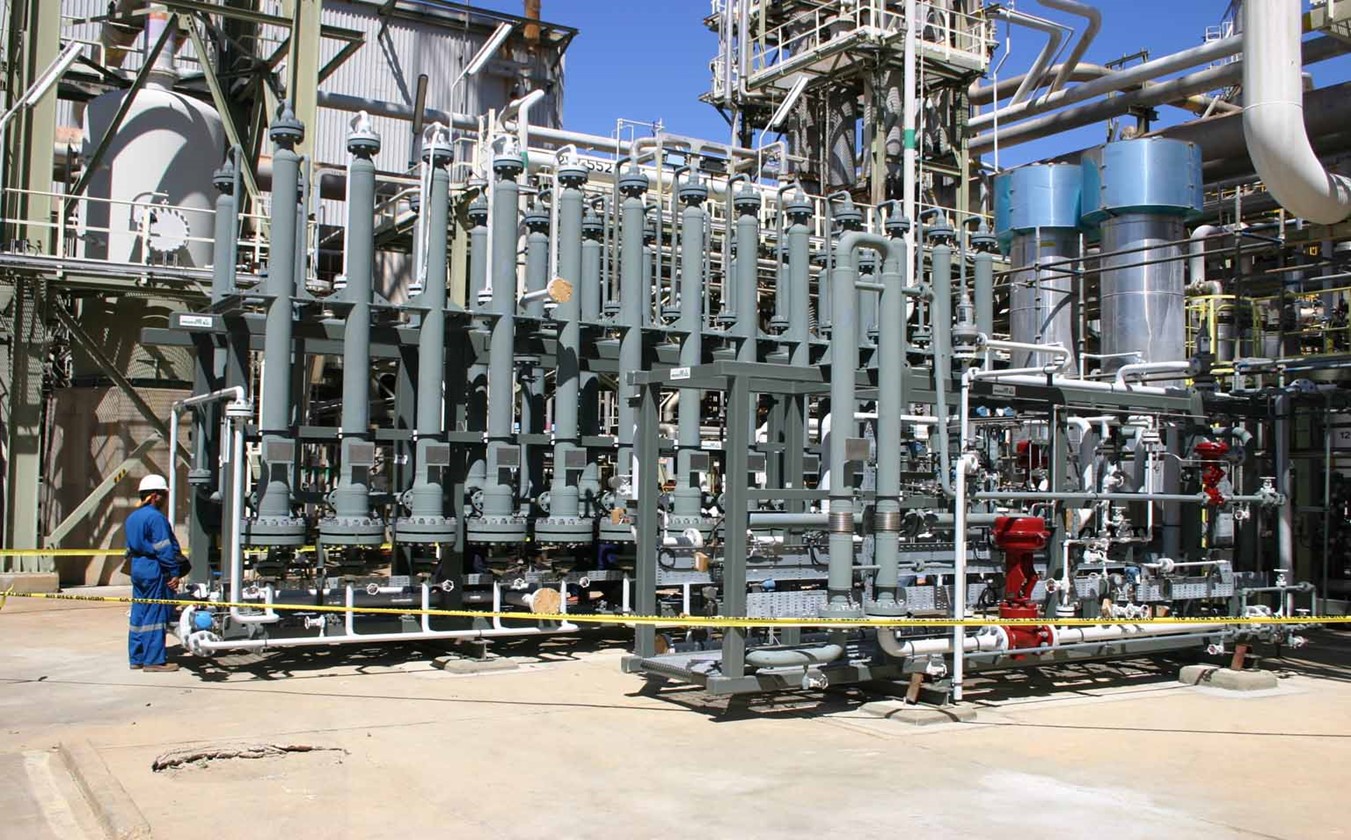
Polymeric Membrane Permeation: Multi-stage polyimide hollow-fiber membranes leverage differential molecular permeation rates. Carbon dioxide permeates through the polymer matrix substantially faster than methane, yielding biomethane purities greater than 98% with methane recovery efficiencies reaching 99.5% via permeate recycle loops.
Amine Chemical Absorption: Aqueous blends of activated methyldiethanolamine (aMDEA) chemically bind carbon dioxide inside vertical packed columns under low pressure. The loaded solvent transfers to a stripper column where low-grade process heat regenerates the amine solution, releasing pure off-gas CO2 and delivering product biomethane at transmission pipeline pressures.
Physical Water Scrubbing: High-pressure absorption columns dissolve carbon dioxide into circulating water based on Henry's Law solubility differences. This configuration avoids chemical solvents but requires higher pumping energy and consistent clean water availability.
Pipeline Quality Injection Standards and Compression
Upgraded biomethane must fulfill utility transmission specifications prior to entering commercial natural gas networks. Interconnect standards establish precise gas quality boundaries that demand real-time verification via gas chromatography:
Hydrocarbon Composition: Pure methane content must exceed 96% to 98% by volume, ensuring the Wobbe Index and Gross Heating Value match the regional natural gas baseline.
Inert Gas Thresholds: Total carbon dioxide and nitrogen levels must stay below 2% to 3%, preventing volumetric energy dilution inside the transport pipeline.
Dew Point and Oxygen Limits: Moisture dew points must remain below -40°C at pipeline pressure, combined with dissolved oxygen fractions under 10 ppm to prevent line corrosion.
Dry, pipeline-spec renewable natural gas passes through multi-stage reciprocating compressors. The gas is elevated to distribution or transmission pressures, which typically sit between 1.6 and 7.0 MPa depending on pipeline classification. Odorization units dose exact proportions of mercaptan compounds (such as tertiary butyl mercaptan or dimethyl sulfide) at the final injection skid to provide clear leak detection signatures.
Plant Mass-Energy Integration and Digestate Separation
Operating balance hinges on the systematic recirculation of secondary heat and process water. Saturated steam used within thermal explosion stages derives heat from combined heat and power (CHP) installations fueled by a small slipstream of raw biogas, or from boilers burning dry agricultural residues.
Digestate leaving the fermenters passes through screw presses and decanter centrifuges, splitting the stream into distinct phases:
Solid Fiber Fraction: The cake contains non-degraded lignin complexes, active microbial cell biomass, and insoluble minerals. This material functions as an organic soil amendment, restoring organic carbon to agricultural soils dedicated to continuous grass cultivation.
Liquid Centrate: High in dissolved ammonium nitrogen, phosphorus, and potassium, the liquid stream undergoes ultrafiltration or reverse osmosis. Recovered clear water cycles backward into raw grass wetting and slurry preparation tanks, establishing a zero liquid discharge operating framework.
Engineering Consultation and Project Specifications
Developing industrial facilities using tropical C4 grasses demands verified feedstock composition assays, exact residence kinetics, and matched pretreatment components. Small variations in plant fiber morphology or ash character can disrupt raw input balance, downstream digestion behavior, and membrane operational lifespan.
Deploying kinggrass or napier grass bio-rng projects successfully requires detailed engineering coordination from field chopping to pipeline injection. Plant planners, municipal utility partners, and regional farm syndicates can initiate a process simulation and layout review. Forward your daily biomass mass balances, harvest schedules, and target pipeline specifications to receive a structured equipment proposal, process flow diagram, and mechanical design configuration tailored to your production scope.
Frequently Asked Questions
Q1: What methane yield can be expected from Kinggrass or Napier
grass?
A1: Biomethane output varies according to harvest age and
processing methodology. Standard mechanical shredding yields between 180 and 240
normal cubic meters of biomethane per dry ton of volatile solids. Incorporating
high-pressure steam explosion elevates yields to 280–340 Nm3/ton VS by opening
cellulose fibrils to rapid bacterial attack.
Q2: How does high silica content impact process
equipment?
A2: Biogenic silica forms microscopic abrasive edges that
wear down conventional carbon steel chopping blades, macerator impellers, and
positive displacement pump rotors. Equipment handling unhydrolyzed slurry must
employ hardened alloy components, such as tungsten carbide wear rings and
specialized hard-faced rotor surfaces.
Q3: Can Kinggrass be co-digested with other waste
streams?
A3: Co-digestion with nitrogen-dense substrates, such as
swine slurry, dairy manure, or food processing wastes, is highly effective. The
grass provides structural carbon, balancing the carbon-to-nitrogen (C:N) ratio
to an ideal 25:1 to 30:1, which stabilizes microbial activity and protects
against free ammonia inhibition.
Q4: Why is fine chopping insufficient on its own for raw grass
digestion?
A4: Mechanical cutting only shortens particle length
without modifying the cellular wall barrier. Lignin structures remain intact,
sealing cellulose from microbial enzymes. This leaves the core unhydrolyzed,
leading to long digestion requirements, floating crust development, and reduced
overall gas output.
Q5: What pipeline injection parameters must kinggrass or napier grass bio-rng projects monitor continuously?
A5: Injection stations deploy
continuous gas chromatographs to monitor methane concentration, carbon dioxide
content, oxygen level, hydrogen sulfide content, and hydrocarbon dew points.
Automatic rapid shut-off valves divert off-spec gas back to flare lines or
upstream treatment loops if any parameter exceeds strict pipeline tariffs.